

 登录
登录
Ⅰ. 从方框中选出适当的名词,写在相应的图片下面。
amber dinosaur forest flower ant whale planet river
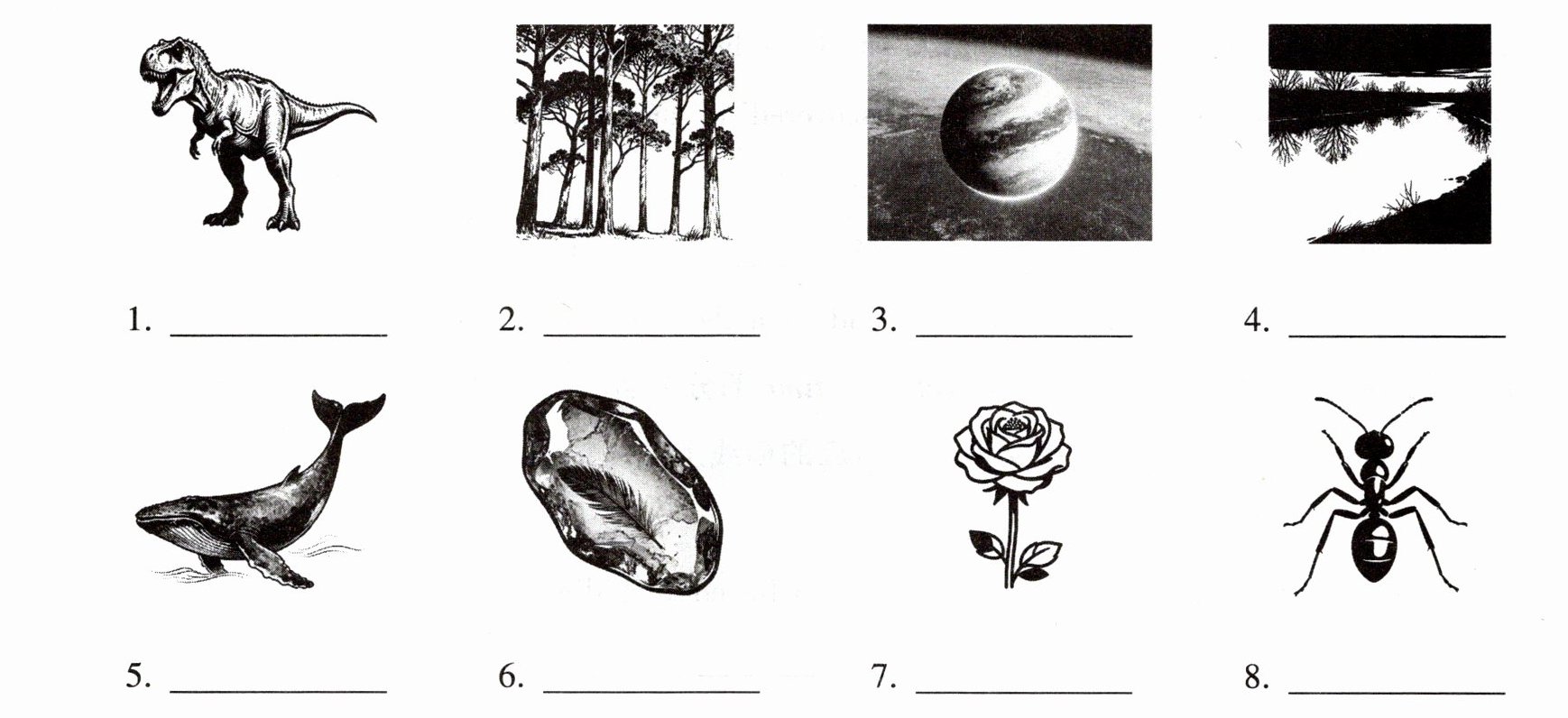
amber dinosaur forest flower ant whale planet river
答案
1. dinosaur 2. forest 3. planet 4. river 5. whale 6. amber 7. flower 8. ant
解析
【分析】
要解决这道题,首先需要明确方框中每个名词的含义:amber(琥珀)、dinosaur(恐龙)、forest(森林)、flower(花)、ant(蚂蚁)、whale(鲸鱼)、planet(行星)、river(河流)。接着逐一观察每幅插图所呈现的事物,结合事物的典型特征(比如恐龙的独特外形、鲸鱼是海洋大型生物等),将事物与对应的英文名词准确匹配。
【解析】
1. 插图1的第一幅图是恐龙,对应单词dinosaur;
2. 插图1的第二幅图是森林,对应单词forest;
3. 插图1的第三幅图是行星,对应单词planet;
4. 插图1的第四幅图是河流,对应单词river;
5. 插图2的第一幅图是鲸鱼,对应单词whale;
6. 插图2的第二幅图是琥珀,对应单词amber;
7. 插图2的第三幅图是花,对应单词flower;
8. 插图2的第四幅图是蚂蚁,对应单词ant。
【答案】
1. dinosaur 2. forest 3. planet 4. river 5. whale 6. amber 7. flower 8. ant
【知识点】
常见名词认知、图文词汇匹配
【点评】
本题考查学生对常见英语名词词义的掌握及图文对应能力,涵盖动物、自然事物等多类别词汇,能帮助学生巩固词汇基础,提升词汇与实际事物的关联认知能力。
【难度系数】
0.8
要解决这道题,首先需要明确方框中每个名词的含义:amber(琥珀)、dinosaur(恐龙)、forest(森林)、flower(花)、ant(蚂蚁)、whale(鲸鱼)、planet(行星)、river(河流)。接着逐一观察每幅插图所呈现的事物,结合事物的典型特征(比如恐龙的独特外形、鲸鱼是海洋大型生物等),将事物与对应的英文名词准确匹配。
【解析】
1. 插图1的第一幅图是恐龙,对应单词dinosaur;
2. 插图1的第二幅图是森林,对应单词forest;
3. 插图1的第三幅图是行星,对应单词planet;
4. 插图1的第四幅图是河流,对应单词river;
5. 插图2的第一幅图是鲸鱼,对应单词whale;
6. 插图2的第二幅图是琥珀,对应单词amber;
7. 插图2的第三幅图是花,对应单词flower;
8. 插图2的第四幅图是蚂蚁,对应单词ant。
【答案】
1. dinosaur 2. forest 3. planet 4. river 5. whale 6. amber 7. flower 8. ant
【知识点】
常见名词认知、图文词汇匹配
【点评】
本题考查学生对常见英语名词词义的掌握及图文对应能力,涵盖动物、自然事物等多类别词汇,能帮助学生巩固词汇基础,提升词汇与实际事物的关联认知能力。
【难度系数】
0.8
Ⅱ. 根据课本第68~69页*Secrets caught in time*内容,完成以下任务。
任务一:将图中的琥珀与对应的科学发现进行匹配。
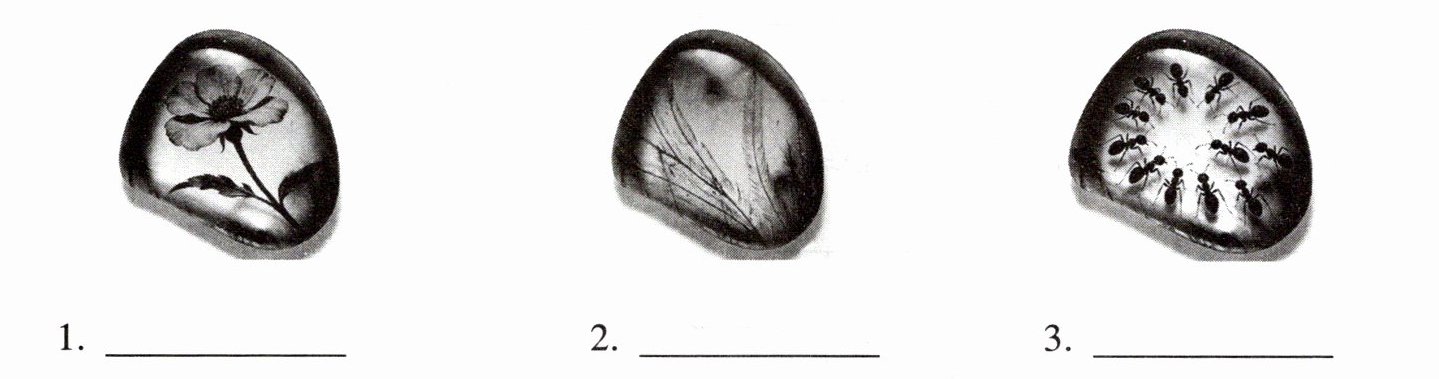
A. They can tell us whether dinosaurs had feathers.
B. Research shows that the ants are a completely new species.
C. The find proves that the flower grew in Northern Europe 35 million years ago, but this species no longer grows in this area.
任务二:从方框中选择适当的短语完成以下科普节目英文解说词。
a window on the past discover new species unlock more secrets of nature
what ancient species looked like life on earth has always changed
Welcome to today's "Looking into Nature"! Let's explore something cool—amber!
What can amber show us? It shows us secrets caught in time! First, it tells us 1.
A piece of amber proves that a kind of flower once grew in Northern Europe 35 million years ago, but it no longer grows there now! Third, it helps us 3.
Over 300 unknown species have been discovered in amber. For example, scientists found a new species of ants in African amber.
So, amber is 4.
任务一:将图中的琥珀与对应的科学发现进行匹配。
A. They can tell us whether dinosaurs had feathers.
B. Research shows that the ants are a completely new species.
C. The find proves that the flower grew in Northern Europe 35 million years ago, but this species no longer grows in this area.
任务二:从方框中选择适当的短语完成以下科普节目英文解说词。
a window on the past discover new species unlock more secrets of nature
what ancient species looked like life on earth has always changed
Welcome to today's "Looking into Nature"! Let's explore something cool—amber!
What can amber show us? It shows us secrets caught in time! First, it tells us 1.
what ancient species looked like
. For example, a piece of amber helped scientists know that dinosaurs had feathers! Second, it helps us understand that 2. life on earth has always changed
.A piece of amber proves that a kind of flower once grew in Northern Europe 35 million years ago, but it no longer grows there now! Third, it helps us 3.
discover new species
.Over 300 unknown species have been discovered in amber. For example, scientists found a new species of ants in African amber.
So, amber is 4.
a window on the past
. It's also a key to 5. unlock more secrets of nature
. What new things will we find in amber? Let's wait and see!答案
任务一:1. C 2. A 3. B
任务二:1. what ancient species looked like 2. life on earth has always changed
3. discover new species 4. a window on the past 5. unlock more secrets of nature
任务二:1. what ancient species looked like 2. life on earth has always changed
3. discover new species 4. a window on the past 5. unlock more secrets of nature
解析
【分析】
任务一:解题时需结合课本《Secrets caught in time》的内容,先逐一明确每个选项的核心信息:选项C聚焦花朵的生长地域及物种变迁,选项A涉及恐龙羽毛的相关发现,选项B是关于新蚂蚁物种的研究。再将这些信息与插图对应的琥珀所承载的科学发现一一匹配,即可得出答案。
任务二:首先要理解每个短语的含义:"a window on the past"指“通往过去的窗口”,"discover new species"指“发现新物种”,"unlock more secrets of nature"指“解锁自然更多秘密”,"what ancient species looked like"指“古代物种的样貌”,"life on earth has always changed"指“地球上的生命一直在变化”。然后结合每个空的上下文语境分析:第1空后举例琥珀帮助了解恐龙有羽毛,对应古代物种样貌;第2空后举例花曾在北欧生长现在消失,对应生命一直在变化;第3空后提到发现300多种未知物种,对应发现新物种;第4空是总结琥珀的作用,对应通往过去的窗口;第5空说琥珀是钥匙,对应解锁自然更多秘密。
【解析】
任务一:
1. 结合课本内容,对应花朵生长地域及物种变迁科学发现的是选项C,故填C;
2. 对应恐龙羽毛相关发现的是选项A,故填A;
3. 对应新蚂蚁物种研究的是选项B,故填B。
任务二:
1. 根据后文“a piece of amber helped scientists know that dinosaurs had feathers”可知,琥珀能告诉我们古代物种的样貌,故选"what ancient species looked like";
2. 根据后文“A piece of amber proves that a kind of flower once grew in Northern Europe 35 million years ago, but it no longer grows there now”可知,这体现了地球上的生命一直在变化,故选"life on earth has always changed";
3. 根据后文“Over 300 unknown species have been discovered in amber”可知,琥珀帮助我们发现新物种,故选"discover new species";
4. 此处是对琥珀作用的总结,琥珀能让我们了解过去的信息,是“通往过去的窗口”,故选"a window on the past";
5. 结合前文“It's also a key to”,琥珀作为钥匙,是用来解锁自然更多秘密的,故选"unlock more secrets of nature"。
【答案】
任务一:1. C 2. A 3. B
任务二:1. what ancient species looked like 2. life on earth has always changed
3. discover new species 4. a window on the past 5. unlock more secrets of nature
【知识点】
科普文本信息匹配;短语语境运用;语篇填空
【点评】
本题紧密结合课本科普类文本内容,既考查学生对课本信息的提取与匹配能力,又考查学生在语境中运用短语的语言实践能力,有助于提升学生的信息整合能力和英语语篇理解能力。
【难度系数】
0.6
任务一:解题时需结合课本《Secrets caught in time》的内容,先逐一明确每个选项的核心信息:选项C聚焦花朵的生长地域及物种变迁,选项A涉及恐龙羽毛的相关发现,选项B是关于新蚂蚁物种的研究。再将这些信息与插图对应的琥珀所承载的科学发现一一匹配,即可得出答案。
任务二:首先要理解每个短语的含义:"a window on the past"指“通往过去的窗口”,"discover new species"指“发现新物种”,"unlock more secrets of nature"指“解锁自然更多秘密”,"what ancient species looked like"指“古代物种的样貌”,"life on earth has always changed"指“地球上的生命一直在变化”。然后结合每个空的上下文语境分析:第1空后举例琥珀帮助了解恐龙有羽毛,对应古代物种样貌;第2空后举例花曾在北欧生长现在消失,对应生命一直在变化;第3空后提到发现300多种未知物种,对应发现新物种;第4空是总结琥珀的作用,对应通往过去的窗口;第5空说琥珀是钥匙,对应解锁自然更多秘密。
【解析】
任务一:
1. 结合课本内容,对应花朵生长地域及物种变迁科学发现的是选项C,故填C;
2. 对应恐龙羽毛相关发现的是选项A,故填A;
3. 对应新蚂蚁物种研究的是选项B,故填B。
任务二:
1. 根据后文“a piece of amber helped scientists know that dinosaurs had feathers”可知,琥珀能告诉我们古代物种的样貌,故选"what ancient species looked like";
2. 根据后文“A piece of amber proves that a kind of flower once grew in Northern Europe 35 million years ago, but it no longer grows there now”可知,这体现了地球上的生命一直在变化,故选"life on earth has always changed";
3. 根据后文“Over 300 unknown species have been discovered in amber”可知,琥珀帮助我们发现新物种,故选"discover new species";
4. 此处是对琥珀作用的总结,琥珀能让我们了解过去的信息,是“通往过去的窗口”,故选"a window on the past";
5. 结合前文“It's also a key to”,琥珀作为钥匙,是用来解锁自然更多秘密的,故选"unlock more secrets of nature"。
【答案】
任务一:1. C 2. A 3. B
任务二:1. what ancient species looked like 2. life on earth has always changed
3. discover new species 4. a window on the past 5. unlock more secrets of nature
【知识点】
科普文本信息匹配;短语语境运用;语篇填空
【点评】
本题紧密结合课本科普类文本内容,既考查学生对课本信息的提取与匹配能力,又考查学生在语境中运用短语的语言实践能力,有助于提升学生的信息整合能力和英语语篇理解能力。
【难度系数】
0.6
