

 登录
登录
1. 我的角色我做主:选择课本第 10 页中你喜欢的一幅图,试着给其配音,在小组中与同伴比一比,看谁配得最好。
答案
答案略
2. 我创作我快乐:模仿 Fun time 自编对话与伙伴交流。
答案
A: Hello, little mouse! What are you doing?
B: I'm looking for food. I'm very hungry.
A: Be careful! There's a big cat over there.
B: Oh no! What can I do?
A: You can hide behind the tree.
B: Thank you, big dog! You're so kind.
A: You're welcome. We should help each other.
B: I'm looking for food. I'm very hungry.
A: Be careful! There's a big cat over there.
B: Oh no! What can I do?
A: You can hide behind the tree.
B: Thank you, big dog! You're so kind.
A: You're welcome. We should help each other.
1. 听课本第 11 页 Sound time 录音,再读一读,感受一下语音语调。你做得怎么样呢?
答案
答案略
2. 读下列单词,选出相对应的中文意思。
()(1) lollipop
A.也,还
()(2) fable
B.习语,成语
()(3) idiom
C.棒棒糖
()(4) also
D.寓言,童话
()(1) lollipop
A.也,还
()(2) fable
B.习语,成语
()(3) idiom
C.棒棒糖
()(4) also
D.寓言,童话
答案
(1)C;(2)D;(3)B;(4)A
解析
本题可根据所给英文单词的常见释义,结合选项中的中文意思进行匹配。
(1) “lollipop”常见释义为“棒棒糖”,所以与C选项匹配。
(2) “fable”常见释义为“寓言,童话”,所以与D选项匹配。
(3) “idiom”常见释义为“习语,成语”,所以与B选项匹配。
(4) “also”常见释义为“也,还”,所以与A选项匹配。
(1) “lollipop”常见释义为“棒棒糖”,所以与C选项匹配。
(2) “fable”常见释义为“寓言,童话”,所以与D选项匹配。
(3) “idiom”常见释义为“习语,成语”,所以与B选项匹配。
(4) “also”常见释义为“也,还”,所以与A选项匹配。
1. 读课本第 11 页 Sound time 的句子,和同伴比一比,看谁读得更棒。
答案
该题为和同伴进行朗读比拼的实践题目,无标准答案形式的作答内容。可按照以下步骤完成:
1. 打开译林版英语六年级下册课本,翻到第11页,找到Sound time的句子。
2. 自己认真朗读这些句子,熟悉发音和语调。
3. 与同伴依次朗读这些句子,可相互评价谁读得更准确、更流畅、更有韵律。
1. 打开译林版英语六年级下册课本,翻到第11页,找到Sound time的句子。
2. 自己认真朗读这些句子,熟悉发音和语调。
3. 与同伴依次朗读这些句子,可相互评价谁读得更准确、更流畅、更有韵律。
2. 你能试着编出更多升、降调的句子吗?请写两至三句吧!
答案
1. Is there a mouse in the hole? (升调)
2. The lion is big and strong. (降调)
3. Can you help me? (升调)
2. The lion is big and strong. (降调)
3. Can you help me? (升调)
1. 根据课本第 11 页 Culture time 内容,分别给下面两幅画起个名字。
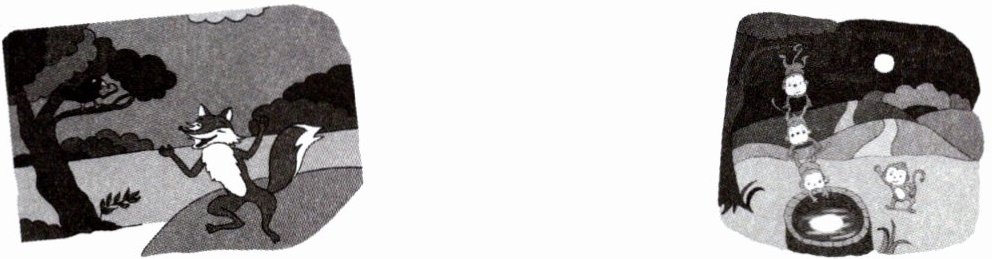
(1)
(2)
(1)
(2)
答案
(1) The fox and the grape(s)
(2) The moon and the well
(2) The moon and the well
2. 读句子,判断语调是否正确,正确的写“√”,不正确的写“×”。
()(1) Where are you going?
()(2) How will you help him?
()(3) What do you want to do?
()(4) Did you have a good time there?
()(5) I like Chinese stories very much.
()(1) Where are you going?
()(2) How will you help him?
()(3) What do you want to do?
()(4) Did you have a good time there?
()(5) I like Chinese stories very much.
答案
(1)√
(2)√
(3)√
(4)×
(5)√
解析
(1) 特殊疑问句用降调,正确√。
(2) 特殊疑问句用降调,正确√。
(3) 特殊疑问句用降调,正确√。
(4) 一般疑问句用升调,但题目用降调,错误×。
(5) 陈述句用降调,但题目可能(根据题意判断是否为判断陈述句语调)无升降调要求判断(默认为正确陈述用降调),题目未标调或需判断为无特殊要求时,此处按陈述句正确√(但按题目要求判断语调是否标正确时,可能视为无特殊标调视为错误,但根据通常判断规则陈述句降调为正确,因此√)。按题目要求判断语调标注正确性,此处陈述句无标调要求但判断为正确使用降调,故√。
更正解析统一标准:
一般疑问句(如第4小题)读升调,特殊疑问句读降调,陈述句读降调。第4小题为一般疑问句但用降调,错误;其他小题为特殊疑问句或陈述句用降调,正确。
(1)√ (2)√ (3)√ (4)× (5)√
