

 登录
登录
E Choose and complete(选择合适的单词,完成句子)
safe easy must safely can’t easily safety can mustn’t
1 Tim knows how to cross the street
2 You
3 Miss Li is talking about road
4 Jim can draw a tiger. It is
5 Mrs Brown can make a cake
6 —I want to go to Zhongshan Park.
—No, you
7 —
—No. You can finish it after dinner.
safe easy must safely can’t easily safety can mustn’t
1 Tim knows how to cross the street
safely
.2 You
mustn't
play on the road. It’s not safe
.3 Miss Li is talking about road
safety
.4 Jim can draw a tiger. It is
easy
for him.5 Mrs Brown can make a cake
easily
.6 —I want to go to Zhongshan Park.
Can
I take this bus?—No, you
can't
. This bus goes to Fuxing Park.7 —
Must
I finish my homework before dinner?—No. You can finish it after dinner.
答案
E 1 safely 2 mustn't, safe 3 safety 4 easy 5 easily 6 Can, can't 7 Must
解析
【解析】
1. 此处修饰动词cross,需用副词,结合语境选safely(安全地)。
2. 第一空:根据“play on the road”可知是禁止的行为,用mustn’t(禁止);第二空:be动词后接形容词,结合语境选safe(安全的)。
3. road safety是固定短语,意为“道路安全”,故填safety。
4. be动词后接形容词,结合“Jim can draw a tiger”可知对他来说很容易,选easy。
5. 此处修饰动词make,需用副词,结合语境选easily(容易地)。
6. 第一空:询问是否可以乘坐公交,用Can;第二空:根据答语否定含义,用can’t。
7. 根据答语“No. You can finish it after dinner”可知问句是询问是否必须晚饭前完成作业,用Must。
【答案】
1 safely
2 mustn't, safe
3 safety
4 easy
5 easily
6 Can, can't
7 Must
【知识点】
副词与形容词辨析、情态动词用法、固定短语搭配
【点评】
本题考查英语词汇在语境中的运用,重点区分形容词和副词的不同用法,掌握must/can等情态动词的含义及问答搭配,帮助学生提升语境词汇运用能力。
【难度系数】
0.7
1. 此处修饰动词cross,需用副词,结合语境选safely(安全地)。
2. 第一空:根据“play on the road”可知是禁止的行为,用mustn’t(禁止);第二空:be动词后接形容词,结合语境选safe(安全的)。
3. road safety是固定短语,意为“道路安全”,故填safety。
4. be动词后接形容词,结合“Jim can draw a tiger”可知对他来说很容易,选easy。
5. 此处修饰动词make,需用副词,结合语境选easily(容易地)。
6. 第一空:询问是否可以乘坐公交,用Can;第二空:根据答语否定含义,用can’t。
7. 根据答语“No. You can finish it after dinner”可知问句是询问是否必须晚饭前完成作业,用Must。
【答案】
1 safely
2 mustn't, safe
3 safety
4 easy
5 easily
6 Can, can't
7 Must
【知识点】
副词与形容词辨析、情态动词用法、固定短语搭配
【点评】
本题考查英语词汇在语境中的运用,重点区分形容词和副词的不同用法,掌握must/can等情态动词的含义及问答搭配,帮助学生提升语境词汇运用能力。
【难度系数】
0.7
F Choose and complete(选择合适的词组,完成歌谣)
a in the park
b find the way
c in our life (生活)
d on the road
e in our school
Signs
We need signs
We can see signs
When we can’t
They can tell us where to go and how to go.
So signs are like (像……) policemen.
We can see signs
They can tell us what to do and what not to do.
So signs are like teachers.
We can see signs
They can tell us what is safe and what is not safe.
So signs are like park keepers.
a in the park
b find the way
c in our life (生活)
d on the road
e in our school
Signs
We need signs
c
.We can see signs
d
.When we can’t
b
,They can tell us where to go and how to go.
So signs are like (像……) policemen.
We can see signs
e
.They can tell us what to do and what not to do.
So signs are like teachers.
We can see signs
a
.They can tell us what is safe and what is not safe.
So signs are like park keepers.
答案
F c d b e a
解析
【解析】
1. 第一句表达“我们在生活中需要标志”,结合语境选c in our life;
2. 第二句后提到标志像警察指引方向,路上的标志具备此指引作用,选d on the road;
3. 第三句“当我们找不到路时”,标志能告知前行方向与方式,选b find the way;
4. 第四部分提到标志像老师,学校里的标志会明确行为规范,选e in our school;
5. 最后一部分提到标志像公园管理员,对应公园场景的标志,选a in the park。
【答案】
c d b e a
【知识点】
介词短语运用,情景词汇匹配,语境句意理解
【点评】
本题以歌谣形式呈现,考查学生对不同场景标志功能的认知,以及短语在具体语境中的运用,需结合上下文分析句意来选择合适词组,贴近生活且富有趣味性。
【难度系数】
0.6
1. 第一句表达“我们在生活中需要标志”,结合语境选c in our life;
2. 第二句后提到标志像警察指引方向,路上的标志具备此指引作用,选d on the road;
3. 第三句“当我们找不到路时”,标志能告知前行方向与方式,选b find the way;
4. 第四部分提到标志像老师,学校里的标志会明确行为规范,选e in our school;
5. 最后一部分提到标志像公园管理员,对应公园场景的标志,选a in the park。
【答案】
c d b e a
【知识点】
介词短语运用,情景词汇匹配,语境句意理解
【点评】
本题以歌谣形式呈现,考查学生对不同场景标志功能的认知,以及短语在具体语境中的运用,需结合上下文分析句意来选择合适词组,贴近生活且富有趣味性。
【难度系数】
0.6
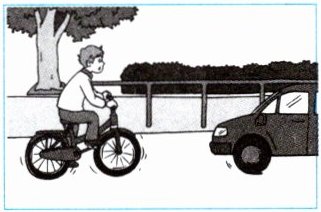
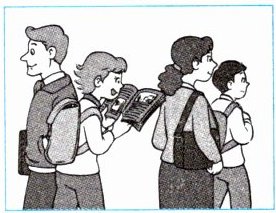
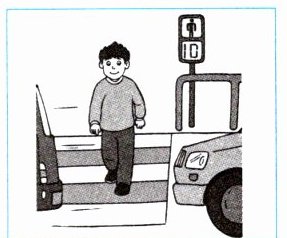
G Look, judge and complete(看图,判断行为对错,完成对话)
1 A: What’s Mike doing?
B:
A: What mustn’t he do?
B:
2 A: What’s Helen doing?
B:
A: Is it safe?
B:
3 A: What’s Liu Tao doing?
B:
A: What should he do?
B:
1 A: What’s Mike doing?
B:
He's riding a bike on the road.
A: What mustn’t he do?
B:
He mustn't ride on the road.
2 A: What’s Helen doing?
B:
She's reading on the road/when she is walking.
A: Is it safe?
B:
No, it isn't.
3 A: What’s Liu Tao doing?
B:
He's crossing the road when there is a red man.
A: What should he do?
B:
He should stop and wait for the green man.
答案
G 1 He's riding a bike on the road. He mustn't ride on the road.
2 She's reading on the road/when she is walking. No, it isn't.
3 He's crossing the road when there is a red man. He should stop and wait for the green man.
2 She's reading on the road/when she is walking. No, it isn't.
3 He's crossing the road when there is a red man. He should stop and wait for the green man.
解析
【解析】
本题需结合插图呈现的交通场景,运用现在进行时描述行为,并根据交通规则完成问答:
1. 图中Mike在马路上骑自行车,根据交通规则,不能在马路上骑车,据此完成对话;
2. 图中Helen走路时在看书,这种行为不安全,据此完成对话;
3. 图中Liu Tao在红灯(红人标识)时过马路,正确做法是停下等绿灯(绿人标识),据此完成对话。
【答案】
1. He's riding a bike on the road. He mustn't ride on the road.
2. She's reading on the road/when she is walking. No, it isn't.
3. He's crossing the road when there is a red man. He should stop and wait for the green man.
【知识点】
现在进行时表达、交通规则英语问答、情态动词用法
【点评】
本题通过情景对话形式,考查学生对现在进行时、情态动词的运用能力,同时渗透交通安全知识,帮助学生在语言学习中树立安全意识。
【难度系数】
0.6
本题需结合插图呈现的交通场景,运用现在进行时描述行为,并根据交通规则完成问答:
1. 图中Mike在马路上骑自行车,根据交通规则,不能在马路上骑车,据此完成对话;
2. 图中Helen走路时在看书,这种行为不安全,据此完成对话;
3. 图中Liu Tao在红灯(红人标识)时过马路,正确做法是停下等绿灯(绿人标识),据此完成对话。
【答案】
1. He's riding a bike on the road. He mustn't ride on the road.
2. She's reading on the road/when she is walking. No, it isn't.
3. He's crossing the road when there is a red man. He should stop and wait for the green man.
【知识点】
现在进行时表达、交通规则英语问答、情态动词用法
【点评】
本题通过情景对话形式,考查学生对现在进行时、情态动词的运用能力,同时渗透交通安全知识,帮助学生在语言学习中树立安全意识。
【难度系数】
0.6
