

 登录
登录
七、根据首字母提示补全短文。
Do your children do 1. c
children have too much homework. It takes lots of 3. t
real-life lessons are good for 4. c
how to 5. w
Do your children do 1. c
hores
at home? Many 2. parents
say theirchildren have too much homework. It takes lots of 3. t
ime
to finish it. Butreal-life lessons are good for 4. c
hildren
. They can know how to make food andhow to 5. w
ash
their clothes. They can learn from doing chores.答案
1. chores 2. parents 3. time
4. children 5. wash
4. children 5. wash
解析
【分析】
首先通读全文,明确短文围绕孩子在家做家务和作业的话题展开,再结合上下文语境和首字母提示逐个分析填空:
1. 后文提到“They can learn from doing chores.”,结合首字母c,可判断此处是询问孩子是否在家做家务;
2. 根据“say their children”的表述,结合首字母p,能确定是父母在谈论自己的孩子;
3. 前文指出孩子作业太多,完成作业需要耗费大量时长,结合首字母t,可知此处填表示时间的单词;
4. 全文围绕孩子的相关情况展开,这里说现实生活课程对孩子有益,结合首字母c,对应孩子的复数形式;
5. 空后是“their clothes”,结合首字母w,对应洗衣服的固定搭配。
【解析】
1. 结合后文的“doing chores”以及首字母c,填入chores,“do chores”是固定搭配,意为“做家务”;
2. 根据“their children”的指代关系以及首字母p,填入parents,指“父母”;
3. 依据“too much homework”和固定句型“It takes lots of time to do sth.”(做某事花费大量时间),结合首字母t,填入time;
4. 短文核心话题是孩子,结合首字母c,填入children,指“孩子们”;
5. 根据“their clothes”和固定搭配“wash clothes”(洗衣服),结合首字母w,填入wash。
【答案】
1. chores 2. parents 3. time
4. children 5. wash
【知识点】
1. 家务类词汇
2. 固定句型搭配
3. 语境猜词
【点评】
本文贴近学生日常生活,围绕孩子做家务与作业的话题展开,重点考查学生结合上下文语境、首字母提示及固定搭配填写单词的能力,有助于巩固学生的日常词汇积累和语境分析能力。
【难度系数】
0.7
首先通读全文,明确短文围绕孩子在家做家务和作业的话题展开,再结合上下文语境和首字母提示逐个分析填空:
1. 后文提到“They can learn from doing chores.”,结合首字母c,可判断此处是询问孩子是否在家做家务;
2. 根据“say their children”的表述,结合首字母p,能确定是父母在谈论自己的孩子;
3. 前文指出孩子作业太多,完成作业需要耗费大量时长,结合首字母t,可知此处填表示时间的单词;
4. 全文围绕孩子的相关情况展开,这里说现实生活课程对孩子有益,结合首字母c,对应孩子的复数形式;
5. 空后是“their clothes”,结合首字母w,对应洗衣服的固定搭配。
【解析】
1. 结合后文的“doing chores”以及首字母c,填入chores,“do chores”是固定搭配,意为“做家务”;
2. 根据“their children”的指代关系以及首字母p,填入parents,指“父母”;
3. 依据“too much homework”和固定句型“It takes lots of time to do sth.”(做某事花费大量时间),结合首字母t,填入time;
4. 短文核心话题是孩子,结合首字母c,填入children,指“孩子们”;
5. 根据“their clothes”和固定搭配“wash clothes”(洗衣服),结合首字母w,填入wash。
【答案】
1. chores 2. parents 3. time
4. children 5. wash
【知识点】
1. 家务类词汇
2. 固定句型搭配
3. 语境猜词
【点评】
本文贴近学生日常生活,围绕孩子做家务与作业的话题展开,重点考查学生结合上下文语境、首字母提示及固定搭配填写单词的能力,有助于巩固学生的日常词汇积累和语境分析能力。
【难度系数】
0.7
八、提素养 健康生活 你知道如何使用洗衣机吗?阅读材料,判断句子正(T)误(F)。
| Instructions | Washing Machine |
| ---- | ---- |
| 1. Press(按) the power button(按钮). You'll
hear a beep. It means the machine is ready.
2. Open the door. Put detergent and clothes in it.
Then, close the door gently.
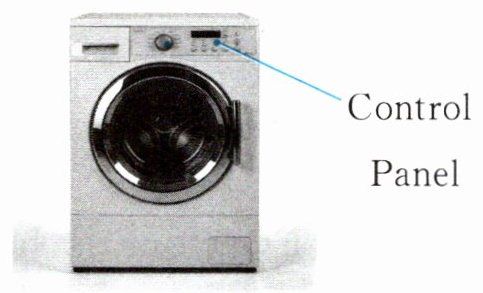
3. Look at the Control Panel(控制面板). Choose
how you want to wash.
4. Press the button that says "Start".
5. You will hear two beeps when it is finished. |
Tip:
Read and follow the instructions
before first using the product.
Contact us: 4728 |
()1. These are instructions for using a washing machine.
()2. You can put in clothes before the machine makes a beep sound.
()3. The underlined word "detergent" means "洗涤剂" here.
( )4. Press the power button if you want to begin washing.
()5. If there is any problem, you can speak with the maker by calling 4726.
| Instructions | Washing Machine |
| ---- | ---- |
| 1. Press(按) the power button(按钮). You'll
hear a beep. It means the machine is ready.
2. Open the door. Put detergent and clothes in it.
Then, close the door gently.
3. Look at the Control Panel(控制面板). Choose
how you want to wash.
4. Press the button that says "Start".
5. You will hear two beeps when it is finished. |
Tip:
Read and follow the instructions
before first using the product.
Contact us: 4728 |
()1. These are instructions for using a washing machine.
()2. You can put in clothes before the machine makes a beep sound.
()3. The underlined word "detergent" means "洗涤剂" here.
( )4. Press the power button if you want to begin washing.
()5. If there is any problem, you can speak with the maker by calling 4726.
答案
1. T 2. F 3. T 4. F 5. F
解析
【分析】
这是一道基于洗衣机英文使用说明的判断正误题,解题思路为:首先仔细通读洗衣机的使用说明文字,获取关键信息;然后逐个查看题目中的句子,将句子内容与原文对应信息进行比对,根据是否一致来判断句子的正误。具体来说,每个题目都要找到原文中的对应依据,比如第1题看说明的主题,第2题看操作顺序,第3题结合语境猜单词意思,第4题看启动操作的按钮,第5题看联系电话的信息,不能凭主观臆断,必须严格依据原文内容判断。
【解析】
1. 根据材料标题“Instructions | Washing Machine”以及正文的操作步骤可知,这些内容是洗衣机的使用说明,与句子描述一致,故填T。
2. 根据步骤1“Press the power button... You'll hear a beep. It means the machine is ready.”和步骤2的操作顺序,可知要等机器发出蜂鸣声(处于就绪状态)后才能放衣服,句子描述与原文不符,故填F。
3. 在洗衣的语境中,和衣物一起放入洗衣机的“detergent”意思是“洗涤剂”,符合实际使用逻辑,故填T。
4. 根据步骤4“Press the button that says 'Start'.”可知,开始洗衣需要按“Start”按钮,而非电源键,句子描述错误,故填F。
5. 根据材料末尾“Contact us: 4728”可知,联系电话是4728,不是4726,句子描述错误,故填F。
【答案】
1. T 2. F 3. T 4. F 5. F
【知识点】
信息匹配判断、生活英语词汇、阅读理解应用
【点评】
本题结合生活常见的家电使用场景,考查学生对英文实用说明的理解与信息提取能力,既需要学生准确查找原文信息进行比对,也涉及生活类英语词汇的语境理解,题目贴近生活,实用性较强,能帮助学生将英语学习与生活实践结合起来。
【难度系数】
0.7
这是一道基于洗衣机英文使用说明的判断正误题,解题思路为:首先仔细通读洗衣机的使用说明文字,获取关键信息;然后逐个查看题目中的句子,将句子内容与原文对应信息进行比对,根据是否一致来判断句子的正误。具体来说,每个题目都要找到原文中的对应依据,比如第1题看说明的主题,第2题看操作顺序,第3题结合语境猜单词意思,第4题看启动操作的按钮,第5题看联系电话的信息,不能凭主观臆断,必须严格依据原文内容判断。
【解析】
1. 根据材料标题“Instructions | Washing Machine”以及正文的操作步骤可知,这些内容是洗衣机的使用说明,与句子描述一致,故填T。
2. 根据步骤1“Press the power button... You'll hear a beep. It means the machine is ready.”和步骤2的操作顺序,可知要等机器发出蜂鸣声(处于就绪状态)后才能放衣服,句子描述与原文不符,故填F。
3. 在洗衣的语境中,和衣物一起放入洗衣机的“detergent”意思是“洗涤剂”,符合实际使用逻辑,故填T。
4. 根据步骤4“Press the button that says 'Start'.”可知,开始洗衣需要按“Start”按钮,而非电源键,句子描述错误,故填F。
5. 根据材料末尾“Contact us: 4728”可知,联系电话是4728,不是4726,句子描述错误,故填F。
【答案】
1. T 2. F 3. T 4. F 5. F
【知识点】
信息匹配判断、生活英语词汇、阅读理解应用
【点评】
本题结合生活常见的家电使用场景,考查学生对英文实用说明的理解与信息提取能力,既需要学生准确查找原文信息进行比对,也涉及生活类英语词汇的语境理解,题目贴近生活,实用性较强,能帮助学生将英语学习与生活实践结合起来。
【难度系数】
0.7
九、(2025 常州期末)阅读绘本《A sweet Chinese New Year for Ren》,完成任务。
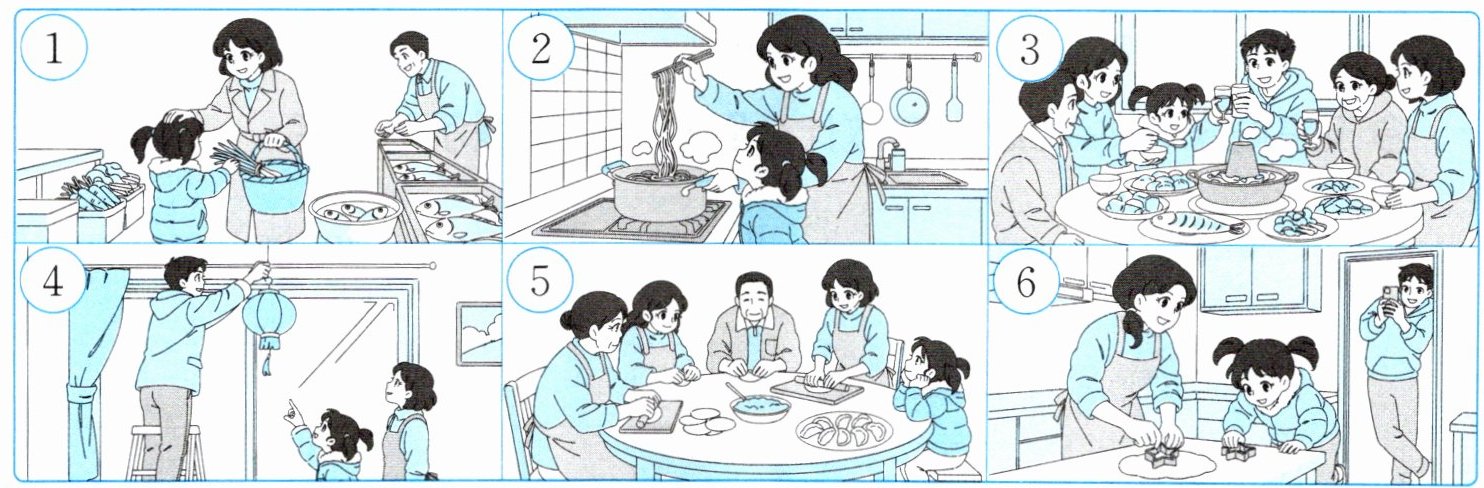
任务一:根据绘本内容,给句子匹配相对应的图片。
(
want to help my family too. "Can I help, Dad?" I ask. "The lantern(灯
笼) is too high. I'm afraid you're too little, Ren."
(
葱) are for you, Mum." "Thanks. They're for sea bass jiaozi."
(
too little, Ren. We're in a big hurry!"
(
little, Ren. It's not safe!" Auntie Liu Mei says.
(
Auntie Amy says. "I can make pineapple cakes!" Ren says.
( 3 )Everyone is here together. Ren gets many red envelopes(红包).
Chinese New Year is for eating, sharing, celebrating and helping!
任务二:再读绘本,圈出正确答案的序号。
1. What food does Ren's family cook?
①jiaozi ②noodles
A. ②③④
B. ①③④
C. ①②③
③pineapple cakes ④a salad
2. The underlined word "moulds" means "
A. 锅子
B. 模具
C. 馅
3. Who lets Ren do chores in the family?
A. Dad.
B. Auntie Liu Mei.
C. Auntie Amy.
4. Which is NOT true according to the picture book?
A. Ren wants to help her family.
B. The red envelopes are for the old.
C. Chinese New Year is not just for eating. It is also for sharing and helping.
任务一:根据绘本内容,给句子匹配相对应的图片。
(
4
)Every year, I watch everyone doing chores before Chinese New Year. Iwant to help my family too. "Can I help, Dad?" I ask. "The lantern(灯
笼) is too high. I'm afraid you're too little, Ren."
(
1
)"Nice sea bass(鲈鱼) are Dad's favourite. These green shallots(大葱) are for you, Mum." "Thanks. They're for sea bass jiaozi."
(
5
)My family are making jiaozi now. "Can I help?" I ask. "You're stilltoo little, Ren. We're in a big hurry!"
(
2
)Auntie Liu Mei is cooking the noodles. "Can I help?" "You're toolittle, Ren. It's not safe!" Auntie Liu Mei says.
(
6
)"Ren, be careful when you push the dough(面团) into the moulds!"Auntie Amy says. "I can make pineapple cakes!" Ren says.
( 3 )Everyone is here together. Ren gets many red envelopes(红包).
Chinese New Year is for eating, sharing, celebrating and helping!
任务二:再读绘本,圈出正确答案的序号。
1. What food does Ren's family cook?
①jiaozi ②noodles
A. ②③④
B. ①③④
C. ①②③
③pineapple cakes ④a salad
2. The underlined word "moulds" means "
B
".A. 锅子
B. 模具
C. 馅
3. Who lets Ren do chores in the family?
A. Dad.
B. Auntie Liu Mei.
C. Auntie Amy.
4. Which is NOT true according to the picture book?
A. Ren wants to help her family.
B. The red envelopes are for the old.
C. Chinese New Year is not just for eating. It is also for sharing and helping.
答案
任务一:4 1 5 2 6 3
任务二:1. C 2. B 3. C 4. B
任务二:1. C 2. B 3. C 4. B
解析
【分析】
任务一:解题思路是先提取每个句子中的关键信息,再匹配对应图片的核心场景:
1. 第一个句子提到“lantern(灯笼)”“Dad”,对应图片4挂灯笼的场景;
2. 第二个句子提到“sea bass(鲈鱼)”“green shallots(大葱)”“sea bass jiaozi”,对应图片1整理鱼和葱的场景;
3. 第三个句子提到“making jiaozi”,对应图片5全家包饺子的场景;
4. 第四个句子提到“cooking the noodles”,对应图片2煮面条的场景;
5. 第五个句子提到“push the dough(面团) into the moulds”“make pineapple cakes”,对应图片6压面团做糕点的场景;
6. 题目已给出第3句对应图片3聚餐拿红包的场景。
任务二:解题思路是结合绘本内容和图片细节,逐一分析选项:
1. 第1题:梳理文中提到的食物,对应选项判断包含的种类;
2. 第2题:根据“push the dough into the moulds”的动作语境推断词义;
3. 第3题:定位允许Ren帮忙的人物描述;
4. 第4题:逐一验证选项,找出不符合绘本内容的表述。
【解析】
任务一:
第一句关键信息“灯笼”“爸爸”,对应图片4;
第二句关键信息“鲈鱼”“大葱”“饺子”,对应图片1;
第三句关键信息“包饺子”,对应图片5;
第四句关键信息“煮面条”,对应图片2;
第五句关键信息“面团”“模具”“凤梨酥”,对应图片6;
题目已给出第3句对应图片3。
任务二:
1. 文中提到的食物有jiaozi饺子、noodles面条、pineapple cakes凤梨酥,未提到salad沙拉,对应选项①②③,选C;
2. 根据“把面团放进moulds做糕点”的动作,可推断“moulds”意为“模具”,选B;
3. 只有Auntie Amy指导Ren帮忙做糕点,其他家人最初都认为Ren太小不允许帮忙,选C;
4. A选项符合Ren想帮家人的内容;C选项符合绘本最后对新年的描述;B选项错误,红包通常是长辈给晚辈,并非给老人,选B。
【答案】
任务一:4 1 5 2 6 3
任务二:1. C 2. B 3. C 4. B
【知识点】
1. 图文匹配
2. 词义推断
3. 细节理解
【点评】
本题以中国新年主题绘本为载体,将英语能力考查与传统文化场景结合,既考查学生的文本细节捕捉、图文对应能力,也帮助学生理解新年“分享、互助”的内涵,贴近生活,兼具知识性与趣味性。
【难度系数】
0.7
任务一:解题思路是先提取每个句子中的关键信息,再匹配对应图片的核心场景:
1. 第一个句子提到“lantern(灯笼)”“Dad”,对应图片4挂灯笼的场景;
2. 第二个句子提到“sea bass(鲈鱼)”“green shallots(大葱)”“sea bass jiaozi”,对应图片1整理鱼和葱的场景;
3. 第三个句子提到“making jiaozi”,对应图片5全家包饺子的场景;
4. 第四个句子提到“cooking the noodles”,对应图片2煮面条的场景;
5. 第五个句子提到“push the dough(面团) into the moulds”“make pineapple cakes”,对应图片6压面团做糕点的场景;
6. 题目已给出第3句对应图片3聚餐拿红包的场景。
任务二:解题思路是结合绘本内容和图片细节,逐一分析选项:
1. 第1题:梳理文中提到的食物,对应选项判断包含的种类;
2. 第2题:根据“push the dough into the moulds”的动作语境推断词义;
3. 第3题:定位允许Ren帮忙的人物描述;
4. 第4题:逐一验证选项,找出不符合绘本内容的表述。
【解析】
任务一:
第一句关键信息“灯笼”“爸爸”,对应图片4;
第二句关键信息“鲈鱼”“大葱”“饺子”,对应图片1;
第三句关键信息“包饺子”,对应图片5;
第四句关键信息“煮面条”,对应图片2;
第五句关键信息“面团”“模具”“凤梨酥”,对应图片6;
题目已给出第3句对应图片3。
任务二:
1. 文中提到的食物有jiaozi饺子、noodles面条、pineapple cakes凤梨酥,未提到salad沙拉,对应选项①②③,选C;
2. 根据“把面团放进moulds做糕点”的动作,可推断“moulds”意为“模具”,选B;
3. 只有Auntie Amy指导Ren帮忙做糕点,其他家人最初都认为Ren太小不允许帮忙,选C;
4. A选项符合Ren想帮家人的内容;C选项符合绘本最后对新年的描述;B选项错误,红包通常是长辈给晚辈,并非给老人,选B。
【答案】
任务一:4 1 5 2 6 3
任务二:1. C 2. B 3. C 4. B
【知识点】
1. 图文匹配
2. 词义推断
3. 细节理解
【点评】
本题以中国新年主题绘本为载体,将英语能力考查与传统文化场景结合,既考查学生的文本细节捕捉、图文对应能力,也帮助学生理解新年“分享、互助”的内涵,贴近生活,兼具知识性与趣味性。
【难度系数】
0.7
