

 登录
登录
B
So far, China has successfully sent a large number of satellites(卫星)and spaceships into space. Space scientists have been greatly inspired(赋予灵感)by the old stories and ancient famous people when giving them names.
Since thousands of years ago, Chinese people have dreamed of going to the moon. Chang'e Flies to the Moon is one of the most popular stories. As you can see, China's first man - made satellite to circle around the moon was named Chang'e I. More interestingly, the moon rover(巡视器)was named after the Jade Rabbit, who is the partner of Chang'e in the story. These old stories carry people's best wishes and dreams. With the development of science and technology, our scientists have made them come true.
Kua Fu Runs After the Sun is another story to show how much ancient Chinese people wanted to know about the unknown world. Now Kua Fu is going with the scientists to visit the sun, because we have a space project called KuaFu Misson.
Besides the ancient stories, space scientists also get ideas from ancient famous people. For example, Mozi, an ancient scientist, discovered that light travels in a straight line over 2000 years ago. His discovery made space study take a big step at that time. So, China's first quantum(量子)science satellite was named Mozi, making China the first country in the world to achieve quantum communication between satellites and the ground.
From such simple things as giving names to the satellites, we can see how great our traditional culture is and what influence it has on our modern science and technology.
(
①old stories ②traditional projects ③ancient famous people ④popular inventions
A. ①②
B. ①③
C. ②④
D. ③④
(
A. It moves around the moon.
B. It protects the Jade Rabbit.
C. It “visits” the sun with the scientists.
D. It is the world's first man - made satellite.
(
A. By listing numbers.
B. By comparing facts.
C. By giving an example.
D. By reporting a result.
(
(①=Paragraph 1 ②=Paragraph 2…)
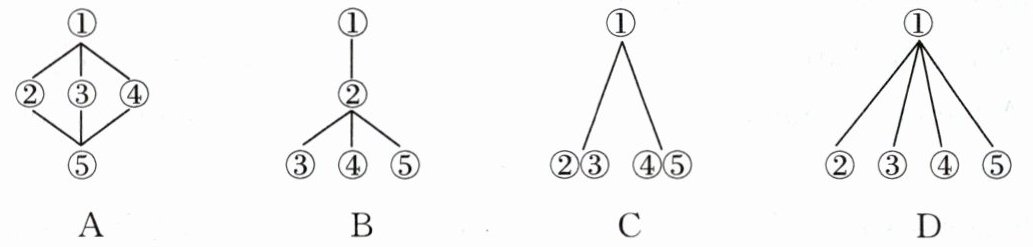
(
A. To spread the traditional Chinese culture.
B. To explain how our scientists develop the space industry.
C. To introduce the achievements in our science and technology.
D. To tell how traditional Chinese culture influences our space science.
So far, China has successfully sent a large number of satellites(卫星)and spaceships into space. Space scientists have been greatly inspired(赋予灵感)by the old stories and ancient famous people when giving them names.
Since thousands of years ago, Chinese people have dreamed of going to the moon. Chang'e Flies to the Moon is one of the most popular stories. As you can see, China's first man - made satellite to circle around the moon was named Chang'e I. More interestingly, the moon rover(巡视器)was named after the Jade Rabbit, who is the partner of Chang'e in the story. These old stories carry people's best wishes and dreams. With the development of science and technology, our scientists have made them come true.
Kua Fu Runs After the Sun is another story to show how much ancient Chinese people wanted to know about the unknown world. Now Kua Fu is going with the scientists to visit the sun, because we have a space project called KuaFu Misson.
Besides the ancient stories, space scientists also get ideas from ancient famous people. For example, Mozi, an ancient scientist, discovered that light travels in a straight line over 2000 years ago. His discovery made space study take a big step at that time. So, China's first quantum(量子)science satellite was named Mozi, making China the first country in the world to achieve quantum communication between satellites and the ground.
From such simple things as giving names to the satellites, we can see how great our traditional culture is and what influence it has on our modern science and technology.
(
B
) 1. In China, space scientists get ideas from when naming satellites.①old stories ②traditional projects ③ancient famous people ④popular inventions
A. ①②
B. ①③
C. ②④
D. ③④
(
A
) 2. What do we know about Chang'e I according to the passage?A. It moves around the moon.
B. It protects the Jade Rabbit.
C. It “visits” the sun with the scientists.
D. It is the world's first man - made satellite.
(
C
) 3. How does the writer support his opinion in Paragraph 4?A. By listing numbers.
B. By comparing facts.
C. By giving an example.
D. By reporting a result.
(
A
) 4. Which is the right structure of the passage?(①=Paragraph 1 ②=Paragraph 2…)
(
D
) 5. What's the writer's main purpose of writing the passage?A. To spread the traditional Chinese culture.
B. To explain how our scientists develop the space industry.
C. To introduce the achievements in our science and technology.
D. To tell how traditional Chinese culture influences our space science.
答案
1.B 2.A 3.C 4.A 5.D
解析
【分析】
本题为英语阅读理解题,需结合原文内容逐一分析各题目:
1. 第1题:定位原文第一段,找到科学家命名卫星的灵感来源,对应选项判断;
2. 第2题:定位原文关于“嫦娥一号”的描述,匹配选项信息;
3. 第3题:分析第四段的论证方式,判断作者用了何种方法支撑观点;
4. 第4题:梳理文章段落结构,对应选项的结构图示;
5. 第5题:定位最后一段,明确作者的写作目的。
【解析】
1. 第1题:根据原文第一段“Space scientists have been greatly inspired by the old stories and ancient famous people when giving them names.”可知,科学家命名卫星的灵感来自古老故事(①)和古代名人(③),故选B。
2. 第2题:根据原文第二段“China's first man-made satellite to circle around the moon was named Chang'e I.”可知,嫦娥一号是绕月球运行的人造卫星,A选项正确;B、C、D均与原文不符,故选A。
3. 第3题:第四段通过列举“墨子号”量子卫星命名的例子,说明科学家从古代名人处获得灵感,作者用举例子的方式支撑观点,故选C。
4. 第4题:文章结构为:第一段总起(引出命名的灵感来源),第二、三、四段分别举嫦娥、夸父、墨子三个例子,第五段总结(传统文化对现代科技的影响),对应选项A的结构,故选A。
5. 第5题:最后一段点明主旨“we can see how great our traditional culture is and what influence it has on our modern science and technology.”,作者写作目的是说明中国传统文化对航天科技的影响,故选D。
【答案】
1.B 2.A 3.C 4.A 5.D
【知识点】
阅读理解(细节理解、文章结构、主旨大意)
【点评】
本题围绕中国航天命名与传统文化的关联展开,考查学生快速定位原文信息、分析文章结构及主旨的能力,题目难度适中,需准确把握原文细节与逻辑。
【难度系数】
0.6
本题为英语阅读理解题,需结合原文内容逐一分析各题目:
1. 第1题:定位原文第一段,找到科学家命名卫星的灵感来源,对应选项判断;
2. 第2题:定位原文关于“嫦娥一号”的描述,匹配选项信息;
3. 第3题:分析第四段的论证方式,判断作者用了何种方法支撑观点;
4. 第4题:梳理文章段落结构,对应选项的结构图示;
5. 第5题:定位最后一段,明确作者的写作目的。
【解析】
1. 第1题:根据原文第一段“Space scientists have been greatly inspired by the old stories and ancient famous people when giving them names.”可知,科学家命名卫星的灵感来自古老故事(①)和古代名人(③),故选B。
2. 第2题:根据原文第二段“China's first man-made satellite to circle around the moon was named Chang'e I.”可知,嫦娥一号是绕月球运行的人造卫星,A选项正确;B、C、D均与原文不符,故选A。
3. 第3题:第四段通过列举“墨子号”量子卫星命名的例子,说明科学家从古代名人处获得灵感,作者用举例子的方式支撑观点,故选C。
4. 第4题:文章结构为:第一段总起(引出命名的灵感来源),第二、三、四段分别举嫦娥、夸父、墨子三个例子,第五段总结(传统文化对现代科技的影响),对应选项A的结构,故选A。
5. 第5题:最后一段点明主旨“we can see how great our traditional culture is and what influence it has on our modern science and technology.”,作者写作目的是说明中国传统文化对航天科技的影响,故选D。
【答案】
1.B 2.A 3.C 4.A 5.D
【知识点】
阅读理解(细节理解、文章结构、主旨大意)
【点评】
本题围绕中国航天命名与传统文化的关联展开,考查学生快速定位原文信息、分析文章结构及主旨的能力,题目难度适中,需准确把握原文细节与逻辑。
【难度系数】
0.6
