

 登录
登录
三、阅读短文,判断正(T)误(F)。
Many children in Western countries get pocket money from their parents. They usually do some housework to earn(挣钱)it. For example, they can clean their rooms, wash the dishes, walk the dog or take out the rubbish(垃圾).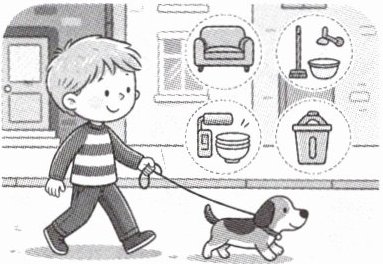
Most Western parents think it's important for children to learn how to manage money at a young age. They want their children to understand(知道)that money doesn't grow on trees. They have to work hard to get it.
Children can use their pocket money to buy things they want. But they also learn to save some money for the future. Some children save up for a new bike or a computer game. Others save their money to help people in need.
(
(
(
(
Many children in Western countries get pocket money from their parents. They usually do some housework to earn(挣钱)it. For example, they can clean their rooms, wash the dishes, walk the dog or take out the rubbish(垃圾).
Most Western parents think it's important for children to learn how to manage money at a young age. They want their children to understand(知道)that money doesn't grow on trees. They have to work hard to get it.
Children can use their pocket money to buy things they want. But they also learn to save some money for the future. Some children save up for a new bike or a computer game. Others save their money to help people in need.
(
F
)1. All children in Western countries get pocket money without doing any housework.(
T
)2. Western parents think learning to manage money is important for children.(
T
)3. “Money doesn't grow on trees” means money is not easy to get.(
F
)4. Children can only spend their pocket money on toys and candies.答案
1. F
2. T
3. T
4. F
2. T
3. T
4. F
解析
【分析】
做这类判断正误题,需先通读短文理解大意,再逐题定位原文对应内容,对比题目表述与原文信息是否一致来判断对错。具体需分别查找孩子赚零花钱的方式、父母对孩子学管钱的看法、特定句子含义、孩子使用零花钱的方式这几类信息。
【解析】
1. 原文第一段提到西方国家很多孩子通过做家务赚零花钱,并非“所有孩子不做家务”,故本题错误(F);
2. 原文第二段明确说明西方父母认为孩子小时候学管钱很重要,与题目表述一致,故本题正确(T);
3. 原文提到父母想让孩子知道要努力工作才能得到钱,所以“Money doesn't grow on trees”意思是钱不易得,本题正确(T);
4. 原文指出孩子可用零花钱买想要的东西,还能存钱,并非“只能花在玩具和糖果上”,故本题错误(F)。
【答案】
1.F
2.T
3.T
4.F
【知识点】
阅读理解判断正误、细节理解
【点评】
本题是英语阅读理解基础题型,侧重考查学生对原文细节的查找与理解能力,题目设置直接,认真对比原文与题目表述即可作答,适合小学阶段学生练习。
【难度系数】
0.6
做这类判断正误题,需先通读短文理解大意,再逐题定位原文对应内容,对比题目表述与原文信息是否一致来判断对错。具体需分别查找孩子赚零花钱的方式、父母对孩子学管钱的看法、特定句子含义、孩子使用零花钱的方式这几类信息。
【解析】
1. 原文第一段提到西方国家很多孩子通过做家务赚零花钱,并非“所有孩子不做家务”,故本题错误(F);
2. 原文第二段明确说明西方父母认为孩子小时候学管钱很重要,与题目表述一致,故本题正确(T);
3. 原文提到父母想让孩子知道要努力工作才能得到钱,所以“Money doesn't grow on trees”意思是钱不易得,本题正确(T);
4. 原文指出孩子可用零花钱买想要的东西,还能存钱,并非“只能花在玩具和糖果上”,故本题错误(F)。
【答案】
1.F
2.T
3.T
4.F
【知识点】
阅读理解判断正误、细节理解
【点评】
本题是英语阅读理解基础题型,侧重考查学生对原文细节的查找与理解能力,题目设置直接,认真对比原文与题目表述即可作答,适合小学阶段学生练习。
【难度系数】
0.6
四、书面表达。
假设你下个月将有 200 元零花钱,请你制订一份合理的消费计划。
要求:1.区分“需要(need)”和“想要(want)”;2.包含储蓄(save)和分享(share)的部分;3.说明每一笔钱的用途和原因;4.不少于5句话。
My spending plan for next month
假设你下个月将有 200 元零花钱,请你制订一份合理的消费计划。
要求:1.区分“需要(need)”和“想要(want)”;2.包含储蓄(save)和分享(share)的部分;3.说明每一笔钱的用途和原因;4.不少于5句话。
My spending plan for next month
答案
My spending plan for next month
I will have 200 yuan pocket money next month, and I make a proper spending plan for it.
First, I will spend 80 yuan on my "need" — new stationery and exercise books, because these are necessary things for my daily school study.
Second, I will spend 40 yuan on my "want" — my favourite cartoon books about animals, these books can give me a lot of fun after I finish my homework.
Third, I will save 60 yuan in my piggy bank, I plan to use the money to buy a useful English dictionary later, and saving money helps me not waste pocket money.
Last, I will use the rest 20 yuan to share with my deskmate, it is his birthday next month, and I will buy him a nice small gift to show my friendship.
I think this is a very good plan, I will follow it to use my money well.
I will have 200 yuan pocket money next month, and I make a proper spending plan for it.
First, I will spend 80 yuan on my "need" — new stationery and exercise books, because these are necessary things for my daily school study.
Second, I will spend 40 yuan on my "want" — my favourite cartoon books about animals, these books can give me a lot of fun after I finish my homework.
Third, I will save 60 yuan in my piggy bank, I plan to use the money to buy a useful English dictionary later, and saving money helps me not waste pocket money.
Last, I will use the rest 20 yuan to share with my deskmate, it is his birthday next month, and I will buy him a nice small gift to show my friendship.
I think this is a very good plan, I will follow it to use my money well.
解析
【分析】
本题为英语书面表达题,要求基于200元零花钱制定合理消费计划,需满足四个核心要求:一是区分“需要(need)”与“想要(want)”;二是包含储蓄(save)和分享(share)的内容;三是明确每笔钱的用途及对应原因;四是语句不少于5句。解题思路:先总起说明将为200元零花钱制定计划,再按“need”“want”“save”“share”四个维度分配资金,每个维度明确金额、具体事项及原因,最后总结计划的合理性,确保符合所有要求。
【解析】
写作遵循“总-分-总”结构:1.总起句说明下月有200元零花钱并制定计划;2.分配“need”部分:80元用于文具、练习本,原因是日常学习必需;3.分配“want”部分:40元用于动物卡通书,原因是完成作业后能获得乐趣;4.分配“save”部分:60元存入储蓄罐,原因是后续买英语词典,避免浪费;5.分配“share”部分:20元给同桌买生日礼物,原因是表达友谊;6.总结句说明计划合理,会严格执行。
【答案】
My spending plan for next month
I will have 200 yuan pocket money next month, and I make a proper spending plan for it.
First, I will spend 80 yuan on my "need" — new stationery and exercise books, because these are necessary things for my daily school study.
Second, I will spend 40 yuan on my "want" — my favourite cartoon books about animals, these books can give me a lot of fun after I finish my homework.
Third, I will save 60 yuan in my piggy bank, I plan to use the money to buy a useful English dictionary later, and saving money helps me not waste pocket money.
Last, I will use the rest 20 yuan to share with my deskmate, it is his birthday next month, and I will buy him a nice small gift to show my friendship.
I think this is a very good plan, I will follow it to use my money well.
【知识点】
英语应用文写作;日常话题表达
【点评】
本题结合学生生活实际,考查英语写作综合能力,要求学生合理规划资金、区分需求与欲望,兼具实用性与考查性,符合初中英语写作命题特点。
【难度系数】
0.6
本题为英语书面表达题,要求基于200元零花钱制定合理消费计划,需满足四个核心要求:一是区分“需要(need)”与“想要(want)”;二是包含储蓄(save)和分享(share)的内容;三是明确每笔钱的用途及对应原因;四是语句不少于5句。解题思路:先总起说明将为200元零花钱制定计划,再按“need”“want”“save”“share”四个维度分配资金,每个维度明确金额、具体事项及原因,最后总结计划的合理性,确保符合所有要求。
【解析】
写作遵循“总-分-总”结构:1.总起句说明下月有200元零花钱并制定计划;2.分配“need”部分:80元用于文具、练习本,原因是日常学习必需;3.分配“want”部分:40元用于动物卡通书,原因是完成作业后能获得乐趣;4.分配“save”部分:60元存入储蓄罐,原因是后续买英语词典,避免浪费;5.分配“share”部分:20元给同桌买生日礼物,原因是表达友谊;6.总结句说明计划合理,会严格执行。
【答案】
My spending plan for next month
I will have 200 yuan pocket money next month, and I make a proper spending plan for it.
First, I will spend 80 yuan on my "need" — new stationery and exercise books, because these are necessary things for my daily school study.
Second, I will spend 40 yuan on my "want" — my favourite cartoon books about animals, these books can give me a lot of fun after I finish my homework.
Third, I will save 60 yuan in my piggy bank, I plan to use the money to buy a useful English dictionary later, and saving money helps me not waste pocket money.
Last, I will use the rest 20 yuan to share with my deskmate, it is his birthday next month, and I will buy him a nice small gift to show my friendship.
I think this is a very good plan, I will follow it to use my money well.
【知识点】
英语应用文写作;日常话题表达
【点评】
本题结合学生生活实际,考查英语写作综合能力,要求学生合理规划资金、区分需求与欲望,兼具实用性与考查性,符合初中英语写作命题特点。
【难度系数】
0.6
