

 登录
登录
四、任务型阅读
KEY→P17
范畴:人与社会 主题:语言文化 体裁:说明文 难度:★★★★ 建议用时:8分钟 评价:/5
In Chinese, guiju refers to rules. In fact, these two characters, gui and ju, referred to two tools in ancient times. Do you know what they were?
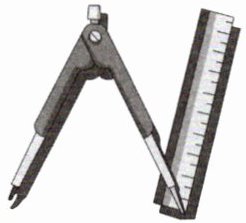
Gui was the tool used to draw circles, like today's compasses(圆规). Ju was used to draw squares, like the try square today.
Gui and ju were useful tools. They helped ancient people draw patterns. Thanks to them, geometry got better. Ju appeared in records of what is known as the Pythagorean theorem. This theorem was one of the most important findings in Maths history.
Ancient Chinese peoplecreated the tools very early. Records of the Historian said that Dayu, the man who fought the flood , used gui and ju.
In the brick carving patterns of the Han dynasty, there are such pictures: Fuxi holds a ju, while Nüwa holds a gui.
Ancient people compared guiju to laws and rules. Later, they used the word to refer to rules.
根据短文内容,回答下列问题。每题答案不超过6个词。
1. What did people use gui and ju to do in ancient times?
2. How did these two tools help the development of Maths?
3. Who used gui and ju according to Records of the Historian?
4. Which tool does Fuxi hold in ancient brick carving patterns?
5. How do you like guiju at school?
英语嗨吧
KEY→P17
范畴:人与社会 主题:语言文化 体裁:说明文 难度:★★★★ 建议用时:8分钟 评价:/5
In Chinese, guiju refers to rules. In fact, these two characters, gui and ju, referred to two tools in ancient times. Do you know what they were?
Gui was the tool used to draw circles, like today's compasses(圆规). Ju was used to draw squares, like the try square today.
Gui and ju were useful tools. They helped ancient people draw patterns. Thanks to them, geometry got better. Ju appeared in records of what is known as the Pythagorean theorem. This theorem was one of the most important findings in Maths history.
Ancient Chinese people
In the brick carving patterns of the Han dynasty, there are such pictures: Fuxi holds a ju, while Nüwa holds a gui.
Ancient people compared guiju to laws and rules. Later, they used the word to refer to rules.
根据短文内容,回答下列问题。每题答案不超过6个词。
1. What did people use gui and ju to do in ancient times?
To draw circles and squares.
2. How did these two tools help the development of Maths?
They helped geometry get better.
3. Who used gui and ju according to Records of the Historian?
Dayu.
4. Which tool does Fuxi hold in ancient brick carving patterns?
The ju.
5. How do you like guiju at school?
It's useful for our study./It keeps our school in order.
英语嗨吧
答案
任务型阅读
本文主要介绍了两种古代工具“规”和“矩”的来历和作用。人们在日常生活中使用“规”和“矩”来指代法律和规章制度。
1. To draw circles and squares. 根据第二段中的“Gui was the tool used to draw circles ... Ju was used to draw squares ...”可知,在古代人们用“规”画圆形,用“矩”画正方形。
2. They helped geometry get better. 根据第三段中的“Thanks to them, geometry got better.”可知答案。
3. Dayu. 根据第四段中的“Records of the Historian said that Dayu, the man who fought the flood, used gui and ju.”可知,在《史记》中,大禹使用了“规”和“矩”。
4. The ju. 根据倒数第二段中的“In the brick carving patterns of the Han dynasty ... Fuxi holds a ju ...”可知答案。
5. It's useful for our study./It keeps our school in order.(答案不唯一,言之有理即可)
本文主要介绍了两种古代工具“规”和“矩”的来历和作用。人们在日常生活中使用“规”和“矩”来指代法律和规章制度。
1. To draw circles and squares. 根据第二段中的“Gui was the tool used to draw circles ... Ju was used to draw squares ...”可知,在古代人们用“规”画圆形,用“矩”画正方形。
2. They helped geometry get better. 根据第三段中的“Thanks to them, geometry got better.”可知答案。
3. Dayu. 根据第四段中的“Records of the Historian said that Dayu, the man who fought the flood, used gui and ju.”可知,在《史记》中,大禹使用了“规”和“矩”。
4. The ju. 根据倒数第二段中的“In the brick carving patterns of the Han dynasty ... Fuxi holds a ju ...”可知答案。
5. It's useful for our study./It keeps our school in order.(答案不唯一,言之有理即可)
