

 登录
B
Standing in Steve Mann’s lab at the University of Toronto may be the closest thing to stepping inside his mind. Old computers, tools and other electronics fill every corner. Boxes of instruction books and tools reach almost to the top of the walls.
Mann chooses to keep his lab this way. “Since childhood, I’ve been interested in
how things work,” he says. “I’ve always filled my space with all kinds of cool, techy things.”
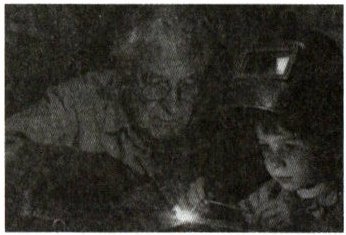
In fact, Mann, now 63, has always had a sense of curiosity about technology. When he was four, his grandfather taught him to weld(焊接). While working, he had to wear a welding helmet. Young Mann found that the helmet’s small window made it hard to see. Mann kept this “problem” in mind for years. Finally, in 1993, he had an idea: HDR. This technology mixes pictures taken with different light levels to make a clearer picture. It’s now used everywhere, from digital cameras to smart phones.
As a teenager, Mann helped at a workshop. Using the spare parts(剩余零件) in the shop, he built his first wearable computer, the WearComp. It weighed about 36 kilograms. Mann says it was inconvenient to use, but it worked.
Over time, Mann made it smaller, lighter and more useful. With the development of HDR, it finally became the EyeTap. It’s likely the world’s first pair of smart glasses. Mann was so proud that he wore it almost all the time. But many people thought it was strange. Some even crossed the street to avoid him. Mann also created a smartwatch videophone. “A lot of what I do seems ahead of its time,” he says. “Most of my ideas come to me in dreams. Somehow, they reach the future ahead of time.”
Mann still has a lot to say about where technology is headed. Hopefully, we’ll all start listening.
(
A. He is too busy to clean the lab.
B. He enjoys studying how things work.
C. He uses spare parts to build computers.
D. He is interested in collecting old things.
(
A. He dreamed about it many times as a kid.
B. He wanted to take better photos with his smart phone.
C. He had trouble seeing clearly through a welding helmet.
D. He failed to improve his first wearable computer many times.
(
A. It was very light and easy to carry.
B. It was the world’s first smartwatch videophone.
C. It later developed into the EyeTap step by step.
D. People all thought it was cool and useful at that time.
(
A. Kind and helpful.
B. Careful and serious.
C. Curious and creative.
D. Brave and hardworking.
Standing in Steve Mann’s lab at the University of Toronto may be the closest thing to stepping inside his mind. Old computers, tools and other electronics fill every corner. Boxes of instruction books and tools reach almost to the top of the walls.
Mann chooses to keep his lab this way. “Since childhood, I’ve been interested in
how things work,” he says. “I’ve always filled my space with all kinds of cool, techy things.”
In fact, Mann, now 63, has always had a sense of curiosity about technology. When he was four, his grandfather taught him to weld(焊接). While working, he had to wear a welding helmet. Young Mann found that the helmet’s small window made it hard to see. Mann kept this “problem” in mind for years. Finally, in 1993, he had an idea: HDR. This technology mixes pictures taken with different light levels to make a clearer picture. It’s now used everywhere, from digital cameras to smart phones.
As a teenager, Mann helped at a workshop. Using the spare parts(剩余零件) in the shop, he built his first wearable computer, the WearComp. It weighed about 36 kilograms. Mann says it was inconvenient to use, but it worked.
Over time, Mann made it smaller, lighter and more useful. With the development of HDR, it finally became the EyeTap. It’s likely the world’s first pair of smart glasses. Mann was so proud that he wore it almost all the time. But many people thought it was strange. Some even crossed the street to avoid him. Mann also created a smartwatch videophone. “A lot of what I do seems ahead of its time,” he says. “Most of my ideas come to me in dreams. Somehow, they reach the future ahead of time.”
Mann still has a lot to say about where technology is headed. Hopefully, we’ll all start listening.
(
B
)4. Why does Steve Mann keep his lab full of old electronics and tools?A. He is too busy to clean the lab.
B. He enjoys studying how things work.
C. He uses spare parts to build computers.
D. He is interested in collecting old things.
(
C
)5. How did Steve Mann get the idea for HDR?A. He dreamed about it many times as a kid.
B. He wanted to take better photos with his smart phone.
C. He had trouble seeing clearly through a welding helmet.
D. He failed to improve his first wearable computer many times.
(
C
)6. What can we learn about the WearComp from the passage?A. It was very light and easy to carry.
B. It was the world’s first smartwatch videophone.
C. It later developed into the EyeTap step by step.
D. People all thought it was cool and useful at that time.
(
C
)7. What do you think of Mann according to the passage?A. Kind and helpful.
B. Careful and serious.
C. Curious and creative.
D. Brave and hardworking.
答案
4. B
5. C
6. C
7. C
