

 登录
登录
二、阅读理解
A 跨学科·物理
体裁: 应用文
主题: 科普知识
难度: ★★★★
建议用时: 7 min
正确率: /4
A scale(天平), a baseball bat, and a bottle opener—they are all levers(杠杆), but each belongs to a different class. These classes aren't like the ones in school. Instead, they tell you where the lever's fulcrum, effort, and load are.
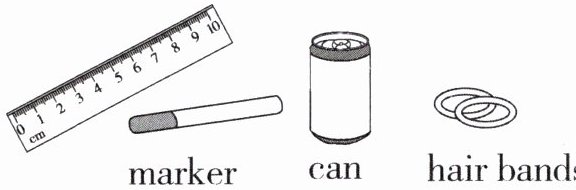
You need:
➢ ruler (the lever)
➢ marker (the fulcrum)
➢ can (the load)
➢ hair bands (to keep the load in place)
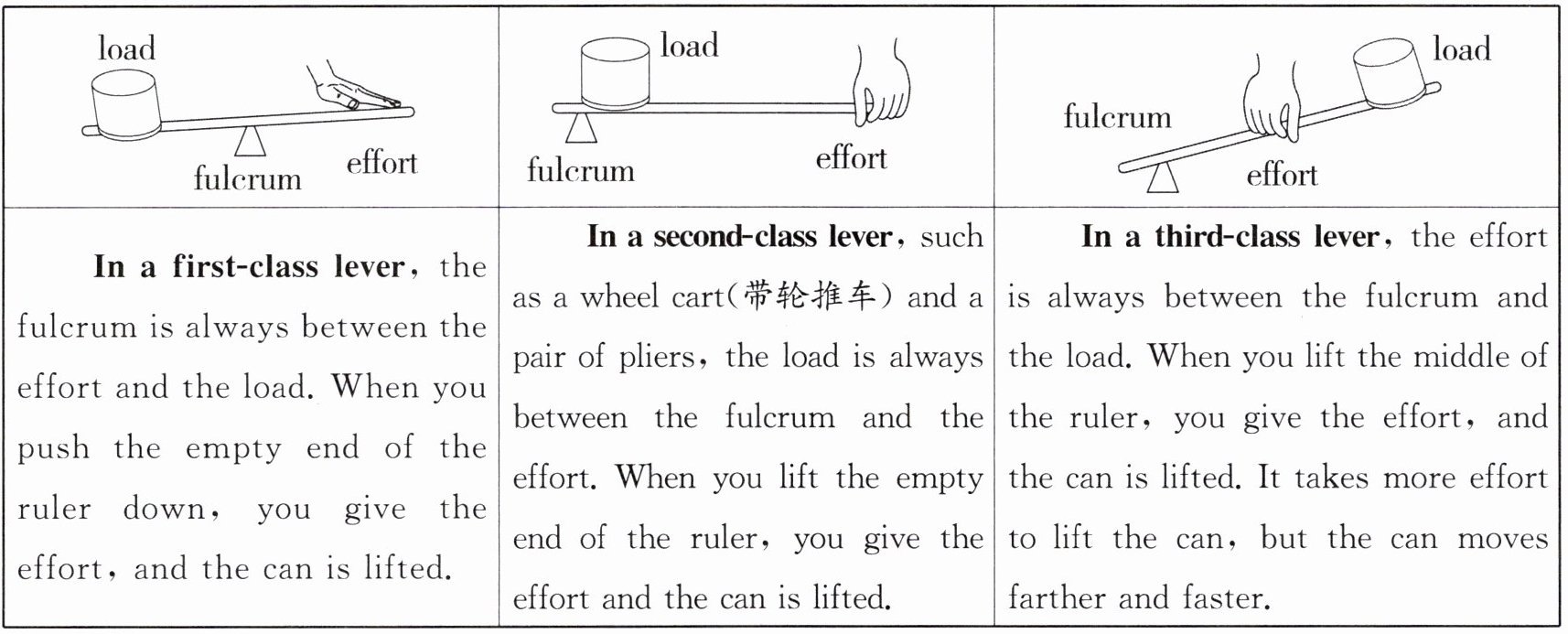
◆The fulcrum is the place the lever rests and turns. It doesn't move.
◆You give the effort at the place you push or pull the lever.
◆The load is the thing that gets moved.
1. What is a fulcrum in a lever?
A. The thing that gets moved.
B. The side that supports the weight.
C. The part which is pushed or pulled.
D. The point where the lever sits and turns.
2. What are hair bands used for in the lever activity?
A. To keep the can in place.
B. To make the ruler heavier.
C. To balance the marker on the ruler.
D. To know how high the can is lifted.
3. 新趋势·图示理解 As a second-class lever, which part is the load of the wheel cart in the picture?
▶▶图示理解题解题策略见 P28 重点精讲

4. According to the passage, which is a third-class lever?
A. A scale.
B. A baseball bat.
C. A pair of pliers.
D. A bottle opener.
A 跨学科·物理
体裁: 应用文
主题: 科普知识
难度: ★★★★
建议用时: 7 min
正确率: /4
A scale(天平), a baseball bat, and a bottle opener—they are all levers(杠杆), but each belongs to a different class. These classes aren't like the ones in school. Instead, they tell you where the lever's fulcrum, effort, and load are.
You need:
➢ ruler (the lever)
➢ marker (the fulcrum)
➢ can (the load)
➢ hair bands (to keep the load in place)
◆The fulcrum is the place the lever rests and turns. It doesn't move.
◆You give the effort at the place you push or pull the lever.
◆The load is the thing that gets moved.
1. What is a fulcrum in a lever?
A. The thing that gets moved.
B. The side that supports the weight.
C. The part which is pushed or pulled.
D. The point where the lever sits and turns.
2. What are hair bands used for in the lever activity?
A. To keep the can in place.
B. To make the ruler heavier.
C. To balance the marker on the ruler.
D. To know how high the can is lifted.
3. 新趋势·图示理解 As a second-class lever, which part is the load of the wheel cart in the picture?
▶▶图示理解题解题策略见 P28 重点精讲
4. According to the passage, which is a third-class lever?
A. A scale.
B. A baseball bat.
C. A pair of pliers.
D. A bottle opener.
答案
【语篇解读】本文是一篇应用文。文章主要介绍了杠杆的三种类型及其分类依据(支点、阻力点和动力点的位置关系)。
1. D 细节理解题。根据“The fulcrum is the place the lever rests and turns. It doesn't move.”可知支点是杠杆的固定转动点。故选D。
2. A 细节理解题。根据“hair bands (to keep the load in place)”可知发圈的作用是固定阻力点。故选A。
3. B 图示理解题。根据“In a second-class lever, such as a wheel cart and a pair of pliers, the load is always between the fulcrum and the effort.”可知带轮推车属于第二类杠杆,阻力点位于支点和动力点之间,结合图片中带轮推车的结构可知推车货物为阻力点,其位于车轮(支点)和手柄(动力点)之间。故选B。
4. B 推理判断题。根据“In a third-class lever, the effort is always between the fulcrum and the load.”可知第三类杠杆动力点位于支点和阻力点之间,根据“A scale, a baseball bat, and a bottle opener—they are all levers”可知棒球棒是杠杆,结合生活常识可知挥棒时手施加力的点(动力点)位于握柄(支点)和击球点(阻力点)之间。故选B。
易错点拨
A项“天平”的支点(中间转轴)位于动力点(放置砝码的托盘)和阻力点(放置待称物体的托盘)之间,属于第一类杠杆;根据“In a second-class lever, such as a wheel cart and a pair of pliers”可知C项“钳子”属于第二类杠杆;D项“开瓶器”阻力点(开瓶器钩住瓶盖下沿的点)位于支点(开瓶器与瓶盖边缘的接触点)和动力点(手握住开瓶器手柄的点)之间,属于第二类杠杆。
1. D 细节理解题。根据“The fulcrum is the place the lever rests and turns. It doesn't move.”可知支点是杠杆的固定转动点。故选D。
2. A 细节理解题。根据“hair bands (to keep the load in place)”可知发圈的作用是固定阻力点。故选A。
3. B 图示理解题。根据“In a second-class lever, such as a wheel cart and a pair of pliers, the load is always between the fulcrum and the effort.”可知带轮推车属于第二类杠杆,阻力点位于支点和动力点之间,结合图片中带轮推车的结构可知推车货物为阻力点,其位于车轮(支点)和手柄(动力点)之间。故选B。
4. B 推理判断题。根据“In a third-class lever, the effort is always between the fulcrum and the load.”可知第三类杠杆动力点位于支点和阻力点之间,根据“A scale, a baseball bat, and a bottle opener—they are all levers”可知棒球棒是杠杆,结合生活常识可知挥棒时手施加力的点(动力点)位于握柄(支点)和击球点(阻力点)之间。故选B。
易错点拨
A项“天平”的支点(中间转轴)位于动力点(放置砝码的托盘)和阻力点(放置待称物体的托盘)之间,属于第一类杠杆;根据“In a second-class lever, such as a wheel cart and a pair of pliers”可知C项“钳子”属于第二类杠杆;D项“开瓶器”阻力点(开瓶器钩住瓶盖下沿的点)位于支点(开瓶器与瓶盖边缘的接触点)和动力点(手握住开瓶器手柄的点)之间,属于第二类杠杆。
解析
【分析】
本题是跨学科的英语阅读理解题,围绕杠杆的分类及相关概念展开。解题时需先通读全文,明确支点、动力点、阻力点的定义,以及三类杠杆的特点;再针对每个问题,定位原文信息或结合跨学科知识(杠杆原理)分析选项,逐一推导答案。
【解析】
1. 细节理解题:根据原文“The fulcrum is the place the lever rests and turns. It doesn't move.”可知,支点是杠杆静止和转动的位置,对应选项D。
2. 细节理解题:根据原文“hair bands (to keep the load in place)”可知,发圈的作用是固定阻力点,对应选项A。
3. 图示理解题:第二类杠杆的特点是阻力点位于支点和动力点之间,轮车属于第二类杠杆;结合图示,推车的货物(load)位于车轮(fulcrum)和手柄(effort)之间,对应选项B。
4. 推理判断题:第三类杠杆的特点是动力点位于支点和阻力点之间;棒球棒作为杠杆,挥棒时手施加力的点(动力点)位于握柄(支点)和击球点(阻力点)之间,属于第三类杠杆;天平为第一类杠杆,钳子、开瓶器为第二类杠杆,对应选项B。
【答案】
1.D 2.A 3.B 4.B
【知识点】
英语阅读理解、杠杆原理、细节理解与推理判断
【点评】
本题为跨学科阅读理解题,融合英语阅读能力与物理杠杆知识,既考查学生提取文章细节的能力,又要求学生理解杠杆分类的逻辑,适合提升跨学科应用素养。
【难度系数】
0.4
本题是跨学科的英语阅读理解题,围绕杠杆的分类及相关概念展开。解题时需先通读全文,明确支点、动力点、阻力点的定义,以及三类杠杆的特点;再针对每个问题,定位原文信息或结合跨学科知识(杠杆原理)分析选项,逐一推导答案。
【解析】
1. 细节理解题:根据原文“The fulcrum is the place the lever rests and turns. It doesn't move.”可知,支点是杠杆静止和转动的位置,对应选项D。
2. 细节理解题:根据原文“hair bands (to keep the load in place)”可知,发圈的作用是固定阻力点,对应选项A。
3. 图示理解题:第二类杠杆的特点是阻力点位于支点和动力点之间,轮车属于第二类杠杆;结合图示,推车的货物(load)位于车轮(fulcrum)和手柄(effort)之间,对应选项B。
4. 推理判断题:第三类杠杆的特点是动力点位于支点和阻力点之间;棒球棒作为杠杆,挥棒时手施加力的点(动力点)位于握柄(支点)和击球点(阻力点)之间,属于第三类杠杆;天平为第一类杠杆,钳子、开瓶器为第二类杠杆,对应选项B。
【答案】
1.D 2.A 3.B 4.B
【知识点】
英语阅读理解、杠杆原理、细节理解与推理判断
【点评】
本题为跨学科阅读理解题,融合英语阅读能力与物理杠杆知识,既考查学生提取文章细节的能力,又要求学生理解杠杆分类的逻辑,适合提升跨学科应用素养。
【难度系数】
0.4
