

 登录
登录
Ⅳ. 补全短文。
根据短文内容,从方框中选出能填入空白处的最佳选项。(其中有一项为多余选项)
When you are in a new place or trying to find your way around, it's important and necessary to know how to ask for directions. It can help you get to your destination
(目的地)faster and avoid getting lost. 1 Don't worry. This passage will help.
The first and most important step is to start the conversation politely. When you ask for directions, the way you make your request can make a difference to the reply you receive. Using polite expressions shows respect for the person you're asking. 2 If possible, put on a smile.
Once you've started the conversation, you'd better ask for directions by using simple sentences. 3
•Could you please tell me the way to the bookshop?
•Excuse me. Can you give me directions to this house?
•What's the best way to reach Donald Street?
When receiving directions, it's important to make sure that you have understood them correctly to avoid getting lost or taking a longer path. 4 This not only shows that you've been listening carefully but also provides a chance to correct any misunderstandings. Here are some expressions to help you, too.
•Let me make sure I understood correctly; I should turn left, is that right?
•5
•Would it be possible for you to write down the directions for me?
Finally, when you have the information you need, don't forget to thank the person for his / her help.
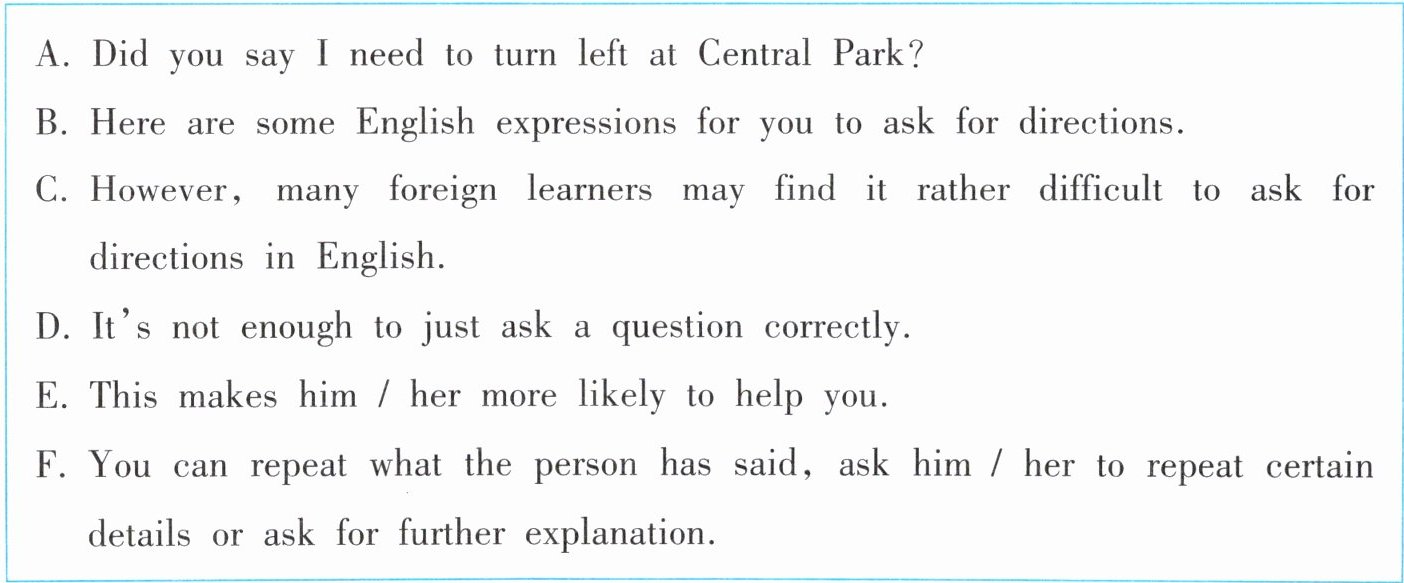
1. 2. 3. 4. 5.
根据短文内容,从方框中选出能填入空白处的最佳选项。(其中有一项为多余选项)
When you are in a new place or trying to find your way around, it's important and necessary to know how to ask for directions. It can help you get to your destination
(目的地)faster and avoid getting lost. 1 Don't worry. This passage will help.
The first and most important step is to start the conversation politely. When you ask for directions, the way you make your request can make a difference to the reply you receive. Using polite expressions shows respect for the person you're asking. 2 If possible, put on a smile.
Once you've started the conversation, you'd better ask for directions by using simple sentences. 3
•Could you please tell me the way to the bookshop?
•Excuse me. Can you give me directions to this house?
•What's the best way to reach Donald Street?
When receiving directions, it's important to make sure that you have understood them correctly to avoid getting lost or taking a longer path. 4 This not only shows that you've been listening carefully but also provides a chance to correct any misunderstandings. Here are some expressions to help you, too.
•Let me make sure I understood correctly; I should turn left, is that right?
•5
•Would it be possible for you to write down the directions for me?
Finally, when you have the information you need, don't forget to thank the person for his / her help.
1. 2. 3. 4. 5.
答案
1. C 2. E 3. B 4. F 5. A
解析
我们可以根据上下文逻辑逐一匹配选项:
1. 空1:前文点明问路的重要性,后文说“别担心,这篇文章会帮助你”,C选项“然而,很多外语学习者可能发现用英语问路相当困难”可以承上启下,引出下文的方法指导,符合语境。
2. 空2:前文提到使用礼貌表达是对问路对象的尊重,E选项“这会让他/她更有可能帮助你”中的This指代前文的礼貌行为,衔接后文“尽可能面带微笑”的内容,逻辑通顺。
3. 空3:前文建议用简单句子问路,后文列举了三个问路的英文例句,B选项“这里有一些供你问路使用的英文表达”可以自然引出下文的示例,符合语境。
4. 空4:前文说接收指路信息时要确保自己正确理解,后文说明对应的行为的好处,F选项“你可以重复对方说的内容,要求他/她重复某些细节或者要求进一步解释”正好对应后文提到的“表明你认真倾听、纠正误解”的作用,符合逻辑。
5. 空5:此处和前后的确认指路信息的例句并列,A选项“你是说我需要在中央公园左转吗?”是典型的确认问路信息的表达,符合语境。
多余选项为D。
1. 空1:前文点明问路的重要性,后文说“别担心,这篇文章会帮助你”,C选项“然而,很多外语学习者可能发现用英语问路相当困难”可以承上启下,引出下文的方法指导,符合语境。
2. 空2:前文提到使用礼貌表达是对问路对象的尊重,E选项“这会让他/她更有可能帮助你”中的This指代前文的礼貌行为,衔接后文“尽可能面带微笑”的内容,逻辑通顺。
3. 空3:前文建议用简单句子问路,后文列举了三个问路的英文例句,B选项“这里有一些供你问路使用的英文表达”可以自然引出下文的示例,符合语境。
4. 空4:前文说接收指路信息时要确保自己正确理解,后文说明对应的行为的好处,F选项“你可以重复对方说的内容,要求他/她重复某些细节或者要求进一步解释”正好对应后文提到的“表明你认真倾听、纠正误解”的作用,符合逻辑。
5. 空5:此处和前后的确认指路信息的例句并列,A选项“你是说我需要在中央公园左转吗?”是典型的确认问路信息的表达,符合语境。
多余选项为D。
