

 登录
登录
一、I. 纵横字谜。请根据所给中文提示在方框中拼写出正确的单词。
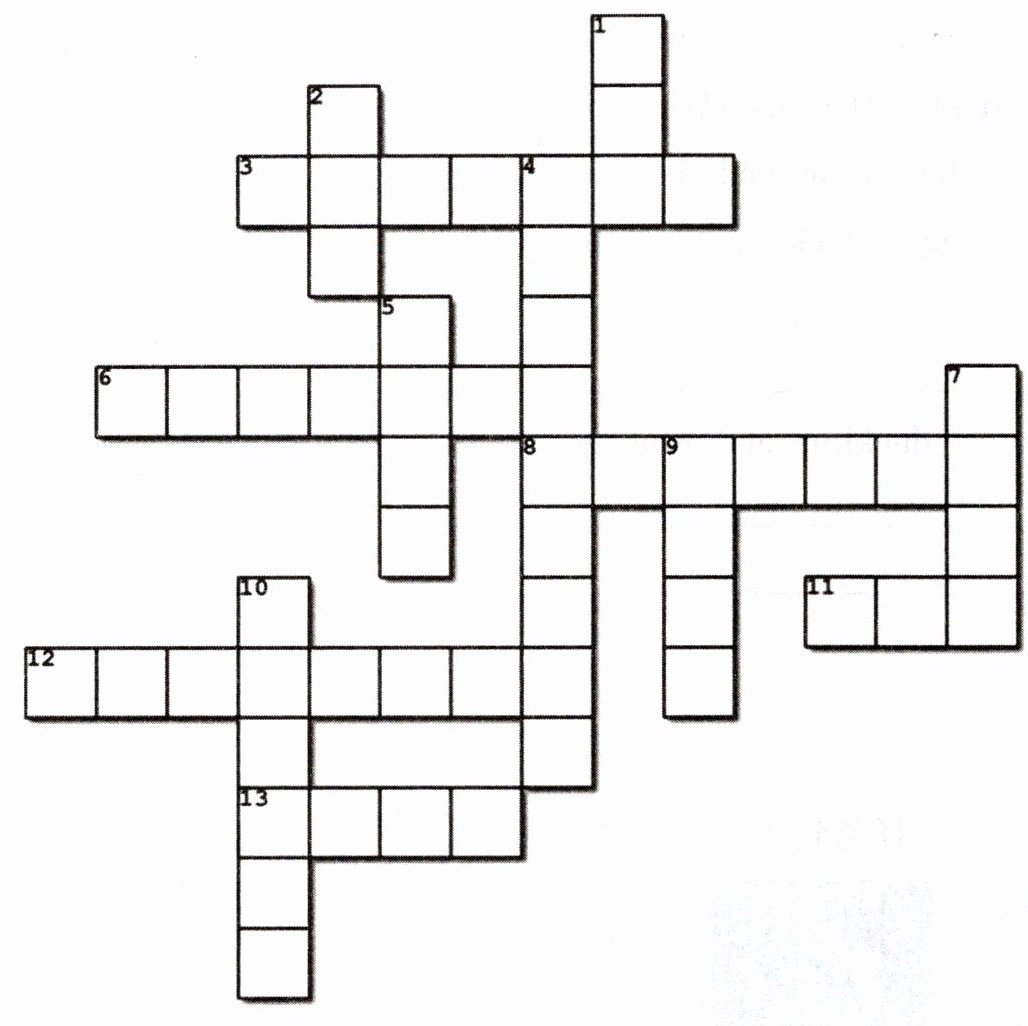 纵向: 横向:
1. v. 死亡 3. n. 羽毛
2. n. 母鸡 6. v. 不喜欢
4. adv.有希望地 8. v.钓鱼
5. n. 尺寸 11. v. 下(蛋)
7. adj. 丑陋的 12. adj. 强大的
9. n. 天鹅 13. adj. 真正的
10. v. 搜寻
纵向: 横向:1. v. 死亡 3. n. 羽毛
2. n. 母鸡 6. v. 不喜欢
4. adv.有希望地 8. v.钓鱼
5. n. 尺寸 11. v. 下(蛋)
7. adj. 丑陋的 12. adj. 强大的
9. n. 天鹅 13. adj. 真正的
10. v. 搜寻
答案
Ⅰ.

解析
【分析】
解这道纵横字谜的思路很清晰:首先先区分所有纵向、横向的编号,逐个统计每个编号对应的连续空白格数量,得到每个待填单词的字母总数;再结合给出的中文释义,匹配对应长度的正确英文单词,最后通过两个方向交叉位置的共用字母验证拼写的一致性,确认所有单词都符合格子排布规则,就能完成填写。优先选字母数少的简单单词先填,再推导长单词,会大幅降低解题难度。
【解析】
我们逐个匹配所有单词,验证交叉字母完全匹配:
1. 纵向1:动词“死亡”,共3格 → die
2. 纵向2:名词“母鸡”,共3格 → hen
3. 横向3:名词“羽毛”,共7格 → feather
4. 纵向4:副词“有希望地”,共9格 → hopefully
5. 纵向5:名词“尺寸”,共4格 → size
6. 横向6:动词“不喜欢”,共7格 → dislike
7. 纵向7:形容词“丑陋的”,共4格 → ugly
8. 横向8:动词“钓鱼”,共7格 → fishing
9. 纵向9:名词“天鹅”,共4格 → swan
10. 纵向10:动词“搜寻”,共6格 → search
11. 横向11:动词“下(蛋)”,共3格 → lay
12. 横向12:形容词“强大的”,共8格 → powerful
13. 横向13:形容词“真正的”,共4格 → real
所有交叉位置的字母都同时满足两个方向的单词拼写,完全符合字谜规则。
【答案】
【知识点】
英文基础词汇拼写
词汇释义对应
英文字谜逻辑
【点评】
本题以趣味纵横字谜的形式考察基础英语词汇的掌握情况,没有超纲词汇,解题时可以先从短单词入手快速填充,再用交叉字母校验长单词的拼写,既巩固了词汇记忆,也锻炼了逻辑推导能力。
【难度系数】
0.6
解这道纵横字谜的思路很清晰:首先先区分所有纵向、横向的编号,逐个统计每个编号对应的连续空白格数量,得到每个待填单词的字母总数;再结合给出的中文释义,匹配对应长度的正确英文单词,最后通过两个方向交叉位置的共用字母验证拼写的一致性,确认所有单词都符合格子排布规则,就能完成填写。优先选字母数少的简单单词先填,再推导长单词,会大幅降低解题难度。
【解析】
我们逐个匹配所有单词,验证交叉字母完全匹配:
1. 纵向1:动词“死亡”,共3格 → die
2. 纵向2:名词“母鸡”,共3格 → hen
3. 横向3:名词“羽毛”,共7格 → feather
4. 纵向4:副词“有希望地”,共9格 → hopefully
5. 纵向5:名词“尺寸”,共4格 → size
6. 横向6:动词“不喜欢”,共7格 → dislike
7. 纵向7:形容词“丑陋的”,共4格 → ugly
8. 横向8:动词“钓鱼”,共7格 → fishing
9. 纵向9:名词“天鹅”,共4格 → swan
10. 纵向10:动词“搜寻”,共6格 → search
11. 横向11:动词“下(蛋)”,共3格 → lay
12. 横向12:形容词“强大的”,共8格 → powerful
13. 横向13:形容词“真正的”,共4格 → real
所有交叉位置的字母都同时满足两个方向的单词拼写,完全符合字谜规则。
【答案】
【知识点】
英文基础词汇拼写
词汇释义对应
英文字谜逻辑
【点评】
本题以趣味纵横字谜的形式考察基础英语词汇的掌握情况,没有超纲词汇,解题时可以先从短单词入手快速填充,再用交叉字母校验长单词的拼写,既巩固了词汇记忆,也锻炼了逻辑推导能力。
【难度系数】
0.6
Ⅱ. 根据课本 Section B 1b的内容,按要求完成任务。任务一:根据课文 The Ugly Duckling完成表格。
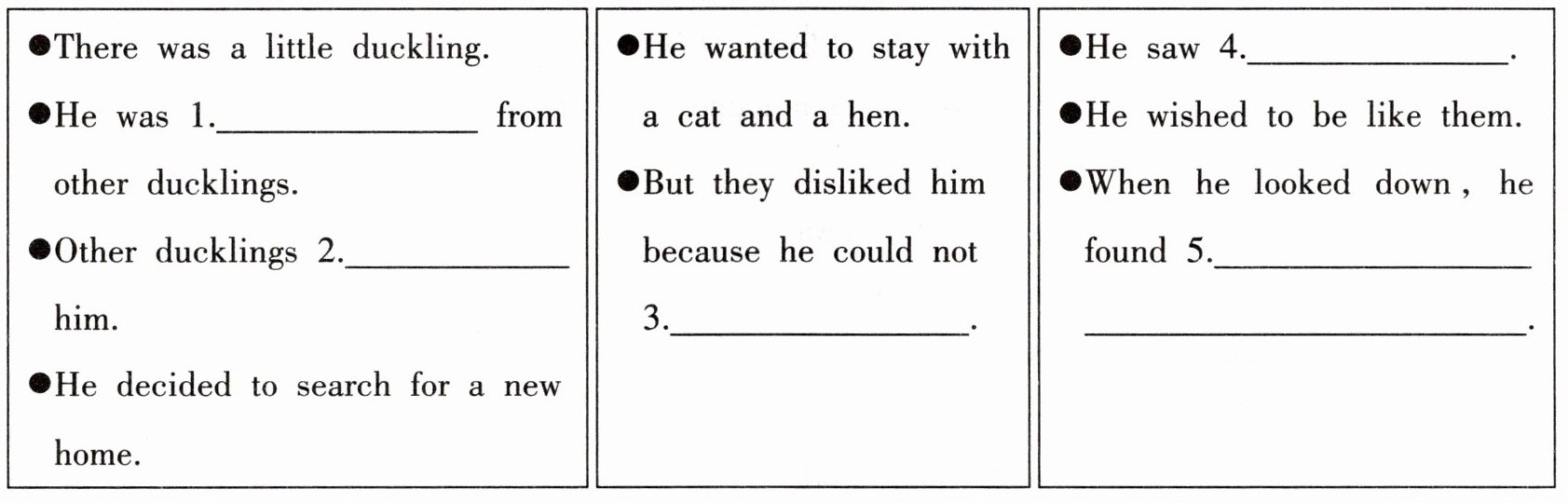
once upon a time one day
  some days later 6.
任务二:阅读短文,回答问题。
The Ugly Duckling was written by the Danish writer Hans Christian Andersen. In 1805, he was born into a poor family in Odense, Denmark. As a young boy, Andersen was tall, ugly and had a very big nose. His friends always said something bad about his big nose. Later, because his father died, Andersen had to live by himself. Life was very difficult for him, but these difficulties helped him write his fairy tales. In The Little Mermaid(《小美人鱼》),he talked about love and sacrifice(牺牲)。In The Emperor's New Clothes,he made fun of authority(权威)。Today,Andersen is famous around the world. Children love his stories.
7. Do you think Andersen was an“ugly duckling”? Explain your reasons ______ .
8. What can we learn from the ugly duckling and Andersen ______ ?
once upon a time
one day some days later 6.任务二:阅读短文,回答问题。
The Ugly Duckling was written by the Danish writer Hans Christian Andersen. In 1805, he was born into a poor family in Odense, Denmark. As a young boy, Andersen was tall, ugly and had a very big nose. His friends always said something bad about his big nose. Later, because his father died, Andersen had to live by himself. Life was very difficult for him, but these difficulties helped him write his fairy tales. In The Little Mermaid(《小美人鱼》),he talked about love and sacrifice(牺牲)。In The Emperor's New Clothes,he made fun of authority(权威)。Today,Andersen is famous around the world. Children love his stories.
7. Do you think Andersen was an“ugly duckling”? Explain your reasons ______ .
8. What can we learn from the ugly duckling and Andersen ______ ?
答案
Ⅱ. 任务一:
1. different 2. laughed at 3. purr or lay eggs 4. three beautiful swans
5. he was a beautiful swan too 6.
任务二:
7. Yes. Because when Andersen was young, he had a very big nose and his friends laughed at him. Besides, after his father died, he had to live by himself. So life was very difficult for him just like the ugly duckling. (仅供参考)
8. Even though they met many difficulties, they didn't give up themselves, and they were always hopeful. At last, the ugly duckling became a beautiful swan and Andersen became a famous writer. (仅供参考)
1. different 2. laughed at 3. purr or lay eggs 4. three beautiful swans
5. he was a beautiful swan too 6.
任务二:
7. Yes. Because when Andersen was young, he had a very big nose and his friends laughed at him. Besides, after his father died, he had to live by himself. So life was very difficult for him just like the ugly duckling. (仅供参考)
8. Even though they met many difficulties, they didn't give up themselves, and they were always hopeful. At last, the ugly duckling became a beautiful swan and Andersen became a famous writer. (仅供参考)
解析
【分析】
首先梳理解题思路:1. 任务一需要结合课本Section B 1b中《丑小鸭》的既定情节,按照故事的时间发展顺序,对应不同时间节点的情节空缺填写内容,回忆丑小鸭从出生与众不同、被旁人嘲笑,到无法适应农场生活,再到遇见天鹅最后发现自己也是天鹅的完整脉络即可完成填空。2. 任务二的两道开放题,首先要从给出的介绍安徒生的短文中定位关键信息:第7题先明确表态,再从文中找出安徒生年少时外貌被嘲笑、父亲早逝独自谋生、生活困苦的经历,对应“丑小鸭”前期的遭遇佐证观点;第8题结合丑小鸭最终蜕变成美丽天鹅、安徒生克服磨难成为世界知名童话作家的共同经历,提炼出面对困境的正确态度,言之有理符合文意即可。
【解析】
任务一:对照课本《The Ugly Duckling》的情节逐一补全内容:
1. 丑小鸭刚出生就和其他小鸭子不一样,此处填different
2. 周围的小动物都排挤、嘲笑这只样貌奇怪的丑小鸭,此处填laughed at
3. 丑小鸭既不能像猫一样发出咕噜声,也不能像母鸡一样下蛋,和农场里的其他生物格格不入,此处填purr or lay eggs
4. 几天后丑小鸭在水面上看到了三只优雅美丽的天鹅,此处填three beautiful swans
5. 当他低头看向水面的倒影时,发现自己也已经长成了一只美丽的天鹅,此处填he was a beautiful swan too
6. 补充完整故事结局的时间线即可。
任务二:
7. 先给出肯定结论,再从原文提取对应依据:安徒生年少时外貌丑陋、长着大鼻子被朋友非议,父亲去世后独自谋生生活十分艰难,和丑小鸭前期被排挤、处境窘迫的经历高度相似,完全符合“丑小鸭”的特质。
8. 从二者的共同经历提炼主旨:二者都在人生前期遭遇了诸多磨难和旁人的非议,但始终没有放弃自己、心怀希望,最终都实现了蜕变,获得了成功,这就是我们可以学习的品质。
【答案】
Ⅱ. 任务一:
1. different 2. laughed at 3. purr or lay eggs 4. three beautiful swans
5. he was a beautiful swan too 6. (对应故事结局补全时间线即可)
任务二:
7. Yes. Because when Andersen was young, he had a very big nose and his friends laughed at him. Besides, after his father died, he had to live by himself. So life was very difficult for him just like the ugly duckling. (仅供参考)
8. Even though they met many difficulties, they didn't give up themselves, and they were always hopeful. At last, the ugly duckling became a beautiful swan and Andersen became a famous writer. (仅供参考)
【知识点】
文本信息提取,童话情节识记,阅读开放表达
【点评】
本题将课本经典童话情节识记和作者生平拓展阅读结合,既考察学生对课内内容的熟悉程度,也锻炼学生从阅读材料中定位信息、结合主旨输出个人观点的能力,同时引导学生理解直面困境、坚持自我的正向价值观,题型灵活兼具知识性和教育意义。
【难度系数】
0.7
首先梳理解题思路:1. 任务一需要结合课本Section B 1b中《丑小鸭》的既定情节,按照故事的时间发展顺序,对应不同时间节点的情节空缺填写内容,回忆丑小鸭从出生与众不同、被旁人嘲笑,到无法适应农场生活,再到遇见天鹅最后发现自己也是天鹅的完整脉络即可完成填空。2. 任务二的两道开放题,首先要从给出的介绍安徒生的短文中定位关键信息:第7题先明确表态,再从文中找出安徒生年少时外貌被嘲笑、父亲早逝独自谋生、生活困苦的经历,对应“丑小鸭”前期的遭遇佐证观点;第8题结合丑小鸭最终蜕变成美丽天鹅、安徒生克服磨难成为世界知名童话作家的共同经历,提炼出面对困境的正确态度,言之有理符合文意即可。
【解析】
任务一:对照课本《The Ugly Duckling》的情节逐一补全内容:
1. 丑小鸭刚出生就和其他小鸭子不一样,此处填different
2. 周围的小动物都排挤、嘲笑这只样貌奇怪的丑小鸭,此处填laughed at
3. 丑小鸭既不能像猫一样发出咕噜声,也不能像母鸡一样下蛋,和农场里的其他生物格格不入,此处填purr or lay eggs
4. 几天后丑小鸭在水面上看到了三只优雅美丽的天鹅,此处填three beautiful swans
5. 当他低头看向水面的倒影时,发现自己也已经长成了一只美丽的天鹅,此处填he was a beautiful swan too
6. 补充完整故事结局的时间线即可。
任务二:
7. 先给出肯定结论,再从原文提取对应依据:安徒生年少时外貌丑陋、长着大鼻子被朋友非议,父亲去世后独自谋生生活十分艰难,和丑小鸭前期被排挤、处境窘迫的经历高度相似,完全符合“丑小鸭”的特质。
8. 从二者的共同经历提炼主旨:二者都在人生前期遭遇了诸多磨难和旁人的非议,但始终没有放弃自己、心怀希望,最终都实现了蜕变,获得了成功,这就是我们可以学习的品质。
【答案】
Ⅱ. 任务一:
1. different 2. laughed at 3. purr or lay eggs 4. three beautiful swans
5. he was a beautiful swan too 6. (对应故事结局补全时间线即可)
任务二:
7. Yes. Because when Andersen was young, he had a very big nose and his friends laughed at him. Besides, after his father died, he had to live by himself. So life was very difficult for him just like the ugly duckling. (仅供参考)
8. Even though they met many difficulties, they didn't give up themselves, and they were always hopeful. At last, the ugly duckling became a beautiful swan and Andersen became a famous writer. (仅供参考)
【知识点】
文本信息提取,童话情节识记,阅读开放表达
【点评】
本题将课本经典童话情节识记和作者生平拓展阅读结合,既考察学生对课内内容的熟悉程度,也锻炼学生从阅读材料中定位信息、结合主旨输出个人观点的能力,同时引导学生理解直面困境、坚持自我的正向价值观,题型灵活兼具知识性和教育意义。
【难度系数】
0.7
