

 登录
登录
一、Sam 和 Bob 正在商量科学课的小组课题。听对话,判断下列句子的正误,正确的写“T”,错误的写“F”。
(
(
(
(
(
(
F
)1. Sam and Bob are talking about water power.(
T
)2. Wind can make electricity.(
T
)3. We can get power from windmills(风车).(
F
)4. Sam has no questions about wind power.(
F
)5. They plan to go to the library to find some information.答案
1.F
2.T
3.T
4.F
5.F
2.T
3.T
4.F
5.F
二、Leo 和 Jason 的小组课题是关于水力发电的。请选择合适的句子补全对话。
Leo: 1.
Jason: Running water can make electricity.
Leo: Yes. 2.
Jason: I want to know how we make power from water.
Leo: Look! 3.
Jason: How do dams make electricity?
Leo: 4.
Jason: Yes, and it says we also get power from the sea.
Leo: Cool! 5.
A. Let's learn more about it.
B. The book says we use dams(大坝).
C. What do you know about water power?
D. What else do you want to know about it?
E. Water runs through the dams and turns big machines(机器).
Leo: 1.
C
Jason: Running water can make electricity.
Leo: Yes. 2.
D
Jason: I want to know how we make power from water.
Leo: Look! 3.
B
Jason: How do dams make electricity?
Leo: 4.
E
That makes electricity.Jason: Yes, and it says we also get power from the sea.
Leo: Cool! 5.
A
A. Let's learn more about it.
B. The book says we use dams(大坝).
C. What do you know about water power?
D. What else do you want to know about it?
E. Water runs through the dams and turns big machines(机器).
答案
1.C
2.D
3.B
4.E
5.A
2.D
3.B
4.E
5.A
解析
【分析】
本题为英语补全对话题,需结合对话上下文的问答逻辑与语境匹配选项。先通读对话,明确话题围绕水力发电展开,再逐一分析每个空缺处的前后句,匹配对应的选项:第1空后Jason回答流水能发电,对应Leo的提问;第2空后Jason表达想了解发电原理,对应Leo的提问;第3空后Jason询问大坝发电,对应Leo提及大坝的内容;第4空回答大坝发电的方式;第5空对应提议进一步了解的内容。
【解析】
1. 第1空:Jason答“Running water can make electricity.”,说明Leo问的是关于水力发电的认知,对应选项C(What do you know about water power?),故1选C。
2. 第2空:Jason说想知道如何从水发电,说明Leo问的是还想了解的内容,对应选项D(What else do you want to know about it?),故2选D。
3. 第3空:Leo说“Look!”,后文Jason问大坝发电,说明Leo提到了大坝,对应选项B(The book says we use dams(大坝).),故3选B。
4. 第4空:Jason问大坝如何发电,需回答发电的具体过程,对应选项E(Water runs through the dams and turns big machines(机器).),故4选E。
5. 第5空:Jason提到从海获取能量,Leo回应“Cool!”后提议进一步了解,对应选项A(Let's learn more about it.),故5选A。
【答案】
1.C
2.D
3.B
4.E
5.A
【知识点】
英语补全对话,日常交际用语
【点评】
本题结合水力发电话题考查英语补全对话,需理清上下文问答逻辑,匹配对应交际用语,难度适中,侧重基础交际能力的运用。
【难度系数】
0.6
本题为英语补全对话题,需结合对话上下文的问答逻辑与语境匹配选项。先通读对话,明确话题围绕水力发电展开,再逐一分析每个空缺处的前后句,匹配对应的选项:第1空后Jason回答流水能发电,对应Leo的提问;第2空后Jason表达想了解发电原理,对应Leo的提问;第3空后Jason询问大坝发电,对应Leo提及大坝的内容;第4空回答大坝发电的方式;第5空对应提议进一步了解的内容。
【解析】
1. 第1空:Jason答“Running water can make electricity.”,说明Leo问的是关于水力发电的认知,对应选项C(What do you know about water power?),故1选C。
2. 第2空:Jason说想知道如何从水发电,说明Leo问的是还想了解的内容,对应选项D(What else do you want to know about it?),故2选D。
3. 第3空:Leo说“Look!”,后文Jason问大坝发电,说明Leo提到了大坝,对应选项B(The book says we use dams(大坝).),故3选B。
4. 第4空:Jason问大坝如何发电,需回答发电的具体过程,对应选项E(Water runs through the dams and turns big machines(机器).),故4选E。
5. 第5空:Jason提到从海获取能量,Leo回应“Cool!”后提议进一步了解,对应选项A(Let's learn more about it.),故5选A。
【答案】
1.C
2.D
3.B
4.E
5.A
【知识点】
英语补全对话,日常交际用语
【点评】
本题结合水力发电话题考查英语补全对话,需理清上下文问答逻辑,匹配对应交际用语,难度适中,侧重基础交际能力的运用。
【难度系数】
0.6
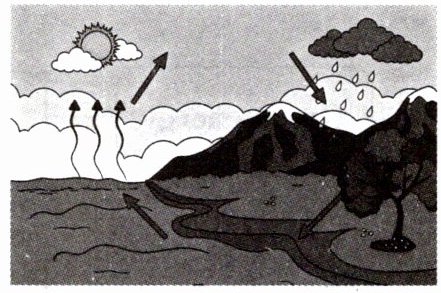
三、提升题 Leo 和 Jason 弄明白了水是从哪里来的。请根据图片提示,将下列句子重新排序,还原水循环的过程。(首句已给出)
(
( 1 )When it's sunny, water at the top of the sea gets warm.
(
(
(
(
3
)When clouds hold enough water, it rains.( 1 )When it's sunny, water at the top of the sea gets warm.
(
5
)Water in rivers goes into the sea again.(
4
)When rain falls, water goes into rivers.(
2
)Some of the water goes up into the sky.答案
( 3 )When clouds hold enough water, it rains.
( 1 )When it's sunny, water at the top of the sea gets warm.
( 5 )Water in rivers goes into the sea again.
( 4 )When rain falls, water goes into rivers.
( 2 )Some of the water goes up into the sky.

解析
【分析】首先明确水循环的逻辑顺序,题目已给出首句(1):晴天时海面的水变暖。接下来,海面的水受热后会蒸发上升,对应句子“Some of the water goes up into the sky.”(第2句);水汽上升到天空形成云,当云聚集足够多的水汽时会降雨,对应句子“When clouds hold enough water, it rains.”(第3句);降雨后,雨水会流入河流,对应句子“When rain falls, water goes into rivers.”(第4句);最后河流中的水会再次流入大海,对应句子“Water in rivers goes into the sea again.”(第5句)。由此可确定各句的排序。
【解析】根据水循环的自然过程,结合给定首句的逻辑:
1. 首句(1):晴天海面水变暖,是水循环的起始条件;
2. 变暖的水蒸发上升,对应“Some of the water goes up into the sky.”,排序为2;
3. 水汽形成云后降雨,对应“When clouds hold enough water, it rains.”,排序为3;
4. 降雨后水流进河流,对应“When rain falls, water goes into rivers.”,排序为4;
5. 河流的水回到大海,对应“Water in rivers goes into the sea again.”,排序为5。
因此各句的正确排序为:3、1、5、4、2。
【答案】( 3 )When clouds hold enough water, it rains.
( 1 )When it's sunny, water at the top of the sea gets warm.
( 5 )Water in rivers goes into the sea again.
( 4 )When rain falls, water goes into rivers.
( 2 )Some of the water goes up into the sky.
【知识点】水循环、水的物态变化
【点评】本题通过图片辅助考查水循环的过程顺序,需要学生理解水在自然界的循环步骤,难度适中,能帮助学生巩固水循环的相关知识。
【难度系数】0.5
【解析】根据水循环的自然过程,结合给定首句的逻辑:
1. 首句(1):晴天海面水变暖,是水循环的起始条件;
2. 变暖的水蒸发上升,对应“Some of the water goes up into the sky.”,排序为2;
3. 水汽形成云后降雨,对应“When clouds hold enough water, it rains.”,排序为3;
4. 降雨后水流进河流,对应“When rain falls, water goes into rivers.”,排序为4;
5. 河流的水回到大海,对应“Water in rivers goes into the sea again.”,排序为5。
因此各句的正确排序为:3、1、5、4、2。
【答案】( 3 )When clouds hold enough water, it rains.
( 1 )When it's sunny, water at the top of the sea gets warm.
( 5 )Water in rivers goes into the sea again.
( 4 )When rain falls, water goes into rivers.
( 2 )Some of the water goes up into the sky.
【知识点】水循环、水的物态变化
【点评】本题通过图片辅助考查水循环的过程顺序,需要学生理解水在自然界的循环步骤,难度适中,能帮助学生巩固水循环的相关知识。
【难度系数】0.5
