

 登录
登录
四、任务型阅读
阅读下面短文,并根据所读内容在文章后的表格里填入最恰当的单词,每个空格只填一个单词。
(2025·泰州二模改编) It is impossible to name all Chinese customs in a single article. Even so, in this passage we bring you several Chinese customs and traditions that you should know.
Chinese usually do not show their feelings openly, also avoiding any unnecessary(不必要的) body touch. The Chinese see badly that people kiss each other on the face. In fact, shaking hands was also not so acceptable in the past. For them it was enough to make a small nod when greeting. As the country gradually(逐渐地) lets Western traditions in, people are used to shaking hands to greet.
Many food manners must be followed strictly at meals. Some details should be paid much attention to by both guests and hosts. In China, the older guests are always seated first, and then others can take their seats. Food manners are also very important. You should never serve yourself a drink. It should be served by someone else. Chopsticks should never be placed upwards in food. And to eat, never put your mouth away from your own bowl.
The Chinese have the habit and skill of being able to sleep anywhere at any time. It doesn't matter if it's on the break from work, in the middle of the street or waiting in a supermarket. This Chinese custom has nothing to do with laziness, quite the opposite. In China, sleeping for a short time in public places is considered a symbol of effort. For example, thousands and millions of netizens(网民) will give a photo of a sleeping doctor in the corner of the operating room a "like" to show their respect to the doctor. So, this person has been putting a lot of effort into his work and it is right that he should sleep as he likes.
Many of you have already known it's not polite to open gifts in public. But that's not the only important thing to know when receiving gifts in China. For example, the Chinese will always refuse your gift up to three times to show they are well educated. But in the end, they're willing to accept it. And remember not to receive the gift with only one hand.
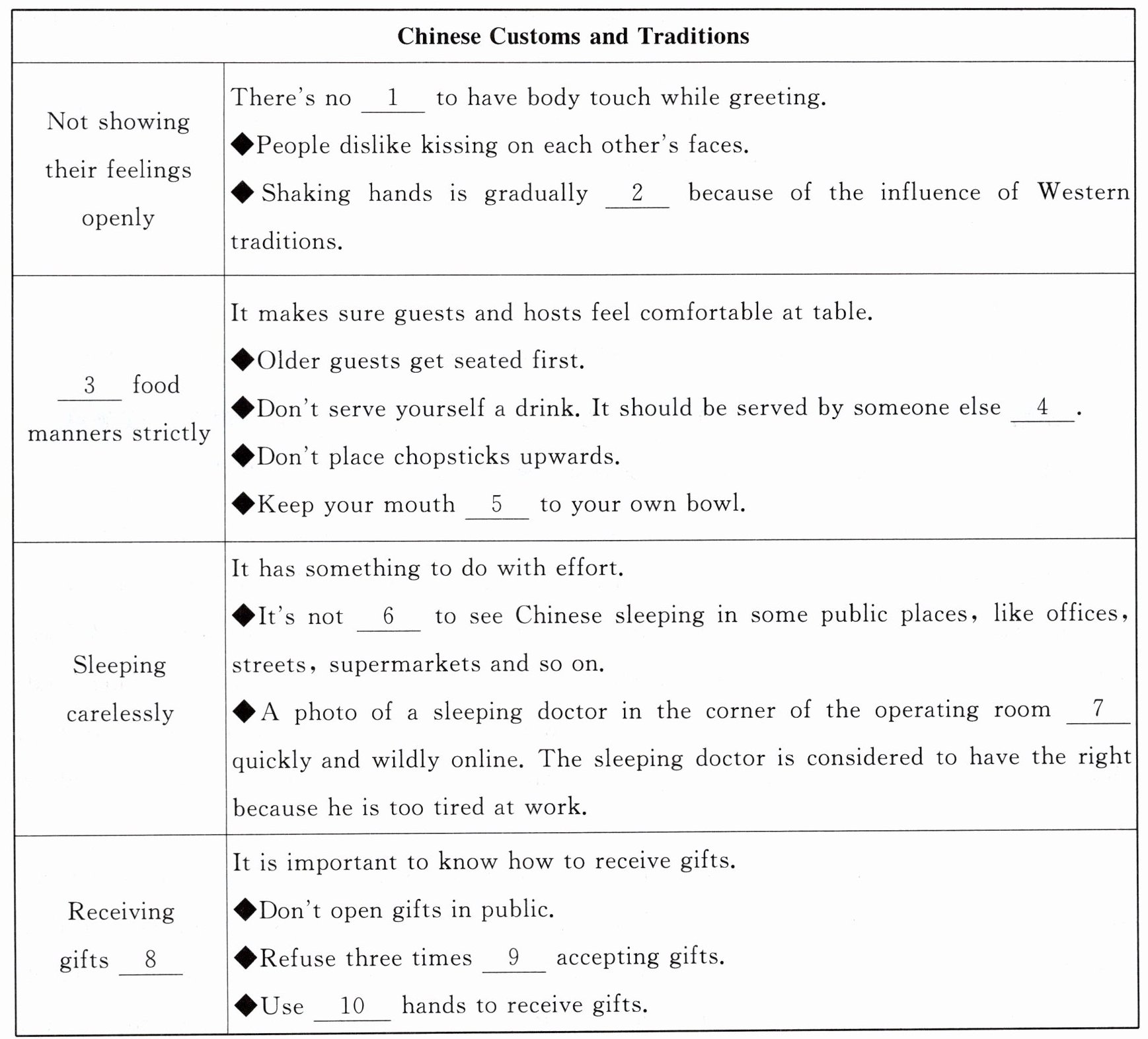
1.
6.
阅读下面短文,并根据所读内容在文章后的表格里填入最恰当的单词,每个空格只填一个单词。
(2025·泰州二模改编) It is impossible to name all Chinese customs in a single article. Even so, in this passage we bring you several Chinese customs and traditions that you should know.
Chinese usually do not show their feelings openly, also avoiding any unnecessary(不必要的) body touch. The Chinese see badly that people kiss each other on the face. In fact, shaking hands was also not so acceptable in the past. For them it was enough to make a small nod when greeting. As the country gradually(逐渐地) lets Western traditions in, people are used to shaking hands to greet.
Many food manners must be followed strictly at meals. Some details should be paid much attention to by both guests and hosts. In China, the older guests are always seated first, and then others can take their seats. Food manners are also very important. You should never serve yourself a drink. It should be served by someone else. Chopsticks should never be placed upwards in food. And to eat, never put your mouth away from your own bowl.
The Chinese have the habit and skill of being able to sleep anywhere at any time. It doesn't matter if it's on the break from work, in the middle of the street or waiting in a supermarket. This Chinese custom has nothing to do with laziness, quite the opposite. In China, sleeping for a short time in public places is considered a symbol of effort. For example, thousands and millions of netizens(网民) will give a photo of a sleeping doctor in the corner of the operating room a "like" to show their respect to the doctor. So, this person has been putting a lot of effort into his work and it is right that he should sleep as he likes.
Many of you have already known it's not polite to open gifts in public. But that's not the only important thing to know when receiving gifts in China. For example, the Chinese will always refuse your gift up to three times to show they are well educated. But in the end, they're willing to accept it. And remember not to receive the gift with only one hand.
1.
need
2. accepted/acceptable
3. Following
4. instead
5. close
6.
strange/surprising/uncommon/unusual
7. spreads
8. politely
9. before
10. both/two
答案
【文章大意】本文是一篇说明文,介绍了中国的几种传统习俗和礼仪,包括情感表达、餐桌礼仪、公共场合小睡习惯以及收礼礼节。
1. need 2. accepted/acceptable 3. Following 4. instead
5. close 6. strange/surprising/uncommon/unusual
7. spreads 8. politely 9. before 10. both/two
1. need 2. accepted/acceptable 3. Following 4. instead
5. close 6. strange/surprising/uncommon/unusual
7. spreads 8. politely 9. before 10. both/two
解析
【分析】
首先通读全文,明确文章围绕中国传统习俗与礼仪展开,涵盖情感表达、餐桌礼仪、公共场合小憩、收礼礼节四个方面。随后针对每个空格,先定位对应段落,再结合上下文语境与语法要求,提炼或转换合适单词:
1. 结合第一段“several Chinese customs and traditions that you should know”,空格需表达“需要了解”的含义,转换为单词need。
2. 从第二段关于握手的内容“As the country gradually lets Western traditions in, people are used to shaking hands to greet”,可知如今握手是被接受的,填写对应的形容词或过去分词形式。
3. 第三段讲餐桌礼仪,开头提到“Many food manners must be followed strictly”,空格需动名词形式表示“遵循”礼仪,确定对应单词。
4. 根据第三段“You should never serve yourself a drink. It should be served by someone else”,用instead表示“相反,转而由他人做”。
5. 从第三段“never put your mouth away from your own bowl”,可知吃饭时嘴要靠近碗,填close。
6. 第四段提到中国人在公共场合睡觉的习惯,这在外国人看来较为特别,填写表示“奇怪、不寻常”的单词。
7. 第四段中网民给睡在手术室的医生点赞,说明“小憩是努力的象征”这一观念在传播,填spreads。
8. 第五段讲收礼时中国人会多次拒绝,这是礼貌的表现,填副词politely修饰动词refuse。
9. 根据第五段“refuse your gift up to three times...But in the end, they're willing to accept it”,说明在接受之前会拒绝,填before。
10. 从第五段“not to receive the gift with only one hand”,可知要用双手,填both或two。
【解析】
1. 根据第一段“several Chinese customs and traditions that you should know”,此处表达“需要了解的习俗”,填need。
2. 由第二段“As the country gradually lets Western traditions in, people are used to shaking hands to greet”可知,现在握手是被大众接受的,填accepted/acceptable。
3. 第三段提到餐桌礼仪需严格遵守,空格处为动名词作主语,对应“Following”。
4. 根据第三段“You should never serve yourself a drink. It should be served by someone else”,用instead表示“相反,由他人来倒”。
5. 第三段“never put your mouth away from your own bowl”即吃饭时嘴要靠近碗,填close。
6. 第四段中中国人在公共场合睡觉的习惯对外国人来说是不寻常的,填strange/surprising/uncommon/unusual。
7. 第四段中网民的行为说明这种观念在传播,填spreads。
8. 第五段“the Chinese will always refuse your gift up to three times to show they are well educated”,是礼貌地拒绝,填politely。
9. 根据第五段“refuse your gift up to three times...But in the end, they're willing to accept it”,表示在接受之前拒绝,填before。
10. 由第五段“not to receive the gift with only one hand”可知要用双手,填both/two。
【答案】
1. need
2. accepted/acceptable
3. Following
4. instead
5. close
6. strange/surprising/uncommon/unusual
7. spreads
8. politely
9. before
10. both/two
【知识点】
任务型阅读、说明文信息提取、中国传统习俗
【点评】
本文是介绍中国传统习俗的说明文,任务型阅读考查学生对文章细节信息的提取能力,以及词汇变形、语境适配能力。解题时需精准定位段落,结合语法要求和上下文语义填写合适单词,对学生的语言综合运用能力要求较高。
【难度系数】
0.2
首先通读全文,明确文章围绕中国传统习俗与礼仪展开,涵盖情感表达、餐桌礼仪、公共场合小憩、收礼礼节四个方面。随后针对每个空格,先定位对应段落,再结合上下文语境与语法要求,提炼或转换合适单词:
1. 结合第一段“several Chinese customs and traditions that you should know”,空格需表达“需要了解”的含义,转换为单词need。
2. 从第二段关于握手的内容“As the country gradually lets Western traditions in, people are used to shaking hands to greet”,可知如今握手是被接受的,填写对应的形容词或过去分词形式。
3. 第三段讲餐桌礼仪,开头提到“Many food manners must be followed strictly”,空格需动名词形式表示“遵循”礼仪,确定对应单词。
4. 根据第三段“You should never serve yourself a drink. It should be served by someone else”,用instead表示“相反,转而由他人做”。
5. 从第三段“never put your mouth away from your own bowl”,可知吃饭时嘴要靠近碗,填close。
6. 第四段提到中国人在公共场合睡觉的习惯,这在外国人看来较为特别,填写表示“奇怪、不寻常”的单词。
7. 第四段中网民给睡在手术室的医生点赞,说明“小憩是努力的象征”这一观念在传播,填spreads。
8. 第五段讲收礼时中国人会多次拒绝,这是礼貌的表现,填副词politely修饰动词refuse。
9. 根据第五段“refuse your gift up to three times...But in the end, they're willing to accept it”,说明在接受之前会拒绝,填before。
10. 从第五段“not to receive the gift with only one hand”,可知要用双手,填both或two。
【解析】
1. 根据第一段“several Chinese customs and traditions that you should know”,此处表达“需要了解的习俗”,填need。
2. 由第二段“As the country gradually lets Western traditions in, people are used to shaking hands to greet”可知,现在握手是被大众接受的,填accepted/acceptable。
3. 第三段提到餐桌礼仪需严格遵守,空格处为动名词作主语,对应“Following”。
4. 根据第三段“You should never serve yourself a drink. It should be served by someone else”,用instead表示“相反,由他人来倒”。
5. 第三段“never put your mouth away from your own bowl”即吃饭时嘴要靠近碗,填close。
6. 第四段中中国人在公共场合睡觉的习惯对外国人来说是不寻常的,填strange/surprising/uncommon/unusual。
7. 第四段中网民的行为说明这种观念在传播,填spreads。
8. 第五段“the Chinese will always refuse your gift up to three times to show they are well educated”,是礼貌地拒绝,填politely。
9. 根据第五段“refuse your gift up to three times...But in the end, they're willing to accept it”,表示在接受之前拒绝,填before。
10. 由第五段“not to receive the gift with only one hand”可知要用双手,填both/two。
【答案】
1. need
2. accepted/acceptable
3. Following
4. instead
5. close
6. strange/surprising/uncommon/unusual
7. spreads
8. politely
9. before
10. both/two
【知识点】
任务型阅读、说明文信息提取、中国传统习俗
【点评】
本文是介绍中国传统习俗的说明文,任务型阅读考查学生对文章细节信息的提取能力,以及词汇变形、语境适配能力。解题时需精准定位段落,结合语法要求和上下文语义填写合适单词,对学生的语言综合运用能力要求较高。
【难度系数】
0.2
