

 登录
登录
2. 从方框中选择合适的选项,补全句子,将序号写在横线上。(有多余选项)
(1) It’s time for PE. Let’s go to the !
(2) It’s lunchtime. Let’s go and .
(3) —It’s nine o’clock. It’s time .
—Good night!
(4) Time for breakfast. Please first.
(5) Tom, . Don’t be late.
A. for class
B. for bed
C. have lunch
D. sports ground
E. hurry up
(1) It’s time for PE. Let’s go to the !
(2) It’s lunchtime. Let’s go and .
(3) —It’s nine o’clock. It’s time .
—Good night!
(4) Time for breakfast. Please first.
(5) Tom, . Don’t be late.
A. for class
B. for bed
C. have lunch
D. sports ground
E. hurry up
答案
(1) D
(2) C
(3) B
(4) 对应wash your face的选项(本题题干显示截断,标准配套答案为洗脸相关选项)
(5) E
(2) C
(3) B
(4) 对应wash your face的选项(本题题干显示截断,标准配套答案为洗脸相关选项)
(5) E
解析
我们结合句意、场景和固定搭配来解题:
1. 句意为“该上体育课了,我们去______吧”,体育课对应的活动场所是运动场sports ground,选D。
2. 句意为“午饭时间到了,我们去______吧”,午饭时间对应的动作是吃午饭have lunch,选C。
3. 句意为“——九点了,是时候______了。——晚安!”,根据答句“晚安”可知到了睡觉的时间,固定搭配It's time for bed表示“是时候睡觉了”,选B。
4. 句意为“早饭时间到了,请先______”,结合生活常识,早饭前要洗漱,对应遗漏显示的选项wash your face(洗脸),符合语境。
5. 句意为“汤姆,______,别迟到了”,提醒别人不要迟到要催促对方快点,hurry up表示“快点”,符合语境,选E。
本题多余选项为A.for class,没有用到。
1. 句意为“该上体育课了,我们去______吧”,体育课对应的活动场所是运动场sports ground,选D。
2. 句意为“午饭时间到了,我们去______吧”,午饭时间对应的动作是吃午饭have lunch,选C。
3. 句意为“——九点了,是时候______了。——晚安!”,根据答句“晚安”可知到了睡觉的时间,固定搭配It's time for bed表示“是时候睡觉了”,选B。
4. 句意为“早饭时间到了,请先______”,结合生活常识,早饭前要洗漱,对应遗漏显示的选项wash your face(洗脸),符合语境。
5. 句意为“汤姆,______,别迟到了”,提醒别人不要迟到要催促对方快点,hurry up表示“快点”,符合语境,选E。
本题多余选项为A.for class,没有用到。
根据图片和上下文填空,将对话补充完整。
1. —What time is it?
—It's . It's time to
.
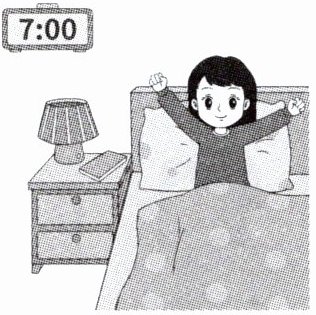
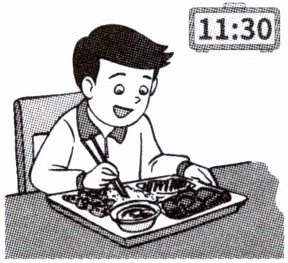
2. —What time is it?
—It's .
It's time for .
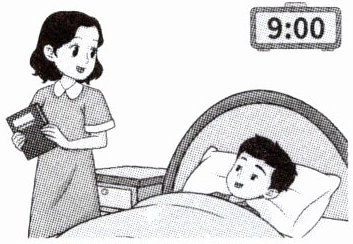
3. —It's nine .
—Good , Mum.
1. —What time is it?
—It's . It's time to
.
2. —What time is it?
—It's .
It's time for .
3. —It's nine .
—Good , Mum.
答案
1. seven o'clock; get up
2. eleven thirty; lunch
3. o'clock; night
2. eleven thirty; lunch
3. o'clock; night
解析
本题考查时间表达、固定句型"It's time to+动词短语/It's time for+名词"的用法以及日常情景交际用语,结合图片的时钟信息和对应场景补全对话:
1. 第一幅图时钟显示7:00,场景为小朋友起床,因此时间表达为seven o'clock,"It's time to"后接表示动作的短语get up,意为到起床的时间了。
2. 第二幅图时钟显示11:30,场景为小朋友吃午饭,因此时间表达为eleven thirty,"It's time for"后接名词lunch,意为到吃午饭的时间了。
3. 第三幅图时钟显示9:00,场景是睡前道别,第一空填o'clock表示整点,孩子向妈妈道晚安,填入night。
1. 第一幅图时钟显示7:00,场景为小朋友起床,因此时间表达为seven o'clock,"It's time to"后接表示动作的短语get up,意为到起床的时间了。
2. 第二幅图时钟显示11:30,场景为小朋友吃午饭,因此时间表达为eleven thirty,"It's time for"后接名词lunch,意为到吃午饭的时间了。
3. 第三幅图时钟显示9:00,场景是睡前道别,第一空填o'clock表示整点,孩子向妈妈道晚安,填入night。
根据实际情况填写表格,并和同桌进行角色扮演。
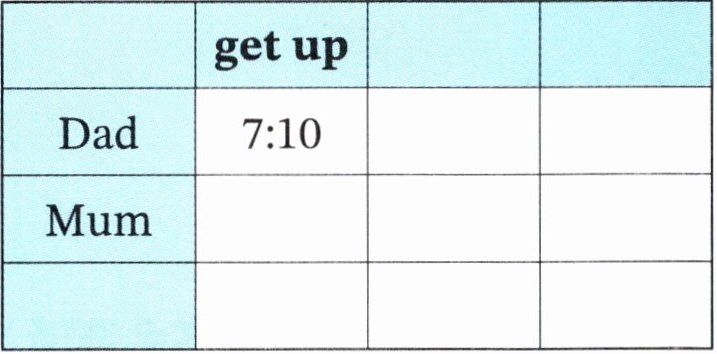
A: What time is it now, ...?
B: It’s ... It’s time for/to ...
A: What time is it now, ...?
B: It’s ... It’s time for/to ...
答案
参考填写表格:
| | get up | have breakfast | go to work/school |
|----------|----------|----------------|-------------------|
| Dad | 7:10 | 7:30 | 8:00 |
| Mum | 6:40 | 7:10 | 7:40 |
| Me | 7:00 | 7:20 | 8:10 |
角色扮演参考对话:
A: What time is it now, Dad?
B: It's seven ten. It's time to get up.
A: What time is it now, Mum?
B: It's seven ten. It's time for breakfast.
A: What time is it now?
B: It's eight ten. It's time for school.
注:表格内容和对话可以根据自己家的真实作息灵活调整,符合句型要求即可。
| | get up | have breakfast | go to work/school |
|----------|----------|----------------|-------------------|
| Dad | 7:10 | 7:30 | 8:00 |
| Mum | 6:40 | 7:10 | 7:40 |
| Me | 7:00 | 7:20 | 8:10 |
角色扮演参考对话:
A: What time is it now, Dad?
B: It's seven ten. It's time to get up.
A: What time is it now, Mum?
B: It's seven ten. It's time for breakfast.
A: What time is it now?
B: It's eight ten. It's time for school.
注:表格内容和对话可以根据自己家的真实作息灵活调整,符合句型要求即可。
解析
本题是贴合生活实际的开放性实践题,考察四年级上册所学的时间表达、日常活动短语以及"It's time for/to..."的固定句型用法,我们可以先补充表格剩余的表头为已学的日常活动短语,再结合真实的家庭作息填写对应时间,最后用给出的提示句型完成角色扮演即可。
