

 登录
登录
Ⅱ.用括号内所给单词的适当形式填空。
1. There
2. Good eating
3. It's necessary for us to have a
4. My friends would like
1. There
is
(be) some mutton in the noodles.2. Good eating
habits
(habit) are good for our health.3. It's necessary for us to have a
balanced
(balance) diet if we want to keep healthy.4. My friends would like
to visit
(visit) us next week. I'm so happy about that.答案
Ⅱ.
1. is
2. habits
3. balanced
4. to visit
1. is
2. habits
3. balanced
4. to visit
解析
【分析】
本题考查英语基础语法知识,需结合各小题的考点分析:1. there be句型遵循就近原则,主语为不可数名词时be动词用单数;2. 根据be动词的形式判断主语的单复数,名词复数需对应变化;3. 修饰名词需用形容词,需转换所给单词的词性;4. 固定搭配中动词的形式为不定式。
【解析】
1. there be句型遵循“就近原则”,主语some mutton是不可数名词,时态为一般现在时,故be动词用is;
2. 句中be动词为are,说明主语是复数,habit的复数形式为habits;
3. 此处修饰名词diet,需用形容词,balance的形容词形式是balanced;
4. 固定搭配would like to do sth意为“想要做某事”,故填动词不定式to visit。
【答案】
Ⅱ.1.is 2.habits 3.balanced 4.to visit
【知识点】
there be句型;名词复数;形容词作定语;固定搭配
【点评】
本题聚焦英语基础语法,涵盖there be句型、名词数的变化、形容词用法及常用固定搭配,难度较低,主要考查学生对基础知识点的掌握与应用能力。
【难度系数】
0.8
本题考查英语基础语法知识,需结合各小题的考点分析:1. there be句型遵循就近原则,主语为不可数名词时be动词用单数;2. 根据be动词的形式判断主语的单复数,名词复数需对应变化;3. 修饰名词需用形容词,需转换所给单词的词性;4. 固定搭配中动词的形式为不定式。
【解析】
1. there be句型遵循“就近原则”,主语some mutton是不可数名词,时态为一般现在时,故be动词用is;
2. 句中be动词为are,说明主语是复数,habit的复数形式为habits;
3. 此处修饰名词diet,需用形容词,balance的形容词形式是balanced;
4. 固定搭配would like to do sth意为“想要做某事”,故填动词不定式to visit。
【答案】
Ⅱ.1.is 2.habits 3.balanced 4.to visit
【知识点】
there be句型;名词复数;形容词作定语;固定搭配
【点评】
本题聚焦英语基础语法,涵盖there be句型、名词数的变化、形容词用法及常用固定搭配,难度较低,主要考查学生对基础知识点的掌握与应用能力。
【难度系数】
0.8
Ⅲ. 阅读理解。
Food is interesting. Different food has different meanings in different countries.
Onions—In Egpyt, farmers love the food, not because they are delicious. They use the onion as a symbol of the truth(真理). When they have different ideas with each other, they often have an onion in their hands and put it up high to show the truth is in their hands. A town in Switzerland has the Onion Festival. It is on the fourth Monday of November. Food shops and restaurants make all kinds of onion food on that day.
▲—They are the "No. 1" food. They are a kind of vegetable and a kind of fruit. They are very helpful. They make the hamburgers and salad taste better. In England, some young people give them as gifts to each other.
Carrots—We can usually see them in vegetable salad. In the Netherlands, carrots, onions and potatoes are country foods. People in some countries call the carrots "Queen(女王)".
Potatoes—They have two other names in many countries—"apples in the forest" and "the second bread".
(
A. Because the onion is a symbol of the truth there.
B. Because their ideas are similar to others'.
C. Because the onion can bring them good luck.
D. Because the onion is very delicious for them.
(
A. The shop.
B. The show.
C. The onion.
D. The Onion Festival.
(
A. Fish.
B. Tomatoes.
C. Cabbages.
D. Watermelons.
(
A. English people use carrots as gifts.
B. Onions are common in England.
C. Potatoes are one of the Netherlands' country foods.
D. People in Egypt eat many tomatoes on the fourth Monday of November.
(
Food is interesting. Different food has different meanings in different countries.
Onions—In Egpyt, farmers love the food, not because they are delicious. They use the onion as a symbol of the truth(真理). When they have different ideas with each other, they often have an onion in their hands and put it up high to show the truth is in their hands. A town in Switzerland has the Onion Festival. It is on the fourth Monday of November. Food shops and restaurants make all kinds of onion food on that day.
▲—They are the "No. 1" food. They are a kind of vegetable and a kind of fruit. They are very helpful. They make the hamburgers and salad taste better. In England, some young people give them as gifts to each other.
Carrots—We can usually see them in vegetable salad. In the Netherlands, carrots, onions and potatoes are country foods. People in some countries call the carrots "Queen(女王)".
Potatoes—They have two other names in many countries—"apples in the forest" and "the second bread".
(
A
)1. Why do people put an onion in their hands in Egypt?A. Because the onion is a symbol of the truth there.
B. Because their ideas are similar to others'.
C. Because the onion can bring them good luck.
D. Because the onion is very delicious for them.
(
D
)2. What does the underlined word "It" refer to?A. The shop.
B. The show.
C. The onion.
D. The Onion Festival.
(
B
)3. 新考向 Which of the following can we put in "▲"?A. Fish.
B. Tomatoes.
C. Cabbages.
D. Watermelons.
(
C
)4. What can we learn from the passage?A. English people use carrots as gifts.
B. Onions are common in England.
C. Potatoes are one of the Netherlands' country foods.
D. People in Egypt eat many tomatoes on the fourth Monday of November.
(
B
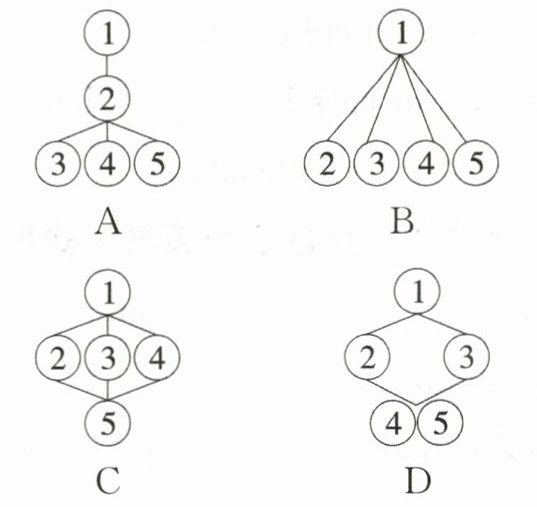
)5. 新考向 What's the structure of the passage?答案
Ⅲ.
1-5 ADBCB
1-5 ADBCB
解析
【分析】
本题为英语阅读理解题,需结合原文内容逐一分析每道题:
1. 第1题:定位洋葱相关段落,查找埃及人拿洋葱的原因,原文明确说明洋葱是真理的象征,对应选项A。
2. 第2题:代词指代题,It指代前文提到的名词,前一句提及“Onion Festival”,故It指代该节日,选D。
3. 第3题:根据后文描述的食物特征(既是蔬菜又是水果、改善汉堡沙拉味道、英国年轻人互赠),匹配西红柿的属性,选B。
4. 第4题:逐一验证选项,A选项与原文不符,B选项无原文支持,C选项符合荷兰国家食物的描述,D选项错误,选C。
5. 第5题:分析文章结构,第一段总述食物的文化意义,后文分述四种食物,为总-分结构,选B。
【解析】
1. 第1题:根据题干关键词“Egypt”“put an onion”定位到Onions段落,原文提到“They use the onion as a symbol of the truth... put it up high to show the truth is in their hands”,可知埃及人拿洋葱是因为它是真理的象征,故选A。
2. 第2题:代词指代题,It所在句前一句为“A town in Switzerland has the Onion Festival”,因此It指代前文的“Onion Festival”,故选D。
3. 第3题:空格后描述该食物“是蔬菜也是水果,让汉堡和沙拉更好吃,英国年轻人互赠”,西红柿符合这些特征,故选B。
4. 第4题:A选项:原文未提及英国人用胡萝卜当礼物,错误;B选项:原文未提及洋葱在英国的情况,错误;C选项:原文提到“In the Netherlands, carrots, onions and potatoes are country foods”,土豆是荷兰国家食物之一,正确;D选项:11月第四个周一的洋葱节和西红柿无关,错误,故选C。
5. 第5题:文章第一段总述不同食物在不同国家有不同意义,后文分述洋葱、某食物、胡萝卜、土豆,为总-分结构,故选B。
【答案】
ADBCB
【知识点】
阅读理解、细节理解、文章结构
【点评】
本题围绕食物的文化寓意展开,考查学生的阅读理解能力,涵盖细节查找、代词指代、推理判断及文章结构分析,是常见的英语阅读题型,难度适中。
【难度系数】
0.5
本题为英语阅读理解题,需结合原文内容逐一分析每道题:
1. 第1题:定位洋葱相关段落,查找埃及人拿洋葱的原因,原文明确说明洋葱是真理的象征,对应选项A。
2. 第2题:代词指代题,It指代前文提到的名词,前一句提及“Onion Festival”,故It指代该节日,选D。
3. 第3题:根据后文描述的食物特征(既是蔬菜又是水果、改善汉堡沙拉味道、英国年轻人互赠),匹配西红柿的属性,选B。
4. 第4题:逐一验证选项,A选项与原文不符,B选项无原文支持,C选项符合荷兰国家食物的描述,D选项错误,选C。
5. 第5题:分析文章结构,第一段总述食物的文化意义,后文分述四种食物,为总-分结构,选B。
【解析】
1. 第1题:根据题干关键词“Egypt”“put an onion”定位到Onions段落,原文提到“They use the onion as a symbol of the truth... put it up high to show the truth is in their hands”,可知埃及人拿洋葱是因为它是真理的象征,故选A。
2. 第2题:代词指代题,It所在句前一句为“A town in Switzerland has the Onion Festival”,因此It指代前文的“Onion Festival”,故选D。
3. 第3题:空格后描述该食物“是蔬菜也是水果,让汉堡和沙拉更好吃,英国年轻人互赠”,西红柿符合这些特征,故选B。
4. 第4题:A选项:原文未提及英国人用胡萝卜当礼物,错误;B选项:原文未提及洋葱在英国的情况,错误;C选项:原文提到“In the Netherlands, carrots, onions and potatoes are country foods”,土豆是荷兰国家食物之一,正确;D选项:11月第四个周一的洋葱节和西红柿无关,错误,故选C。
5. 第5题:文章第一段总述不同食物在不同国家有不同意义,后文分述洋葱、某食物、胡萝卜、土豆,为总-分结构,故选B。
【答案】
ADBCB
【知识点】
阅读理解、细节理解、文章结构
【点评】
本题围绕食物的文化寓意展开,考查学生的阅读理解能力,涵盖细节查找、代词指代、推理判断及文章结构分析,是常见的英语阅读题型,难度适中。
【难度系数】
0.5
