

 登录
登录
三、句子还原 热考内容 传统文化 KEY→P21
范畴:人与社会 主题:文化礼仪 体裁:说明文 难度:★★★ 建议用时:6分钟 评价:/5
请先阅读下面短文,掌握其大意,然后根据短文内容从下面方框内的七个选项中选择五个还原到文中,使短文意思通顺、结构完整。
As Confucius said long time ago, "1.
China is a nation of etiquette(礼仪). 2.
When you visit a Chinese family, the host usually makes tea for you. 3.
At the same time, other family members will prepare a meal for you. 4.
5.
A. The Chinese family try their best to make you feel at home.
B. There are many delicious dishes in China.
C. Then he will serve you snacks like biscuits and candies.
D. To meet friends from afar, how happy we are!
E. Chinese people are the friendliest in the world.
F. Chinese people treat their guests with a big meal.
G. Chinese people are among the most hospitable people in the world.
范畴:人与社会 主题:文化礼仪 体裁:说明文 难度:★★★ 建议用时:6分钟 评价:/5
请先阅读下面短文,掌握其大意,然后根据短文内容从下面方框内的七个选项中选择五个还原到文中,使短文意思通顺、结构完整。
As Confucius said long time ago, "1.
D
" Being warm and hospitable(好客的) has long been an important part of Chinese culture.China is a nation of etiquette(礼仪). 2.
G
If foreigners visit a Chinese family, they would be surprised at the warmth that they would receive as guests.When you visit a Chinese family, the host usually makes tea for you. 3.
C
Someone in the family will also chat with you, never letting you feel lonely.At the same time, other family members will prepare a meal for you. 4.
F
They always serve more food than the guest can eat. At the table, the guests must be the first to eat. Perhaps one of the things that surprise a Western guest most is that the Chinese host likes to pick up food for their guests. However, it won't happen at Western tables.5.
A
As you have finished eating, the host usually says, "It seems that you didn't eat much. Please have more. " Although you tell them you are full, they still put more food in your bowl.A. The Chinese family try their best to make you feel at home.
B. There are many delicious dishes in China.
C. Then he will serve you snacks like biscuits and candies.
D. To meet friends from afar, how happy we are!
E. Chinese people are the friendliest in the world.
F. Chinese people treat their guests with a big meal.
G. Chinese people are among the most hospitable people in the world.
答案
句子还原
本文主要介绍了中国的待客之道。
1. D 这里指孔子的名言:“有朋自远方来,不亦乐乎!”
2. G 由上下文可判断,中国是礼仪之邦,中国人很好客。
3. C 当你拜访一个中国家庭时,主人通常会为你泡茶。然后他会给你饼干和糖果等零食。
4. F 由上文的 prepare a meal 及下文的 serve more food 可判断,这里指中国人用大餐招待客人。
5. A 由下文的描述可知,中国家庭尽最大努力让你有宾至如归的感觉。
本文主要介绍了中国的待客之道。
1. D 这里指孔子的名言:“有朋自远方来,不亦乐乎!”
2. G 由上下文可判断,中国是礼仪之邦,中国人很好客。
3. C 当你拜访一个中国家庭时,主人通常会为你泡茶。然后他会给你饼干和糖果等零食。
4. F 由上文的 prepare a meal 及下文的 serve more food 可判断,这里指中国人用大餐招待客人。
5. A 由下文的描述可知,中国家庭尽最大努力让你有宾至如归的感觉。
解析
【分析】
做句子还原题时,需先通读全文把握主旨(本文围绕中国待客之道展开),再结合空格前后的语境、逻辑关系(如关键词、上下文呼应),从方框选项中匹配最恰当的句子,确保还原后文意通顺、结构完整。
【解析】
1. 空格前是孔子的名言,选项D“有朋自远方来,不亦乐乎!”是孔子关于待客的经典语句,符合语境,故选D;
2. 前文提到“中国是礼仪之邦”,后文说明外国人会惊讶于收到的热情,选项G“中国人是世界上最好客的人之一”承接上文“礼仪之邦”,引出下文的热情描述,故选G;
3. 前文说主人通常为你泡茶,选项C“然后他会给你饼干和糖果等零食”承接“泡茶”的待客流程,符合语境,故选C;
4. 前文提到“准备一顿饭”,后文说“提供更多食物”,选项F“中国人用大餐招待客人”呼应“准备饭”和“更多食物”,故选F;
5. 后文描述吃完后主人仍劝多吃,选项A“中国家庭尽最大努力让你有宾至如归的感觉”总结下文的待客细节,故选A。
【答案】1.D 2.G 3.C 4.F 5.A
【知识点】阅读理解(句子还原)、文化礼仪
【点评】本题以中国传统待客之道为主题,属于文化类句子还原题,既考查学生对上下文语境的逻辑理解能力,又渗透了传统文化知识,难度适中。
【难度系数】0.6
做句子还原题时,需先通读全文把握主旨(本文围绕中国待客之道展开),再结合空格前后的语境、逻辑关系(如关键词、上下文呼应),从方框选项中匹配最恰当的句子,确保还原后文意通顺、结构完整。
【解析】
1. 空格前是孔子的名言,选项D“有朋自远方来,不亦乐乎!”是孔子关于待客的经典语句,符合语境,故选D;
2. 前文提到“中国是礼仪之邦”,后文说明外国人会惊讶于收到的热情,选项G“中国人是世界上最好客的人之一”承接上文“礼仪之邦”,引出下文的热情描述,故选G;
3. 前文说主人通常为你泡茶,选项C“然后他会给你饼干和糖果等零食”承接“泡茶”的待客流程,符合语境,故选C;
4. 前文提到“准备一顿饭”,后文说“提供更多食物”,选项F“中国人用大餐招待客人”呼应“准备饭”和“更多食物”,故选F;
5. 后文描述吃完后主人仍劝多吃,选项A“中国家庭尽最大努力让你有宾至如归的感觉”总结下文的待客细节,故选A。
【答案】1.D 2.G 3.C 4.F 5.A
【知识点】阅读理解(句子还原)、文化礼仪
【点评】本题以中国传统待客之道为主题,属于文化类句子还原题,既考查学生对上下文语境的逻辑理解能力,又渗透了传统文化知识,难度适中。
【难度系数】0.6
四、任务型阅读
KEY→P21
范畴:人与自我 主题:健康生活 体裁:说明文 难度:★★★★ 建议用时:8分钟 评价:/5
(2025·苏州改编)Every day, we hear sounds all around us—some soft, some loud. But do you know that loud sounds can harm your hearing?
Sounds are measured(测量) in decibels(分贝). Look at the chart—some sounds are safe for our ears, but when a sound goes over 85 decibels, it can be harmful to our hearing. To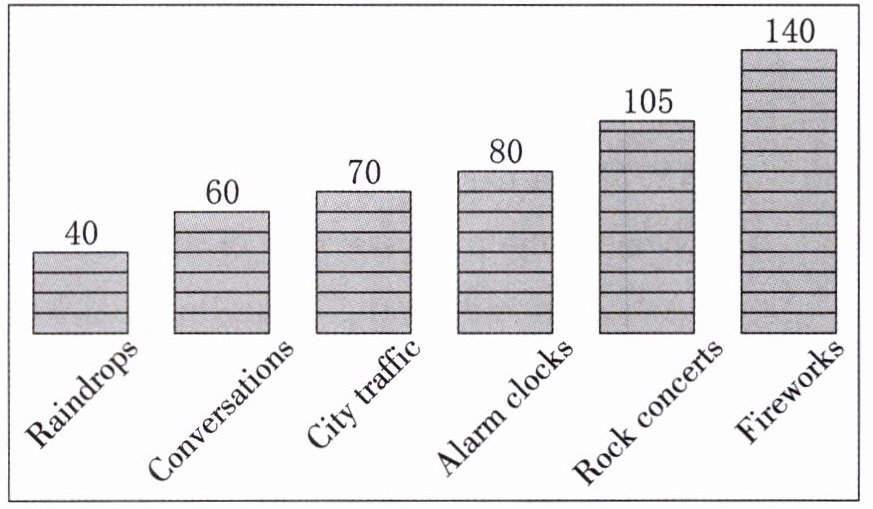
reduce the risk of hearing loss(损失), we shall pay attention to the loudness of the noise, how far we are from it and how long we listen to it.
People often measure noise levels by using sound-level meters(噪声计), but you probably don't always carry one with you. So how can you tell whether noises are too loud or not? Ask yourself: Do you have to raise your voice to be heard? Do you find it hard to hear someone about a meter away from you? Do the noises make your ears hurt or ring for some time? If your answer is YES to any of these, that probably means the noises are too loud.
Headphones are especiallytricky . Many people enjoy using them, but they often listen to loud music for too long, or keep the volume(音量) so high that even other people can hear the noise from their headphones. These can lead to hearing loss.
Your hearing is a gift. You need it for learning, communicating, and enjoying the world. Once your hearing is harmed, it may never come back.
根据短文内容,回答下列问题。每题答案不超过8个词。
1. How many decibels does a sound go over when it can be harmful to our hearing?
2. How do people often measure noise levels?
3. What may happen once our hearing is harmed?
4. What do you need your hearing for?
5. What can we learn from the passage?
KEY→P21
范畴:人与自我 主题:健康生活 体裁:说明文 难度:★★★★ 建议用时:8分钟 评价:/5
(2025·苏州改编)Every day, we hear sounds all around us—some soft, some loud. But do you know that loud sounds can harm your hearing?
Sounds are measured(测量) in decibels(分贝). Look at the chart—some sounds are safe for our ears, but when a sound goes over 85 decibels, it can be harmful to our hearing. To
reduce the risk of hearing loss(损失), we shall pay attention to the loudness of the noise, how far we are from it and how long we listen to it.
People often measure noise levels by using sound-level meters(噪声计), but you probably don't always carry one with you. So how can you tell whether noises are too loud or not? Ask yourself: Do you have to raise your voice to be heard? Do you find it hard to hear someone about a meter away from you? Do the noises make your ears hurt or ring for some time? If your answer is YES to any of these, that probably means the noises are too loud.
Headphones are especially
Your hearing is a gift. You need it for learning, communicating, and enjoying the world. Once your hearing is harmed, it may never come back.
根据短文内容,回答下列问题。每题答案不超过8个词。
1. How many decibels does a sound go over when it can be harmful to our hearing?
85/Eighty-five.
2. How do people often measure noise levels?
By using sound-level meters.
3. What may happen once our hearing is harmed?
It may never come back.
4. What do you need your hearing for?
Learning, communicating, and enjoying the world.
5. What can we learn from the passage?
Loud sound may do harm to our hearing.
答案
任务型阅读
本文主要介绍了高分贝噪声对听力的危害、如何判断噪声是否过大以及保护听力的重要性。
1. 85/Eighty-five. 由“but when a sound goes over 85 decibels, it can be harmful to our hearing”可知,当声音超过85分贝时,可能会对我们的听力有害。
2. By using sound-level meters. 由 People often measure noise levels by using sound-level meters 可知,人们用噪声计测量噪声水平。
3. It may never come back. 由“Once your hearing is harmed, it may never come back.”可知,听力一旦受损,很难恢复。
4. Learning, communicating, and enjoying the world. 由“You need it for learning, communicating, and enjoying the world.”可知,我们需要听力来学习、交流和享受世界。
5. Loud sound may do harm to our hearing. /We should keep away from loud sound. /...(言之有理即可)
本文主要介绍了高分贝噪声对听力的危害、如何判断噪声是否过大以及保护听力的重要性。
1. 85/Eighty-five. 由“but when a sound goes over 85 decibels, it can be harmful to our hearing”可知,当声音超过85分贝时,可能会对我们的听力有害。
2. By using sound-level meters. 由 People often measure noise levels by using sound-level meters 可知,人们用噪声计测量噪声水平。
3. It may never come back. 由“Once your hearing is harmed, it may never come back.”可知,听力一旦受损,很难恢复。
4. Learning, communicating, and enjoying the world. 由“You need it for learning, communicating, and enjoying the world.”可知,我们需要听力来学习、交流和享受世界。
5. Loud sound may do harm to our hearing. /We should keep away from loud sound. /...(言之有理即可)
解析
【分析】
本题为任务型阅读,要求根据短文内容回答问题,每题答案不超过8个词。解题时先划出问题关键词,带着关键词回原文定位对应语句,提取符合字数要求的答案;主旨类题目结合全文核心内容作答即可。
【解析】
1. 问题关键词为“harmful to our hearing”,定位原文第二段“but when a sound goes over 85 decibels, it can be harmful to our hearing”,提取答案。
2. 问题关键词为“measure noise levels”,定位原文第三段第一句“People often measure noise levels by using sound-level meters”,直接提取答案。
3. 问题关键词为“hearing is harmed”,定位原文最后一段“Once your hearing is harmed, it may never come back”,提取答案。
4. 问题关键词为“need your hearing for”,定位原文最后一段“You need it for learning, communicating, and enjoying the world”,提取答案。
5. 问题为主旨类,结合全文核心(高分贝噪声损害听力),给出合理答案。
【答案】
1. 85/Eighty-five.
2. By using sound-level meters.
3. It may never come back.
4. Learning, communicating, and enjoying the world.
5. Loud sound may harm our hearing.
【知识点】
任务型阅读、细节理解
【点评】
本题围绕“健康生活”主题,以听力保护为核心,考查学生信息定位与提取能力,题型常规,需注意答案字数限制,难度适中。
【难度系数】
0.7
本题为任务型阅读,要求根据短文内容回答问题,每题答案不超过8个词。解题时先划出问题关键词,带着关键词回原文定位对应语句,提取符合字数要求的答案;主旨类题目结合全文核心内容作答即可。
【解析】
1. 问题关键词为“harmful to our hearing”,定位原文第二段“but when a sound goes over 85 decibels, it can be harmful to our hearing”,提取答案。
2. 问题关键词为“measure noise levels”,定位原文第三段第一句“People often measure noise levels by using sound-level meters”,直接提取答案。
3. 问题关键词为“hearing is harmed”,定位原文最后一段“Once your hearing is harmed, it may never come back”,提取答案。
4. 问题关键词为“need your hearing for”,定位原文最后一段“You need it for learning, communicating, and enjoying the world”,提取答案。
5. 问题为主旨类,结合全文核心(高分贝噪声损害听力),给出合理答案。
【答案】
1. 85/Eighty-five.
2. By using sound-level meters.
3. It may never come back.
4. Learning, communicating, and enjoying the world.
5. Loud sound may harm our hearing.
【知识点】
任务型阅读、细节理解
【点评】
本题围绕“健康生活”主题,以听力保护为核心,考查学生信息定位与提取能力,题型常规,需注意答案字数限制,难度适中。
【难度系数】
0.7
