

 登录
登录
Ⅰ.根据首字母、图片及中文提示补充句子。
1. These are carrots. We eat the r
2. This is celery. We eat its s
3. These are peas. We eat the s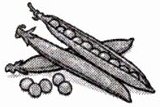
1. These are carrots. We eat the r
roots
(根). 2. This is celery. We eat its s
stems
(茎)and leaves.3. These are peas. We eat the s
seeds
(种子). 答案
1. roots 2. stems 3. seeds
解析
【分析】
解题时,先根据每个句子给出的中文提示确定单词含义,再结合首字母提示锁定单词,最后根据句子语境(如主语的单复数)调整单词形式。第1题提示“根”,首字母r,对应root,因主语为复数概念,需用复数;第2题提示“茎”,首字母s,对应stem,同理用复数;第3题提示“种子”,首字母s,对应seed,用复数。
【解析】
1. 句意:这些是胡萝卜,我们吃它们的根。“根”的英文是root,结合语境需用复数形式,故填roots;
2. 句意:这是芹菜,我们吃它的茎和叶。“茎”的英文是stem,此处用复数形式,故填stems;
3. 句意:这些是豌豆,我们吃它们的种子。“种子”的英文是seed,结合语境用复数形式,故填seeds。
【答案】
1. roots 2. stems 3. seeds
【知识点】
英语基础词汇、名词单复数
【点评】
本题为基础词汇填空题,结合首字母、中文提示及语境填写单词,需注意名词复数的变化,属于难度较低的基础题型,适合巩固词汇运用。
【难度系数】
0.8
解题时,先根据每个句子给出的中文提示确定单词含义,再结合首字母提示锁定单词,最后根据句子语境(如主语的单复数)调整单词形式。第1题提示“根”,首字母r,对应root,因主语为复数概念,需用复数;第2题提示“茎”,首字母s,对应stem,同理用复数;第3题提示“种子”,首字母s,对应seed,用复数。
【解析】
1. 句意:这些是胡萝卜,我们吃它们的根。“根”的英文是root,结合语境需用复数形式,故填roots;
2. 句意:这是芹菜,我们吃它的茎和叶。“茎”的英文是stem,此处用复数形式,故填stems;
3. 句意:这些是豌豆,我们吃它们的种子。“种子”的英文是seed,结合语境用复数形式,故填seeds。
【答案】
1. roots 2. stems 3. seeds
【知识点】
英语基础词汇、名词单复数
【点评】
本题为基础词汇填空题,结合首字母、中文提示及语境填写单词,需注意名词复数的变化,属于难度较低的基础题型,适合巩固词汇运用。
【难度系数】
0.8
Ⅱ.选择与句子相匹配的图片。
A. [图] B. C. [图] D. [图]
(
(
(
(
A. [图] B.
C. [图] D. [图](
C
)1. Amy grows carrots from seeds.(
A
)2. Amy pulls up the carrot by the stem and leaves.(
D
)3. Amy cooks the root.(
B
)4. Her rabbit eats the leaves.答案
1. C 2. A 3. D 4. B
解析
【分析】这是一道句子与图片匹配题,解题思路是先明确每个句子的含义,再逐一观察四幅图片的内容,将句子描述的动作与图片呈现的场景对应,从而选出正确的匹配项。
【解析】1. 句子“Amy grows carrots from seeds.”意为“艾米用种子种胡萝卜”,图C中女孩在菜园里进行种植相关动作,与句子匹配,故1选C;2. 句子“Amy pulls up the carrot by the stem and leaves.”意为“艾米用胡萝卜的茎和叶拔胡萝卜”,图A中女孩正握着胡萝卜的叶将胡萝卜拔出,与句子匹配,故2选A;3. 句子“Amy cooks the root.”意为“艾米烹饪(做好)胡萝卜”,图D中女孩端着一盘做好的菜肴,与句子匹配,故3选D;4. 句子“Her rabbit eats the leaves.”意为“她的兔子吃胡萝卜的叶”,图B中兔子旁是胡萝卜的叶,与句子匹配,故4选B。
【答案】1.C 2.A 3.D 4.B
【知识点】图文匹配、词汇理解
【点评】本题考查学生对句子含义的理解及图片内容的观察能力,属于基础图文匹配题型,难度较低。
【难度系数】0.7
【解析】1. 句子“Amy grows carrots from seeds.”意为“艾米用种子种胡萝卜”,图C中女孩在菜园里进行种植相关动作,与句子匹配,故1选C;2. 句子“Amy pulls up the carrot by the stem and leaves.”意为“艾米用胡萝卜的茎和叶拔胡萝卜”,图A中女孩正握着胡萝卜的叶将胡萝卜拔出,与句子匹配,故2选A;3. 句子“Amy cooks the root.”意为“艾米烹饪(做好)胡萝卜”,图D中女孩端着一盘做好的菜肴,与句子匹配,故3选D;4. 句子“Her rabbit eats the leaves.”意为“她的兔子吃胡萝卜的叶”,图B中兔子旁是胡萝卜的叶,与句子匹配,故4选B。
【答案】1.C 2.A 3.D 4.B
【知识点】图文匹配、词汇理解
【点评】本题考查学生对句子含义的理解及图片内容的观察能力,属于基础图文匹配题型,难度较低。
【难度系数】0.7
Ⅲ.阅读短文,完成下列任务。
Not all plants grow from seeds. Some plants grow from roots, stems or even leaves. When we eat vegetables, we often eat different parts of the plant.
For example, carrots are roots. We pull them out of the ground and eat the sweet roots. Celery is a stem. We eat the long stems and sometimes the green leaves on top. Cabbage is a large head of leaves. We eat those tightly packed leaves. Peas are seeds that grow inside green pods(豆荚). We can eat the whole pod, or just the seeds inside.
Next time you eat a vegetable, think about what part of the plant it is. You might be surprised!
任务一:根据短文信息,完成表格。

任务二:阅读短文,判断正(T)误(F)。
(
(
Not all plants grow from seeds. Some plants grow from roots, stems or even leaves. When we eat vegetables, we often eat different parts of the plant.
For example, carrots are roots. We pull them out of the ground and eat the sweet roots. Celery is a stem. We eat the long stems and sometimes the green leaves on top. Cabbage is a large head of leaves. We eat those tightly packed leaves. Peas are seeds that grow inside green pods(豆荚). We can eat the whole pod, or just the seeds inside.
Next time you eat a vegetable, think about what part of the plant it is. You might be surprised!
任务一:根据短文信息,完成表格。
任务二:阅读短文,判断正(T)误(F)。
(
F
) 1. Peas are seeds. We can only(只能) eat the seeds.(
T
) 2. Celery is a stem. We eat the long stems and the green leaves.答案
任务一:1. stems 2. leaves
任务二:1. F 2. T
任务二:1. F 2. T
解析
【分析】
解题时需先通读短文,明确每种蔬菜对应的植物器官及可食用部分,再结合表格和判断题目提取对应信息。任务一需找到表格中蔬菜在短文中的描述,提取食用部分填空;任务二需将题目描述与原文逐一比对,判断正误。
【解析】
任务一:1. 原文提到“Celery is a stem. We eat the long stems and sometimes the green leaves on top”,可知芹菜可食用部分是茎和叶,故填stems;2. 原文提到“Cabbage is a large head of leaves. We eat those tightly packed leaves”,可知卷心菜可食用部分是叶,故填leaves。
任务二:1. 原文说明“Peas are seeds...We can eat the whole pod, or just the seeds inside”,题目说“只能吃种子”与原文不符,故判断为F;2. 原文明确“Celery is a stem. We eat the long stems and the green leaves”,题目描述与原文一致,故判断为T。
【答案】
任务一:1. stems 2. leaves;任务二:1. F 2. T
【知识点】
阅读理解信息提取、植物器官识别
【点评】
本题为基础阅读理解题,侧重考查学生从短文中定位、提取关键信息的能力,内容贴近生活,难度较低,只要仔细阅读原文即可完成解答。
【难度系数】
0.8
解题时需先通读短文,明确每种蔬菜对应的植物器官及可食用部分,再结合表格和判断题目提取对应信息。任务一需找到表格中蔬菜在短文中的描述,提取食用部分填空;任务二需将题目描述与原文逐一比对,判断正误。
【解析】
任务一:1. 原文提到“Celery is a stem. We eat the long stems and sometimes the green leaves on top”,可知芹菜可食用部分是茎和叶,故填stems;2. 原文提到“Cabbage is a large head of leaves. We eat those tightly packed leaves”,可知卷心菜可食用部分是叶,故填leaves。
任务二:1. 原文说明“Peas are seeds...We can eat the whole pod, or just the seeds inside”,题目说“只能吃种子”与原文不符,故判断为F;2. 原文明确“Celery is a stem. We eat the long stems and the green leaves”,题目描述与原文一致,故判断为T。
【答案】
任务一:1. stems 2. leaves;任务二:1. F 2. T
【知识点】
阅读理解信息提取、植物器官识别
【点评】
本题为基础阅读理解题,侧重考查学生从短文中定位、提取关键信息的能力,内容贴近生活,难度较低,只要仔细阅读原文即可完成解答。
【难度系数】
0.8
