

 登录
登录
B. Choose the best answer and complete the passage.
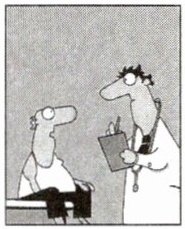
Mr Smith went to see the doctor. The doctor asked him to put out his tongue and said, “OK. There's 1 wrong with you. But I'm afraid you don't take enough exercise.” “But doctor,” Mr Smith said, “I don't think so.”
“I know many people sit in offices all day and 2 the computer in the evening. You must walk quickly for over 20 minutes a day,” the doctor said.
“I don't want to 3 any of your excuses,” the doctor added. “You must find time for exercise, or you will have health problems.”
“But I walk every day,” Mr Smith said.
“Oh, yes, I see. You walk only 4 metres to the bus stop from your home, some more metres to your office, and some metres to your canteen for lunch and back. That's not a real walk.”
“5 I'm a postman,” Mr Smith went on, “and I walk for about seven hours every day.”
Hearing this, the doctor kept silent for a few seconds. 6, he said to Mr Smith, “Put out your tongue again, will you?”
(
(
(
(
(
(
Mr Smith went to see the doctor. The doctor asked him to put out his tongue and said, “OK. There's 1 wrong with you. But I'm afraid you don't take enough exercise.” “But doctor,” Mr Smith said, “I don't think so.”
“I know many people sit in offices all day and 2 the computer in the evening. You must walk quickly for over 20 minutes a day,” the doctor said.
“I don't want to 3 any of your excuses,” the doctor added. “You must find time for exercise, or you will have health problems.”
“But I walk every day,” Mr Smith said.
“Oh, yes, I see. You walk only 4 metres to the bus stop from your home, some more metres to your office, and some metres to your canteen for lunch and back. That's not a real walk.”
“5 I'm a postman,” Mr Smith went on, “and I walk for about seven hours every day.”
Hearing this, the doctor kept silent for a few seconds. 6, he said to Mr Smith, “Put out your tongue again, will you?”
(
C
)1. A. anything B. everything C. nothing D. something(
A
)2. A. in front of B. at the back of C. in the middle of D. on the right of(
D
)3. A. see B. taste C. smell D. hear(
B
)4. A. few B. a few C. little D. a little(
D
)5. A. Or B. And C. So D. But(
C
)6. A. Firstly B. Happily C. Finally D. Sadly答案
1. C
2. A
3. D
4. B
5. D
6. C
2. A
3. D
4. B
5. D
6. C
解析
【分析】
本题是一篇关于医生与病人的完形填空,需结合上下文语境、固定句型、词义辨析来逐一确定答案:第1空根据医生检查后说身体无大碍的语境,选对应表达;第2空结合“坐在电脑前”的常用搭配选介词短语;第3空根据医生对病人借口的态度选动词;第4空修饰可数名词复数“metres”选合适的限定词;第5空根据前后句的转折关系选连词;第6空根据医生沉默后的动作选副词。
【解析】
1. 句意:你没有什么问题。固定句型“There is nothing wrong with sb”表示“某人没有毛病”,故选C。
2. 句意:很多人整天坐办公室,晚上坐在电脑前。“in front of”表示“在……前面”,符合坐在电脑前的语境,故选A。
3. 句意:我不想听你的任何借口。“hear”表示“听”,符合医生不想听病人借口的语境,故选D。
4. 句意:你只走几米到公交站。“metres”是可数名词复数,“a few”修饰可数名词复数表肯定,故选B。
5. 句意:但我是邮递员,每天走七小时。前后句是转折关系,用“But”连接,故选D。
6. 句意:沉默几秒后,他最终说。“finally”表示“最终”,符合语境,故选C。
【答案】
1.C 2.A 3.D 4.B 5.D 6.C
【知识点】
完形填空、词义辨析、固定句型
【点评】
本题通过生活化的医患对话,考查学生对语境的理解和词汇、固定搭配的运用,贴近日常,难度适中。
【难度系数】
0.5
本题是一篇关于医生与病人的完形填空,需结合上下文语境、固定句型、词义辨析来逐一确定答案:第1空根据医生检查后说身体无大碍的语境,选对应表达;第2空结合“坐在电脑前”的常用搭配选介词短语;第3空根据医生对病人借口的态度选动词;第4空修饰可数名词复数“metres”选合适的限定词;第5空根据前后句的转折关系选连词;第6空根据医生沉默后的动作选副词。
【解析】
1. 句意:你没有什么问题。固定句型“There is nothing wrong with sb”表示“某人没有毛病”,故选C。
2. 句意:很多人整天坐办公室,晚上坐在电脑前。“in front of”表示“在……前面”,符合坐在电脑前的语境,故选A。
3. 句意:我不想听你的任何借口。“hear”表示“听”,符合医生不想听病人借口的语境,故选D。
4. 句意:你只走几米到公交站。“metres”是可数名词复数,“a few”修饰可数名词复数表肯定,故选B。
5. 句意:但我是邮递员,每天走七小时。前后句是转折关系,用“But”连接,故选D。
6. 句意:沉默几秒后,他最终说。“finally”表示“最终”,符合语境,故选C。
【答案】
1.C 2.A 3.D 4.B 5.D 6.C
【知识点】
完形填空、词义辨析、固定句型
【点评】
本题通过生活化的医患对话,考查学生对语境的理解和词汇、固定搭配的运用,贴近日常,难度适中。
【难度系数】
0.5
C. Answer the questions.
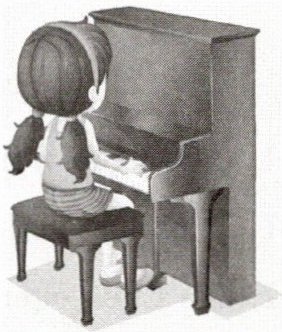
I'm Lesley from Australia. I've got a friend. She doesn't walk, talk or laugh, but she is friendly to me. When I feel tired, she can help me relax. She makes me happy. You can't touch or see her, but she's everywhere. Do you know who she is? She is my best friend—music.
Music is my favourite. At the age of four, I began to listen to different kinds of music. The first time I saw a piano, I fell in love with it.
At first, I was poor at playing the piano. But as a child, I soon got bored with it and didn't want to play it any longer.
One day, I was listening to The Ninth Symphony(交响曲) at home. It sounded wonderful with strong feelings. My mother told me that Beethoven wrote it after he was deaf. Beethoven lost his hearing and couldn't hear anything, but he didn't give up writing great music.
After I heard the story of Beethoven, 5.
1. What's Lesley's nationality?
2. Who's Lesley's best friend?
3. When did Lesley begin to love music?
4. How did The Ninth Symphony sound to Lesley?
5. Fill in the blank with what Lesley was possibly going to say in the end.
I'm Lesley from Australia. I've got a friend. She doesn't walk, talk or laugh, but she is friendly to me. When I feel tired, she can help me relax. She makes me happy. You can't touch or see her, but she's everywhere. Do you know who she is? She is my best friend—music.
Music is my favourite. At the age of four, I began to listen to different kinds of music. The first time I saw a piano, I fell in love with it.
At first, I was poor at playing the piano. But as a child, I soon got bored with it and didn't want to play it any longer.
One day, I was listening to The Ninth Symphony(交响曲) at home. It sounded wonderful with strong feelings. My mother told me that Beethoven wrote it after he was deaf. Beethoven lost his hearing and couldn't hear anything, but he didn't give up writing great music.
After I heard the story of Beethoven, 5.
1. What's Lesley's nationality?
2. Who's Lesley's best friend?
3. When did Lesley begin to love music?
4. How did The Ninth Symphony sound to Lesley?
5. Fill in the blank with what Lesley was possibly going to say in the end.
答案
1. Australian.
2. Music.
3. At (the age of) four(4). /When she was four(4 years old).
4. Wonderful (with strong feelings). /It sounded wonderful (with strong feelings).
5. I no longer hated playing the piano. /I started to love playing the piano. /I was no longer bored with playing the piano. /I practised playing the piano better and better. /I often play the piano to share beautiful music with my parents. /I was more interested in music and in playing the piano. (Any reasonable answer is acceptable.)
2. Music.
3. At (the age of) four(4). /When she was four(4 years old).
4. Wonderful (with strong feelings). /It sounded wonderful (with strong feelings).
5. I no longer hated playing the piano. /I started to love playing the piano. /I was no longer bored with playing the piano. /I practised playing the piano better and better. /I often play the piano to share beautiful music with my parents. /I was more interested in music and in playing the piano. (Any reasonable answer is acceptable.)
解析
【分析】本题为英语阅读理解答题,需先通读短文定位各问题对应的关键信息:1. 问国籍,查找原文中关于Lesley来自哪里的表述;2. 问最好的朋友,直接定位原文提及的best friend相关内容;3. 问开始喜欢音乐的时间,找到原文中接触音乐的时间点;4. 问《第九交响曲》的听感,提取原文描述该交响曲的语句;5. 为开放填空,需结合前文“厌倦弹钢琴”和后文贝多芬的励志故事,推断Lesley的态度转变,填写合理内容。
【解析】1. 由短文第一句“I'm Lesley from Australia.”可知,Lesley的国籍是澳大利亚,对应答案为Australian;2. 由短文第一段最后一句“She is my best friend—music.”可知,她最好的朋友是Music;3. 由短文第二段“At the age of four, I began to listen to different kinds of music.”可知,她四岁时开始接触音乐,对应答案为At (the age of) four(4). /When she was four(4 years old).;4. 由短文第四段“It sounded wonderful with strong feelings.”可知,《第九交响曲》听起来很棒,有强烈的情感,对应答案为Wonderful (with strong feelings). /It sounded wonderful (with strong feelings).;5. 前文提到Lesley一开始厌倦弹钢琴,听了贝多芬失聪仍坚持创作的励志故事后,态度会转变,可填写如“I started to love playing the piano.”等符合语境的合理内容。
【答案】1. Australian.
2. Music.
3. At (the age of) four(4). /When she was four(4 years old).
4. Wonderful (with strong feelings). /It sounded wonderful (with strong feelings).
5. I no longer hated playing the piano. /I started to love playing the piano. /I was no longer bored with playing the piano. /I practised playing the piano better and better. /I often play the piano to share beautiful music with my parents. /I was more interested in music and in playing the piano. (Any reasonable answer is acceptable.)
【知识点】英语阅读理解、细节信息查找、语境推理填空
【点评】本题侧重考查学生对英语短文的细节定位能力和逻辑推理能力,前四题为基础细节题,难度较低;最后一空为开放题,需结合上下文语境合理推断,整体难度适中。
【难度系数】0.3
【解析】1. 由短文第一句“I'm Lesley from Australia.”可知,Lesley的国籍是澳大利亚,对应答案为Australian;2. 由短文第一段最后一句“She is my best friend—music.”可知,她最好的朋友是Music;3. 由短文第二段“At the age of four, I began to listen to different kinds of music.”可知,她四岁时开始接触音乐,对应答案为At (the age of) four(4). /When she was four(4 years old).;4. 由短文第四段“It sounded wonderful with strong feelings.”可知,《第九交响曲》听起来很棒,有强烈的情感,对应答案为Wonderful (with strong feelings). /It sounded wonderful (with strong feelings).;5. 前文提到Lesley一开始厌倦弹钢琴,听了贝多芬失聪仍坚持创作的励志故事后,态度会转变,可填写如“I started to love playing the piano.”等符合语境的合理内容。
【答案】1. Australian.
2. Music.
3. At (the age of) four(4). /When she was four(4 years old).
4. Wonderful (with strong feelings). /It sounded wonderful (with strong feelings).
5. I no longer hated playing the piano. /I started to love playing the piano. /I was no longer bored with playing the piano. /I practised playing the piano better and better. /I often play the piano to share beautiful music with my parents. /I was more interested in music and in playing the piano. (Any reasonable answer is acceptable.)
【知识点】英语阅读理解、细节信息查找、语境推理填空
【点评】本题侧重考查学生对英语短文的细节定位能力和逻辑推理能力,前四题为基础细节题,难度较低;最后一空为开放题,需结合上下文语境合理推断,整体难度适中。
【难度系数】0.3
