

 登录
登录
三、阅读表达。
阅读短文,简略回答问题。
Nowadays, environmental pollution is a serious problem around the world. Our student group wanted to find out how much Chinese teenagers know about environmental problems and whether they understand the importance of protecting the environment. So we did a survey among teenagers in our city.
We focused on three main aspects(方面): common environmental problems in China, how serious the pollution is, and how aware(意识到) young people are of protecting nature. To do this, we designed a survey and gave it to young people aged 13 to 18.
Here’s the result of our survey:
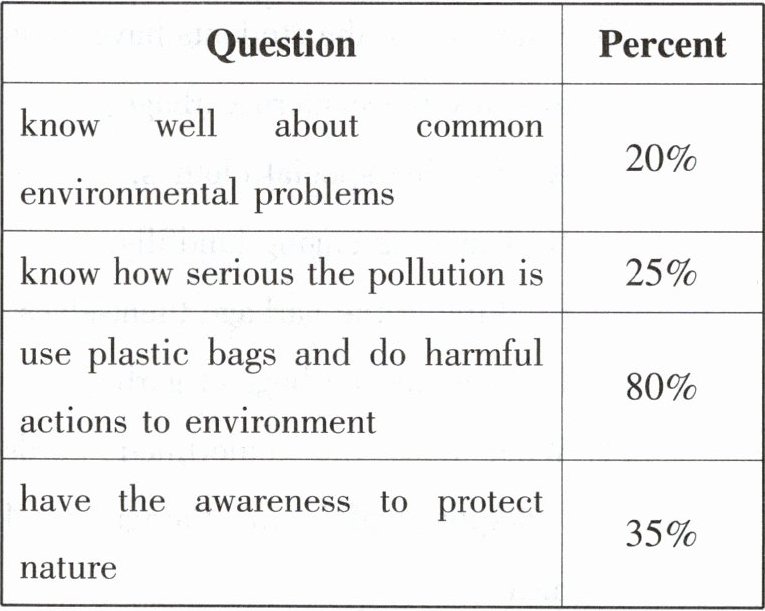
From these results, we see that young people know less about problems like global warming and noise pollution. Most of the teenagers use plastic bags too often, and they often harm the environment. Teenagers need to know more about how pollution happens and how daily choices matter. Then they can do something helpful to the environment.
It’s clear we need to do better. Learning more about the environment and changing small habits—like carrying cloth bags, sorting waste, or saving electricity—can make a big difference to our planet’s future.
29. Why did the group do the survey?
30. What three things did the survey focus on?
31. Do most students use plastic bags and do harmful environmental actions?
32. What percentage of teenagers don’t know how serious the pollution is?
33. What other things do you think can teenagers do to protect the environment?
阅读短文,简略回答问题。
Nowadays, environmental pollution is a serious problem around the world. Our student group wanted to find out how much Chinese teenagers know about environmental problems and whether they understand the importance of protecting the environment. So we did a survey among teenagers in our city.
We focused on three main aspects(方面): common environmental problems in China, how serious the pollution is, and how aware(意识到) young people are of protecting nature. To do this, we designed a survey and gave it to young people aged 13 to 18.
Here’s the result of our survey:
From these results, we see that young people know less about problems like global warming and noise pollution. Most of the teenagers use plastic bags too often, and they often harm the environment. Teenagers need to know more about how pollution happens and how daily choices matter. Then they can do something helpful to the environment.
It’s clear we need to do better. Learning more about the environment and changing small habits—like carrying cloth bags, sorting waste, or saving electricity—can make a big difference to our planet’s future.
29. Why did the group do the survey?
Because they wanted to find out how much Chinese teenagers know about environmental problems and whether they understand the importance of protecting the environment.
30. What three things did the survey focus on?
Common environmental problems in China, how serious the pollution is, and how aware young people are of protecting nature.
31. Do most students use plastic bags and do harmful environmental actions?
Yes( , they do).
32. What percentage of teenagers don’t know how serious the pollution is?
75%.
33. What other things do you think can teenagers do to protect the environment?
略。
答案
29. Because they wanted to find out how much Chinese teenagers know about environmental problems and whether they understand the importance of protecting the environment.
30. Common environmental problems in China, how serious the pollution is, and how aware young people are of protecting nature.
31. Yes( , they do).
32. 75%.
33. We can go to school by bus or on foot, avoid using disposable chopsticks and so on. (答案合理即可)
30. Common environmental problems in China, how serious the pollution is, and how aware young people are of protecting nature.
31. Yes( , they do).
32. 75%.
33. We can go to school by bus or on foot, avoid using disposable chopsticks and so on. (答案合理即可)
解析
【分析】
本题为英语阅读表达题,解题时需先通读短文与表格,针对每个问题定位原文对应信息:29题需找调查原因,定位第一段相关句子;30题找调查的三个方面,定位第二段首句;31题判断是否多数学生用塑料袋,查看表格对应百分比;32题计算不知道污染严重性的百分比,用100%减去已知的对应百分比;33题结合环保常识写出合理做法。
【解析】
29题:根据短文第一段第二句,直接提取调查原因:因为他们想了解中国青少年对环境问题的了解程度,以及是否明白保护环境的重要性;
30题:根据第二段首句,提取调查的三个方面:中国常见的环境问题、污染的严重程度、年轻人保护自然的意识;
31题:表格中“使用塑料袋并对环境做有害行为”的占比为80%,属于多数,故回答Yes;
32题:知道污染严重的青少年占比为25%,因此不知道的占比为100% - 25% = 75%;
33题:结合环保常识,写出合理的青少年环保做法,如步行上学、不用一次性筷子等。
【答案】
29. Because they wanted to find out how much Chinese teenagers know about environmental problems and whether they understand the importance of protecting the environment.
30. Common environmental problems in China, how serious the pollution is, and how aware young people are of protecting nature.
31. Yes(, they do).
32. 75%.
33. We can go to school by bus or on foot, avoid using disposable chopsticks and so on. (答案合理即可)
【知识点】
英语阅读理解、细节查找、数据计算
【点评】
本题考查英语阅读表达的信息提取与简单计算,需准确定位原文内容,难度适中,适合初中阶段学生练习。
【难度系数】
0.7
本题为英语阅读表达题,解题时需先通读短文与表格,针对每个问题定位原文对应信息:29题需找调查原因,定位第一段相关句子;30题找调查的三个方面,定位第二段首句;31题判断是否多数学生用塑料袋,查看表格对应百分比;32题计算不知道污染严重性的百分比,用100%减去已知的对应百分比;33题结合环保常识写出合理做法。
【解析】
29题:根据短文第一段第二句,直接提取调查原因:因为他们想了解中国青少年对环境问题的了解程度,以及是否明白保护环境的重要性;
30题:根据第二段首句,提取调查的三个方面:中国常见的环境问题、污染的严重程度、年轻人保护自然的意识;
31题:表格中“使用塑料袋并对环境做有害行为”的占比为80%,属于多数,故回答Yes;
32题:知道污染严重的青少年占比为25%,因此不知道的占比为100% - 25% = 75%;
33题:结合环保常识,写出合理的青少年环保做法,如步行上学、不用一次性筷子等。
【答案】
29. Because they wanted to find out how much Chinese teenagers know about environmental problems and whether they understand the importance of protecting the environment.
30. Common environmental problems in China, how serious the pollution is, and how aware young people are of protecting nature.
31. Yes(, they do).
32. 75%.
33. We can go to school by bus or on foot, avoid using disposable chopsticks and so on. (答案合理即可)
【知识点】
英语阅读理解、细节查找、数据计算
【点评】
本题考查英语阅读表达的信息提取与简单计算,需准确定位原文内容,难度适中,适合初中阶段学生练习。
【难度系数】
0.7
