

 登录
登录
四、阅读与回答问题
In early March, temperatures(温度) warm up and it's time for spring cleaning. This special cleaning activity helps people welcome the new season with a fresh and organized living space.
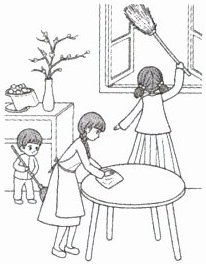
Spring cleaning has been a tradition for centuries in China. After long winter months, people naturally want to clean their homes when the weather turns warm. In spring, the humidity(湿度) can be high, and a deep cleaning helps stop mold growth and keeps homes fresh. In Chinese culture, it's also considered that doing spring cleaning can bring good luck.
In Western countries, spring cleaning also has a long history. In the past centuries, houses were heated with wood or coal. And before electricity was widely used, people used oil lights, so houses were full of dirt. Cold weather also meant less airflow, which made houses smell bad. Warmer weather brought fresh air and a chance(机会) to wash away winter's dirt and smell.
In fact, spring cleaning may have more than these. A psychologist(心理学家) reports that cleaning our homes can be good for our brains and bodies. Cleaning produces a result that we not only see but also feel. We will have a relaxed feeling while doing something meaningful like sweeping or mopping the floor. And when our homes are clean and organized, we feel comfortable.
For families, spring cleaning can make a tidy study area for children to help them pay more attention to homework. Finding school things becomes easier for children when everything is organized. When families clean together, they share duties and create closer relationships.
So, this spring, grab a cloth, wear a smile, and make your living space as fresh as spring.
1. When do people usually do spring cleaning?
2. What is special about spring cleaning in Chinese culture?
3. Why did people do spring cleaning in Western countries in the past?
4. What benefits(益处) does spring cleaning have for humans/families? (List at least 2)
5. How do you usually keep your house clean?
In early March, temperatures(温度) warm up and it's time for spring cleaning. This special cleaning activity helps people welcome the new season with a fresh and organized living space.
Spring cleaning has been a tradition for centuries in China. After long winter months, people naturally want to clean their homes when the weather turns warm. In spring, the humidity(湿度) can be high, and a deep cleaning helps stop mold growth and keeps homes fresh. In Chinese culture, it's also considered that doing spring cleaning can bring good luck.
In Western countries, spring cleaning also has a long history. In the past centuries, houses were heated with wood or coal. And before electricity was widely used, people used oil lights, so houses were full of dirt. Cold weather also meant less airflow, which made houses smell bad. Warmer weather brought fresh air and a chance(机会) to wash away winter's dirt and smell.
In fact, spring cleaning may have more than these. A psychologist(心理学家) reports that cleaning our homes can be good for our brains and bodies. Cleaning produces a result that we not only see but also feel. We will have a relaxed feeling while doing something meaningful like sweeping or mopping the floor. And when our homes are clean and organized, we feel comfortable.
For families, spring cleaning can make a tidy study area for children to help them pay more attention to homework. Finding school things becomes easier for children when everything is organized. When families clean together, they share duties and create closer relationships.
So, this spring, grab a cloth, wear a smile, and make your living space as fresh as spring.
1. When do people usually do spring cleaning?
2. What is special about spring cleaning in Chinese culture?
Doing spring cleaning can bring good luck./It can bring good luck.
3. Why did people do spring cleaning in Western countries in the past?
To wash away winter's dirt and smell./Because houses were full of dirt and smelled bad.
4. What benefits(益处) does spring cleaning have for humans/families? (List at least 2)
It makes us relaxed and comfortable./It helps children study better and find school things easily./It helps families share duties and create closer relationships.(写出两点即可)
5. How do you usually keep your house clean?
I usually sweep and mop the floor./I usually open the windows to let fresh air in.(答案不唯一,言之有理即可)
答案
【语篇解读】本文是一篇说明文。文章主要介绍了中西方春季大扫除的历史原因及其对身心健康和家庭关系的积极影响。
1. In early March./When temperatures warm up in spring.
根据第一段“In early March, temperatures warm up and it's time for spring cleaning.”可知人们通常在三月初或春季气温回暖时进行春季大扫除。
2. Doing spring cleaning can bring good luck./It can bring good luck. 根据第二段“In Chinese culture, it's also considered that doing spring cleaning can bring good luck.”可知在中国文化中,春季大扫除被认为能带来好运。
3. To wash away winter's dirt and smell./Because houses were full of dirt and smelled bad. 根据第三段“so houses were full of dirt. Cold weather also meant less airflow, which made houses smell bad. Warmer weather brought fresh air and a chance to wash away winter's dirt and smell”可知过去西方回家房屋积尘,空气不流通导致异味,春季大扫除是为了清除冬季的污垢和异味。
4. It makes us relaxed and comfortable./It helps children study better and find school things easily./It helps families share duties and create closer relationships。(写出两点即可)
根据第四段“cleaning our homes can be good for our brains and bodies... We will have a relaxed feeling... we feel comfortable”;第五段“For families, spring cleaning can make a tidy study area for children to help them pay more attention to homework... they share duties and create closer relationships.”可知大扫除让人放松和舒适,帮助孩子更好地学习和找到学习物品,促进家庭分工与亲密关系。
5. I usually sweep and mop the floor./I usually open the windows to let fresh air in。(答案不唯一,言之有理即可)
1. In early March./When temperatures warm up in spring.
根据第一段“In early March, temperatures warm up and it's time for spring cleaning.”可知人们通常在三月初或春季气温回暖时进行春季大扫除。
2. Doing spring cleaning can bring good luck./It can bring good luck. 根据第二段“In Chinese culture, it's also considered that doing spring cleaning can bring good luck.”可知在中国文化中,春季大扫除被认为能带来好运。
3. To wash away winter's dirt and smell./Because houses were full of dirt and smelled bad. 根据第三段“so houses were full of dirt. Cold weather also meant less airflow, which made houses smell bad. Warmer weather brought fresh air and a chance to wash away winter's dirt and smell”可知过去西方回家房屋积尘,空气不流通导致异味,春季大扫除是为了清除冬季的污垢和异味。
4. It makes us relaxed and comfortable./It helps children study better and find school things easily./It helps families share duties and create closer relationships。(写出两点即可)
根据第四段“cleaning our homes can be good for our brains and bodies... We will have a relaxed feeling... we feel comfortable”;第五段“For families, spring cleaning can make a tidy study area for children to help them pay more attention to homework... they share duties and create closer relationships.”可知大扫除让人放松和舒适,帮助孩子更好地学习和找到学习物品,促进家庭分工与亲密关系。
5. I usually sweep and mop the floor./I usually open the windows to let fresh air in。(答案不唯一,言之有理即可)
解析
【分析】
做这类阅读回答问题的题型时,首先可以先通读题干,明确每道题的提问方向,带着问题的关键词回到原文对应段落定位信息:
1. 第一题询问春季大扫除的时间,直接定位文章首段找时间相关表述即可;
2. 第二题限定了“中国文化”的前提,回到介绍中国春扫传统的第二段,抓取对应的特殊文化内涵即可;
3. 第三题限定了“过去西方国家”的背景,定位介绍西方春扫历史的第三段,梳理当时人们大扫除的原因即可;
4. 第四题询问春扫的益处,回到介绍春扫额外好处的第四、第五段,筛选出至少两点符合要求的益处即可;
5. 第五题为开放性问题,结合自身日常做家务的实际情况,用通顺的英语表述合理内容即可。
【解析】
1. 定位原文第一段第一句"In early March, temperatures warm up and it's time for spring cleaning.",直接提取对应的时间信息即可得到答案。
2. 定位原文第二段最后一句"In Chinese culture, it's also considered that doing spring cleaning can bring good luck.",提取中国文化中春扫的特殊寓意即可得到答案。
3. 定位原文第三段,过去西方房屋用木/煤取暖、使用油灯,屋内满是灰尘,寒冷天气空气不流通导致屋内有异味,人们趁天气变暖大扫除来清除冬季积攒的灰尘和异味,整理对应表述即可得到答案。
4. 定位原文第四段和第五段,分别从对个人身心、对孩子学习、对家庭关系几个维度筛选益处,任选两点及以上作答即可。
5. 开放性作答,只要表述符合日常打扫房屋的实际行为,语法通顺合理即可。
【答案】
1. In early March./When temperatures warm up in spring.
2. Doing spring cleaning can bring good luck./It can bring good luck.
3. To wash away winter's dirt and smell./Because houses were full of dirt and smelled bad.
4. It makes us relaxed and comfortable./It helps children study better and find school things easily./It helps families share duties and create closer relationships.(写出任意两点合理即可)
5. I usually sweep and mop the floor./I usually open the windows to let fresh air in.(答案不唯一,言之有理即可)
【知识点】
阅读理解细节定位
英语阅读简答
中西方春扫文化
【点评】
本题属于初中英语常见的阅读回答问题题型,绝大多数题目都可以通过原文关键词定位直接获取答案,难度梯度设置合理,最后一道开放题引导学生结合生活实际输出内容,既考察了学生快速抓取文本关键信息的能力,也渗透了劳动教育和跨文化常识,整体实用性较强。
【难度系数】
0.7
做这类阅读回答问题的题型时,首先可以先通读题干,明确每道题的提问方向,带着问题的关键词回到原文对应段落定位信息:
1. 第一题询问春季大扫除的时间,直接定位文章首段找时间相关表述即可;
2. 第二题限定了“中国文化”的前提,回到介绍中国春扫传统的第二段,抓取对应的特殊文化内涵即可;
3. 第三题限定了“过去西方国家”的背景,定位介绍西方春扫历史的第三段,梳理当时人们大扫除的原因即可;
4. 第四题询问春扫的益处,回到介绍春扫额外好处的第四、第五段,筛选出至少两点符合要求的益处即可;
5. 第五题为开放性问题,结合自身日常做家务的实际情况,用通顺的英语表述合理内容即可。
【解析】
1. 定位原文第一段第一句"In early March, temperatures warm up and it's time for spring cleaning.",直接提取对应的时间信息即可得到答案。
2. 定位原文第二段最后一句"In Chinese culture, it's also considered that doing spring cleaning can bring good luck.",提取中国文化中春扫的特殊寓意即可得到答案。
3. 定位原文第三段,过去西方房屋用木/煤取暖、使用油灯,屋内满是灰尘,寒冷天气空气不流通导致屋内有异味,人们趁天气变暖大扫除来清除冬季积攒的灰尘和异味,整理对应表述即可得到答案。
4. 定位原文第四段和第五段,分别从对个人身心、对孩子学习、对家庭关系几个维度筛选益处,任选两点及以上作答即可。
5. 开放性作答,只要表述符合日常打扫房屋的实际行为,语法通顺合理即可。
【答案】
1. In early March./When temperatures warm up in spring.
2. Doing spring cleaning can bring good luck./It can bring good luck.
3. To wash away winter's dirt and smell./Because houses were full of dirt and smelled bad.
4. It makes us relaxed and comfortable./It helps children study better and find school things easily./It helps families share duties and create closer relationships.(写出任意两点合理即可)
5. I usually sweep and mop the floor./I usually open the windows to let fresh air in.(答案不唯一,言之有理即可)
【知识点】
阅读理解细节定位
英语阅读简答
中西方春扫文化
【点评】
本题属于初中英语常见的阅读回答问题题型,绝大多数题目都可以通过原文关键词定位直接获取答案,难度梯度设置合理,最后一道开放题引导学生结合生活实际输出内容,既考察了学生快速抓取文本关键信息的能力,也渗透了劳动教育和跨文化常识,整体实用性较强。
【难度系数】
0.7
