

 登录
登录
探究点1 have(...) to do with sb / sth 的用法
have(...) to do with sb / sth 意为“与……有关系”。
What does this problem have to do with what we're learning today?
这道题跟我们今天所学的内容有什么关系?
[知识拓展]
1. have much to do with 意为“与……有很大的关系”。
Health has much to do with our diets.
健康与我们的饮食有很大的关系。
2. have nothing to do with 意为“与……无关”。
He has nothing to do with the matter.
他与这件事无关。
情境应用
1. That book computers.
(与……有关)
2. I thought it me.
(与……无关)
have(...) to do with sb / sth 意为“与……有关系”。
What does this problem have to do with what we're learning today?
这道题跟我们今天所学的内容有什么关系?
[知识拓展]
1. have much to do with 意为“与……有很大的关系”。
Health has much to do with our diets.
健康与我们的饮食有很大的关系。
2. have nothing to do with 意为“与……无关”。
He has nothing to do with the matter.
他与这件事无关。
情境应用
1. That book computers.
(与……有关)
2. I thought it me.
(与……无关)
答案
1. has to do with
2. had nothing to do with
2. had nothing to do with
解析
本题考查固定短语have(...) to do with sb/sth的用法:
1. 第一空需要表达“与……有关”,主语That book是第三人称单数,句子描述客观事实用一般现在时,因此使用has to do with。
2. 第二空需要表达“与……无关”,主句谓语动词thought是一般过去时,从句时态要和主句保持一致,使用一般过去时,因此用had nothing to do with。
1. 第一空需要表达“与……有关”,主语That book是第三人称单数,句子描述客观事实用一般现在时,因此使用has to do with。
2. 第二空需要表达“与……无关”,主句谓语动词thought是一般过去时,从句时态要和主句保持一致,使用一般过去时,因此用had nothing to do with。
探究点2 wisely 的用法
wisely 副词,意为“聪明地;明智地”。
Parents hope children can spend their money wisely.
父母希望孩子们能够明智地花钱。
[知识拓展]
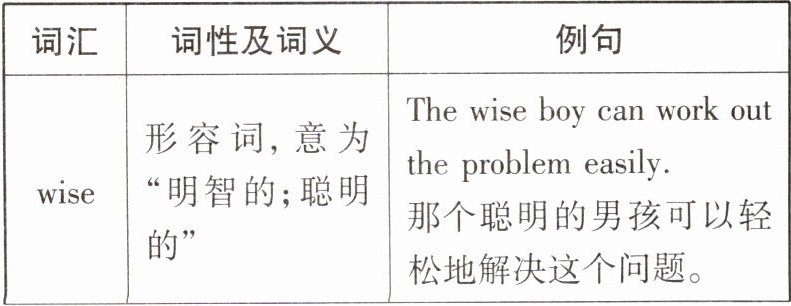
词汇 词性及词义 例句
wise 形容词,意为“明智的;聪明的” The wise boy can work out the problem easily. 那个聪明的男孩可以轻松地解决这个问题。
续表
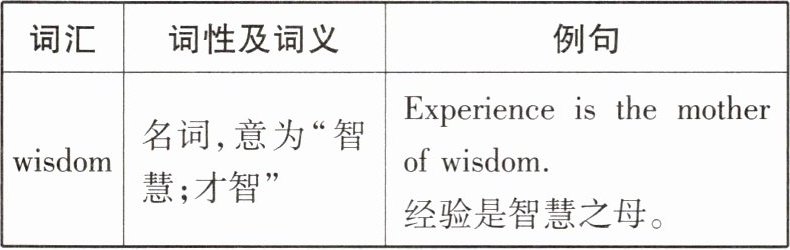
词汇 词性及词义 例句
wisdom 名词,意为“智慧;才智” Experience is the mother of wisdom. 经验是智慧之母。
情境应用
1. Trying again is a choice. (wise)
2. It's important for kids to learn to spend time . (wise)
3. Through hard work and , Han Mei always comes top of the class in exams. (wise)
wisely 副词,意为“聪明地;明智地”。
Parents hope children can spend their money wisely.
父母希望孩子们能够明智地花钱。
[知识拓展]
词汇 词性及词义 例句
wise 形容词,意为“明智的;聪明的” The wise boy can work out the problem easily. 那个聪明的男孩可以轻松地解决这个问题。
续表
词汇 词性及词义 例句
wisdom 名词,意为“智慧;才智” Experience is the mother of wisdom. 经验是智慧之母。
情境应用
1. Trying again is a choice. (wise)
2. It's important for kids to learn to spend time . (wise)
3. Through hard work and , Han Mei always comes top of the class in exams. (wise)
答案
1. wise 2. wisely 3. wisdom
解析
1. 空格后是名词choice,需要用形容词修饰该名词,wise本身是形容词,意为“明智的”,符合语境,故填wise。
2. 此处修饰动词短语spend time,修饰动词需使用副词,要将形容词wise变为副词形式wisely,意为“明智地”,符合语境。
3. 空格处和名词短语hard work并列,介词through后需接名词作宾语,要将形容词wise变为名词形式wisdom,意为“智慧”,符合语境。
2. 此处修饰动词短语spend time,修饰动词需使用副词,要将形容词wise变为副词形式wisely,意为“明智地”,符合语境。
3. 空格处和名词短语hard work并列,介词through后需接名词作宾语,要将形容词wise变为名词形式wisdom,意为“智慧”,符合语境。
探究点3 health 的用法
情境应用
1. Sport, food and enough sleep are all important to us. (health)
2. When you eat , it makes you feel better. (health)
3. My grandparents are over 90 years old, but they are still . (身体健康)
情境应用
1. Sport, food and enough sleep are all important to us. (health)
2. When you eat , it makes you feel better. (health)
3. My grandparents are over 90 years old, but they are still . (身体健康)
答案
1. healthy
2. healthily
3. healthy / in good health
2. healthily
3. healthy / in good health
解析
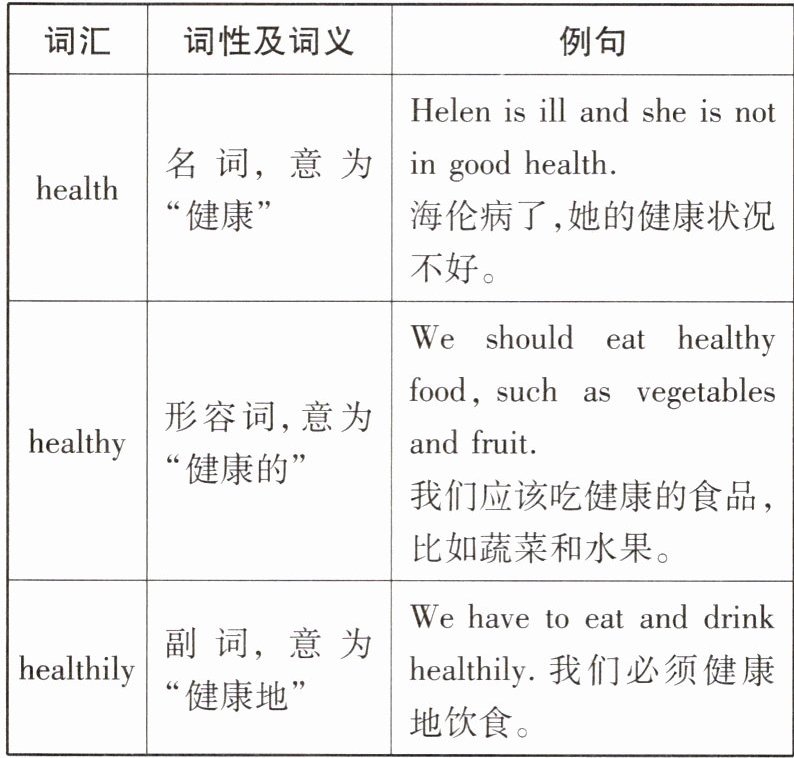
1. 空格后是名词food,需要用形容词来修饰该名词,health的形容词形式是healthy,意为“健康的”,此处用来修饰food表示健康的食物。
2. 空格前是实义动词eat,需要用副词来修饰该动词,health的副词形式是healthily,意为“健康地”,此处表示健康地进食。
3. 空格前是系动词are,此处需要填入可作表语的内容来表达“身体健康”,可以使用形容词healthy,也可以用短语in good health,二者都符合语法和语境要求。
2. 空格前是实义动词eat,需要用副词来修饰该动词,health的副词形式是healthily,意为“健康地”,此处表示健康地进食。
3. 空格前是系动词are,此处需要填入可作表语的内容来表达“身体健康”,可以使用形容词healthy,也可以用短语in good health,二者都符合语法和语境要求。
