

 登录
登录
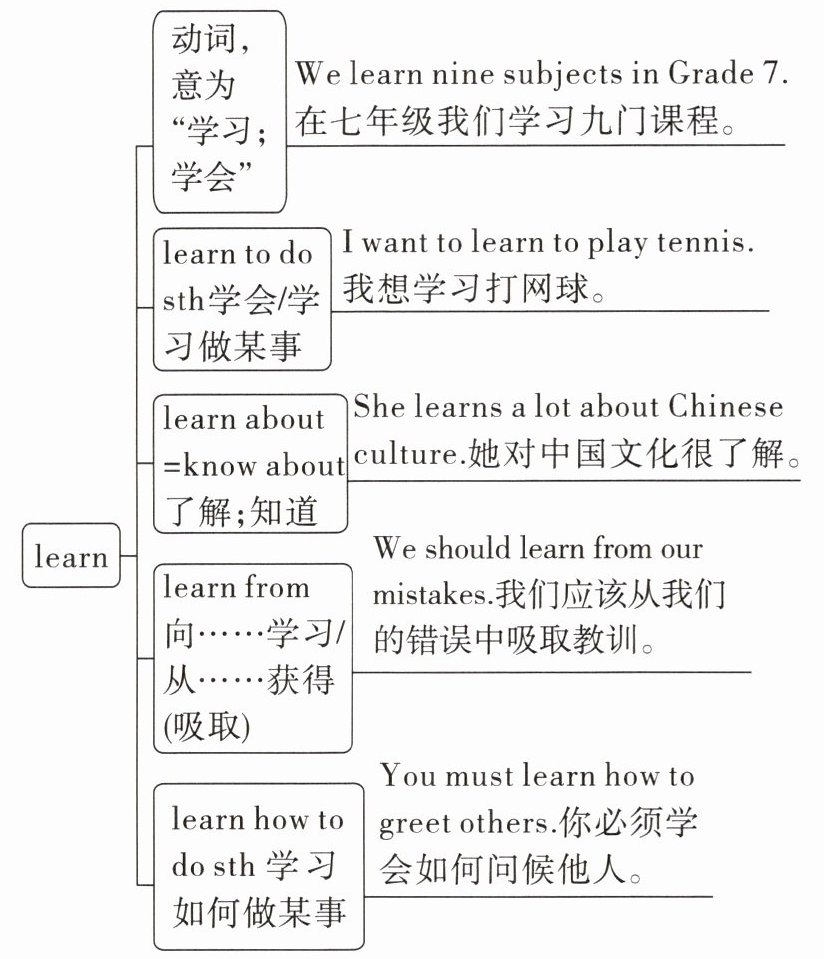
探究点1 learn 的用法
情境应用
1. I'd like to learn next summer. ( swim )
2. Anna wants to Chinese history, so she will go on a trip to Xi'an. ( 了解 )
情境应用
1. I'd like to learn next summer. ( swim )
2. Anna wants to Chinese history, so she will go on a trip to Xi'an. ( 了解 )
答案
1. to swim
2. learn about
2. learn about
解析
1. 考查learn的固定搭配learn to do sth.,意为“学习做某事”,需要将所给动词swim变为不定式形式to swim。
2. 考查learn的固定搭配,根据中文提示“了解”,对应短语learn about,want to后接动词原形,所以直接填learn about。
2. 考查learn的固定搭配,根据中文提示“了解”,对应短语learn about,want to后接动词原形,所以直接填learn about。
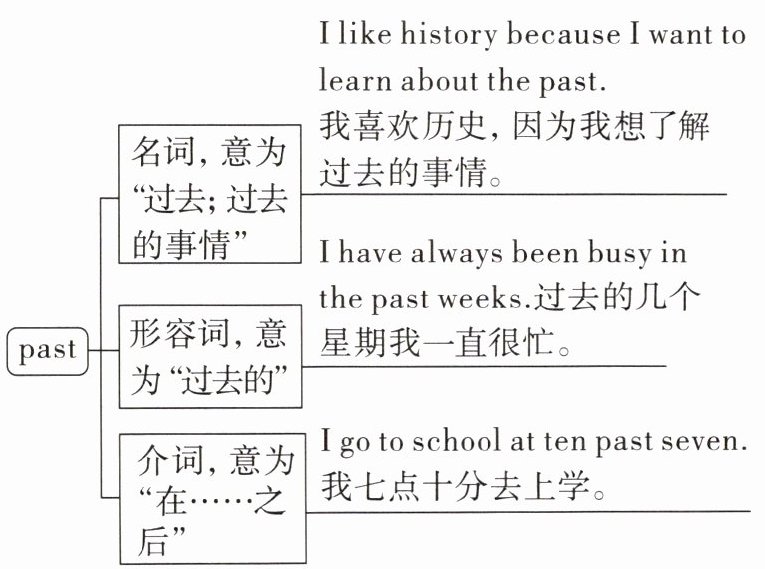
探究点2 past 的用法
情境应用
1. I usually go to bed . (十点半)
2. She was short . (过去)
情境应用
1. I usually go to bed . (十点半)
2. She was short . (过去)
答案
1. at half past ten
2. in the past
2. in the past
解析
本题考查单词past的不同用法:1. 表达时间“十点半”时,past作介词,意为“在……之后”,半点的时间表达结构为half past + 对应基数词,前面加介词at引出具体时间点;2. 表示“在过去”是固定搭配in the past,此处past作名词,意为“过去”。
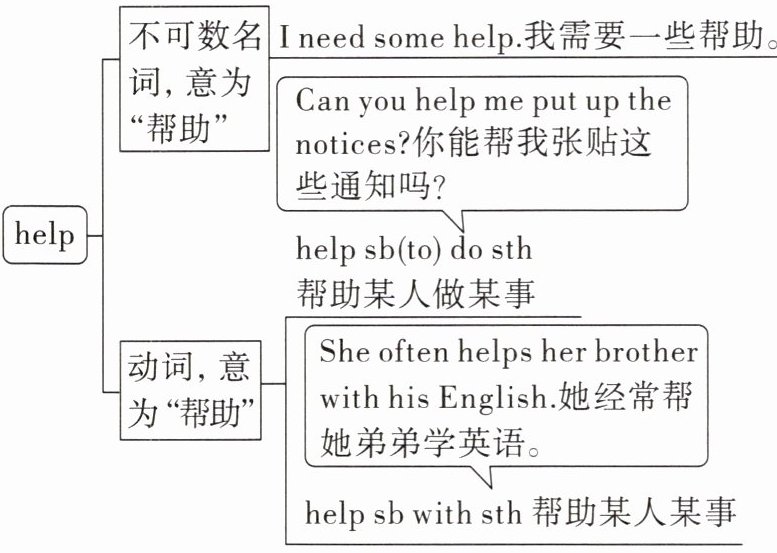
探究点3 help 的用法
情境应用
1. —Does Jane often help her parents the housework?
—Yes,she does.
A. at B. for
C. with D. about
2. —
—Yes,please. I need a pen.
A. How are you?
B. Is this a pen?
C. What's this?
D. Can I help you?
3. Our English teacher helps us better in fun ways. (learn)
情境应用
1. —Does Jane often help her parents the housework?
—Yes,she does.
A. at B. for
C. with D. about
2. —
—Yes,please. I need a pen.
A. How are you?
B. Is this a pen?
C. What's this?
D. Can I help you?
3. Our English teacher helps us better in fun ways. (learn)
答案
1. C
2. D
3. (to) learn
2. D
3. (to) learn
解析
1. 本题考查help的固定搭配help sb with sth,意为“帮助某人做某事”,空格后the housework是名词,符合该搭配的用法,因此选介词with。
2. 本题考查情景交际,答语"Yes, please. I need a pen."是对他人主动提供帮助的回应,"Can I help you?"是服务场景中主动询问对方是否需要帮助的常用表达,其余选项均不符合对应语境。
3. 本题考查help的固定搭配help sb (to) do sth,意为“帮助某人做某事”,空格后给出动词提示词learn,填入learn或者to learn都符合该搭配的语法规则。
2. 本题考查情景交际,答语"Yes, please. I need a pen."是对他人主动提供帮助的回应,"Can I help you?"是服务场景中主动询问对方是否需要帮助的常用表达,其余选项均不符合对应语境。
3. 本题考查help的固定搭配help sb (to) do sth,意为“帮助某人做某事”,空格后给出动词提示词learn,填入learn或者to learn都符合该搭配的语法规则。
