

 登录
登录
五、情景交际
根据情景提示,用得体的英语完成下列对话。
56. A:
?
B: I visit my grandparents nearly every month.
57. A: How about visiting the science museum this weekend?
B:
.
58. A: Have you read the novel Journey to the West before?
B:
.
I'm going to read it this summer holiday.
59. A:
?
B: The cup is made from bamboo.
60. A: What do you often use AI for?
B:
.
根据情景提示,用得体的英语完成下列对话。
56. A:
How often do you visit your grandparents
?
B: I visit my grandparents nearly every month.
57. A: How about visiting the science museum this weekend?
B:
Good idea/Sounds great/That sounds great/I'd love to. But...
.
58. A: Have you read the novel Journey to the West before?
B:
No, I haven't/No, not yet
.
I'm going to read it this summer holiday.
59. A:
What is the cup made from
?
B: The cup is made from bamboo.
60. A: What do you often use AI for?
B:
I often use it for learning English/I often use it to search for information
.
答案
56. How often do you visit your grandparents
57. Good idea/Sounds great/That sounds great/I'd love to. But...
58. No, I haven't/No, not yet
59. What is the cup made from
60. I often use it for learning English/I often use it to search for information
57. Good idea/Sounds great/That sounds great/I'd love to. But...
58. No, I haven't/No, not yet
59. What is the cup made from
60. I often use it for learning English/I often use it to search for information
解析
【分析】
本题为英语情景交际补全对话题型,需结合答语内容、语境及语法规则补全对话:56题根据答语表频率,需用询问频率的特殊疑问句;57题针对提议需给出得体回应(同意或委婉拒绝);58题结合现在完成时问句及答语“打算暑假读”,需用现在完成时否定回答;59题根据答语的制作材料,需用询问材料的特殊疑问句;60题针对AI用途提问,需回答具体用途。
【解析】
56. 答语“nearly every month”表频率,用“How often”引导特殊疑问句,故填How often do you visit your grandparents;
57. 对提议的回应,可填同意类表达(Good idea等)或委婉拒绝类表达(I'd love to. But...);
58. 对应现在完成时问句“Have you...?”,结合答语未读过,填No, I haven't/No, not yet;
59. 答语说明杯子制作材料,用“What”引导询问材料的特殊疑问句,故填What is the cup made from;
60. 回答AI的具体用途,可填I often use it for learning English/I often use it to search for information。
【答案】
56. How often do you visit your grandparents;57. Good idea/Sounds great/That sounds great/I'd love to. But...;58. No, I haven't/No, not yet;59. What is the cup made from;60. I often use it for learning English/I often use it to search for information
【知识点】
情景交际用语、特殊疑问句、现在完成时
【点评】
本题为英语基础情景交际题,考查日常对话的得体表达,需结合答语语境补全内容,难度适中,适合基础阶段学生巩固日常对话用法。
【难度系数】
0.7
本题为英语情景交际补全对话题型,需结合答语内容、语境及语法规则补全对话:56题根据答语表频率,需用询问频率的特殊疑问句;57题针对提议需给出得体回应(同意或委婉拒绝);58题结合现在完成时问句及答语“打算暑假读”,需用现在完成时否定回答;59题根据答语的制作材料,需用询问材料的特殊疑问句;60题针对AI用途提问,需回答具体用途。
【解析】
56. 答语“nearly every month”表频率,用“How often”引导特殊疑问句,故填How often do you visit your grandparents;
57. 对提议的回应,可填同意类表达(Good idea等)或委婉拒绝类表达(I'd love to. But...);
58. 对应现在完成时问句“Have you...?”,结合答语未读过,填No, I haven't/No, not yet;
59. 答语说明杯子制作材料,用“What”引导询问材料的特殊疑问句,故填What is the cup made from;
60. 回答AI的具体用途,可填I often use it for learning English/I often use it to search for information。
【答案】
56. How often do you visit your grandparents;57. Good idea/Sounds great/That sounds great/I'd love to. But...;58. No, I haven't/No, not yet;59. What is the cup made from;60. I often use it for learning English/I often use it to search for information
【知识点】
情景交际用语、特殊疑问句、现在完成时
【点评】
本题为英语基础情景交际题,考查日常对话的得体表达,需结合答语语境补全内容,难度适中,适合基础阶段学生巩固日常对话用法。
【难度系数】
0.7
六、看图写话
根据每小题所提供的提示词,写出一个与图画情景相符的句子。
61.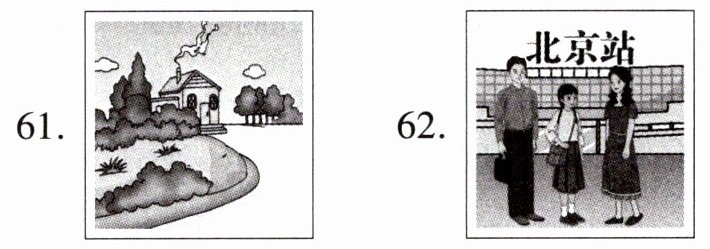 like, countryside
62. have gone to
63.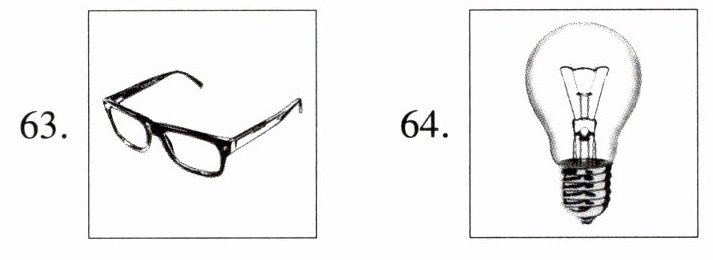 plastic
64. in 1879
61.
62.
63.
64.
根据每小题所提供的提示词,写出一个与图画情景相符的句子。
61.
like, countryside62. have gone to
63.
plastic64. in 1879
61.
I like living in the countryside./My grandparents like living in the countryside.
62.
She has gone to Beijing with her family./They have gone to Beijing.
63.
This pair of glasses is made of glass and plastic.
64.
The light bulb was invented in 1879./Thomas Edison invented the light bulb in 1879.
答案
61. I like living in the countryside./My grandparents like living in the countryside.
62. She has gone to Beijing with her family./They have gone to Beijing.
63. This pair of glasses is made of glass and plastic.
64. The light bulb was invented in 1879./Thomas Edison invented the light bulb in 1879.
62. She has gone to Beijing with her family./They have gone to Beijing.
63. This pair of glasses is made of glass and plastic.
64. The light bulb was invented in 1879./Thomas Edison invented the light bulb in 1879.
解析
【分析】
61题需结合提示词like和countryside,运用like的常用搭配(like doing sth)构造符合情景的句子;62题需用现在完成时结构have gone to(表去某地未返回),搭配合适主语和地点造句;63题需结合提示词plastic,用be made of结构(表由……制成)构造句子;64题需结合时间状语in 1879,用一般过去时相关结构构造符合发明情景的句子。
【解析】
61题:like后接动名词,可选用主语I或My grandparents,搭配地点in the countryside,造句为I like living in the countryside.或My grandparents like living in the countryside.;
62题:have gone to为现在完成时结构,主语用复数或第三人称单数,搭配地点如Beijing,造句为She has gone to Beijing with her family.或They have gone to Beijing.;
63题:提示词plastic结合物品(如眼镜),用be made of结构,造句为This pair of glasses is made of glass and plastic.;
64题:in 1879为过去时间,结合发明情景,造句为The light bulb was invented in 1879.或Thomas Edison invented the light bulb in 1879.
【答案】
61. I like living in the countryside./My grandparents like living in the countryside.
62. She has gone to Beijing with her family./They have gone to Beijing.
63. This pair of glasses is made of glass and plastic.
64. The light bulb was invented in 1879./Thomas Edison invented the light bulb in 1879.
【知识点】
like的固定搭配、现在完成时、被动语态
【点评】
本题为英语基础看图写话题,考查学生对常用词汇、句型及语法结构的运用能力,需结合提示词和情景构造正确句子,难度适中,适合基础阶段学生练习。
【难度系数】
0.7
61题需结合提示词like和countryside,运用like的常用搭配(like doing sth)构造符合情景的句子;62题需用现在完成时结构have gone to(表去某地未返回),搭配合适主语和地点造句;63题需结合提示词plastic,用be made of结构(表由……制成)构造句子;64题需结合时间状语in 1879,用一般过去时相关结构构造符合发明情景的句子。
【解析】
61题:like后接动名词,可选用主语I或My grandparents,搭配地点in the countryside,造句为I like living in the countryside.或My grandparents like living in the countryside.;
62题:have gone to为现在完成时结构,主语用复数或第三人称单数,搭配地点如Beijing,造句为She has gone to Beijing with her family.或They have gone to Beijing.;
63题:提示词plastic结合物品(如眼镜),用be made of结构,造句为This pair of glasses is made of glass and plastic.;
64题:in 1879为过去时间,结合发明情景,造句为The light bulb was invented in 1879.或Thomas Edison invented the light bulb in 1879.
【答案】
61. I like living in the countryside./My grandparents like living in the countryside.
62. She has gone to Beijing with her family./They have gone to Beijing.
63. This pair of glasses is made of glass and plastic.
64. The light bulb was invented in 1879./Thomas Edison invented the light bulb in 1879.
【知识点】
like的固定搭配、现在完成时、被动语态
【点评】
本题为英语基础看图写话题,考查学生对常用词汇、句型及语法结构的运用能力,需结合提示词和情景构造正确句子,难度适中,适合基础阶段学生练习。
【难度系数】
0.7
七、短文填空
阅读下面短文,根据语境或所给的单词提示,在每个空格内填入一个恰当的词,要求所填的词意义准确、形式正确,使短文意思完整、行文连贯。
QR codes(二维码),also called Quick Response codes,65.
car parts in factories. But soon,they 66.
Today,QR codes are used in almost every part of 68.
QR codes are convenient,71.
Use 73.
QR codes have made our tasks faster and easier. But being careful helps us use them 74.
阅读下面短文,根据语境或所给的单词提示,在每个空格内填入一个恰当的词,要求所填的词意义准确、形式正确,使短文意思完整、行文连贯。
QR codes(二维码),also called Quick Response codes,65.
were invented
(invent)in 1994. At first,they were used to keep track ofcar parts in factories. But soon,they 66.
became
(become)very popular,because they could hold much more information than the old barcodes(条形码). And it’s easy to scan them 67. with
a smartphone camera.Today,QR codes are used in almost every part of 68.
our
(we)daily life. When we shop,they enable us to pay with apps like Alipay. In restaurants,we can use them to look at digital menus. This way,customers can order food without touching anything. For transportation,QR codes work as electronic 69. tickets
(ticket)for buses,trains and planes. Museums and tourist spots let people 70. get
(get)information by scanning QR codes.QR codes are convenient,71.
but
we need to pay attention to safety when using them. Check where it 72. comes
(come)from—only scan codes from businesses you trust or official websites.Use 73.
a
safe scanner app,and don’t share important information—If a scanned link asks for your password or bank details,close it right away.QR codes have made our tasks faster and easier. But being careful helps us use them 74.
safely
(safe). As QR codes keep developing,they will probably be used in more ways.答案
65. were invented 66. became
67. with 68. our 69. tickets
70. get 71. but 72. comes
73. a 74. safely
67. with 68. our 69. tickets
70. get 71. but 72. comes
73. a 74. safely
解析
【分析】
本题为短文填空,需结合语境、语法规则及词汇变形完成填词:1. 第65空由时间状语in 1994确定时态为一般过去时,主语QR codes是动作承受者,需用一般过去时被动语态;2. 第66空由At first(过去时间)确定用一般过去时,需用become的过去式;3. 第67空表“用工具扫描”,用介词with;4. 第68空修饰名词短语daily life,需用we的形容词性物主代词;5. 第69空对应复数的交通工具,需用ticket的复数形式;6. 第70空是固定搭配let sb do sth,用动词原形;7. 第71空前后句为转折关系,用连词but;8. 第72空主语是第三人称单数it,一般现在时谓语用第三人称单数形式;9. 第73空表泛指“一个”,用不定冠词a;10. 第74空修饰动词use,需用safe的副词形式。
【解析】
65. 时间状语in 1994提示用一般过去时,主语QR codes是invent的动作承受者,构成一般过去时被动语态(were+过去分词),主语为复数,故填were invented。
66. At first表过去时间,需用一般过去时,become的过去式为became,故填became。
67. 表示“用(工具)”扫描,用介词with,故填with。
68. 修饰名词短语daily life,需用形容词性物主代词,we的形容词性物主代词为our,故填our。
69. 对应后文的buses、trains、planes,表复数概念,ticket的复数形式为tickets,故填tickets。
70. 固定搭配let sb do sth,此处用动词原形,故填get。
71. 前后句为转折关系,前句讲二维码便利,后句讲需注意安全,用转折连词but,故填but。
72. 主语it为第三人称单数,时态为一般现在时,谓语动词用第三人称单数形式,come的第三人称单数为comes,故填comes。
73. 表泛指“一个安全的扫描应用”,用不定冠词a,故填a。
74. 修饰动词use,需用副词,safe的副词形式为safely,故填safely。
【答案】
65. were invented 66. became 67. with 68. our 69. tickets 70. get 71. but 72. comes 73. a 74. safely
【知识点】
一般过去时被动语态、形容词性物主代词、副词用法
【点评】
本题考查学生对语境理解、词汇变形、固定搭配及基础语法的综合运用能力,需结合上下文逻辑和语法规则准确填词,难度适中,适合初中阶段学生巩固基础。
【难度系数】
0.6
本题为短文填空,需结合语境、语法规则及词汇变形完成填词:1. 第65空由时间状语in 1994确定时态为一般过去时,主语QR codes是动作承受者,需用一般过去时被动语态;2. 第66空由At first(过去时间)确定用一般过去时,需用become的过去式;3. 第67空表“用工具扫描”,用介词with;4. 第68空修饰名词短语daily life,需用we的形容词性物主代词;5. 第69空对应复数的交通工具,需用ticket的复数形式;6. 第70空是固定搭配let sb do sth,用动词原形;7. 第71空前后句为转折关系,用连词but;8. 第72空主语是第三人称单数it,一般现在时谓语用第三人称单数形式;9. 第73空表泛指“一个”,用不定冠词a;10. 第74空修饰动词use,需用safe的副词形式。
【解析】
65. 时间状语in 1994提示用一般过去时,主语QR codes是invent的动作承受者,构成一般过去时被动语态(were+过去分词),主语为复数,故填were invented。
66. At first表过去时间,需用一般过去时,become的过去式为became,故填became。
67. 表示“用(工具)”扫描,用介词with,故填with。
68. 修饰名词短语daily life,需用形容词性物主代词,we的形容词性物主代词为our,故填our。
69. 对应后文的buses、trains、planes,表复数概念,ticket的复数形式为tickets,故填tickets。
70. 固定搭配let sb do sth,此处用动词原形,故填get。
71. 前后句为转折关系,前句讲二维码便利,后句讲需注意安全,用转折连词but,故填but。
72. 主语it为第三人称单数,时态为一般现在时,谓语动词用第三人称单数形式,come的第三人称单数为comes,故填comes。
73. 表泛指“一个安全的扫描应用”,用不定冠词a,故填a。
74. 修饰动词use,需用副词,safe的副词形式为safely,故填safely。
【答案】
65. were invented 66. became 67. with 68. our 69. tickets 70. get 71. but 72. comes 73. a 74. safely
【知识点】
一般过去时被动语态、形容词性物主代词、副词用法
【点评】
本题考查学生对语境理解、词汇变形、固定搭配及基础语法的综合运用能力,需结合上下文逻辑和语法规则准确填词,难度适中,适合初中阶段学生巩固基础。
【难度系数】
0.6
