

 登录
登录
E Choose and complete (选择合适的单词, 完成句子)
safe easy must safely can't easily safety can mustn't
1 Tim knows how to cross the street
2 You
3 Miss Li is talking about road
4 Jim can draw a tiger. It is
5 Mrs Brown can make a cake
6 —I want to go to Zhongshan Park.
—No, you
7 —
—No. You can finish it after dinner.
safe easy must safely can't easily safety can mustn't
1 Tim knows how to cross the street
safely
.2 You
mustn't
play on the road. It's not safe
.3 Miss Li is talking about road
safety
.4 Jim can draw a tiger. It is
easy
for him.5 Mrs Brown can make a cake
easily
.6 —I want to go to Zhongshan Park.
Can
I take this bus?—No, you
can't
. This bus goes to Fuxing Park.7 —
Must
I finish my homework before dinner?—No. You can finish it after dinner.
答案
1 safely 2 mustn't, safe 3 safety 4 easy 5 easily 6 Can, can't 7 Must
解析
【分析】
首先明确所给单词的词性和语义:safe(形容词,安全的)、easy(形容词,容易的)、must(情态动词,必须)、safely(副词,安全地)、can't(情态动词否定形式,不能)、easily(副词,容易地)、safety(名词,安全)、can(情态动词,能够、可以)、mustn't(情态动词否定形式,禁止、不许)。再逐个结合句子语境和语法要求分析:
1. 句中需要副词修饰动词短语cross the street,结合“过马路”的语境,应选表示“安全地”的safely。
2. 第一空:根据常识“不能在马路上玩耍”,需用表禁止的mustn't;第二空需要形容词作表语,说明在马路上玩不安全,选safe。
3. road后需接名词构成固定搭配road safety(道路安全),所以选safety。
4. 句中it作形式主语,需要形容词作表语,结合“Jim会画老虎”的语境,说明对他来说很容易,选easy。
5. 句中需要副词修饰动词make,结合语境表示“轻松地做蛋糕”,选easily。
6. 问句是询问是否可以乘坐这辆公交,用情态动词Can;答句是否定回答,对应Can的否定形式can't。
7. 答句表示“可以晚饭后完成”,说明问句是询问“是否必须晚饭前完成”,用情态动词Must。
【解析】
1. 空白处修饰动词短语cross the street,需用副词,结合“过马路”的安全语境,选择副词safely。
2. 第一空:根据“不能在马路上玩耍”的安全常识,选择表禁止的mustn't;第二空在be动词后作表语,需用形容词,说明在马路上玩不安全,选择safe。
3. road后需接名词构成固定搭配“road safety(道路安全)”,选择名词safety。
4. 句子结构为“It is + 形容词 + for sb.”,结合“Jim会画老虎”的语境,选择形容词easy。
5. 空白处修饰动词make,需用副词,结合“轻松做蛋糕”的语境,选择副词easily。
6. 问句是请求许可的一般疑问句,用情态动词Can;否定回答对应Can的否定形式can't。
7. 答句表明可以晚饭后完成作业,说明问句是询问“是否必须晚饭前完成”,用情态动词Must。
【答案】
1 safely 2 mustn't, safe 3 safety 4 easy 5 easily 6 Can, can't 7 Must
【知识点】
副词的用法、情态动词用法、词性辨析
【点评】
本题围绕“安全、日常能力”等语境,考查形容词、副词、名词的词性辨析,以及情态动词can、must的用法。需要学生结合语法规则和语境常识选择词汇,既考察基础语法知识,也注重词汇在实际语境中的运用。
【难度系数】
0.6
首先明确所给单词的词性和语义:safe(形容词,安全的)、easy(形容词,容易的)、must(情态动词,必须)、safely(副词,安全地)、can't(情态动词否定形式,不能)、easily(副词,容易地)、safety(名词,安全)、can(情态动词,能够、可以)、mustn't(情态动词否定形式,禁止、不许)。再逐个结合句子语境和语法要求分析:
1. 句中需要副词修饰动词短语cross the street,结合“过马路”的语境,应选表示“安全地”的safely。
2. 第一空:根据常识“不能在马路上玩耍”,需用表禁止的mustn't;第二空需要形容词作表语,说明在马路上玩不安全,选safe。
3. road后需接名词构成固定搭配road safety(道路安全),所以选safety。
4. 句中it作形式主语,需要形容词作表语,结合“Jim会画老虎”的语境,说明对他来说很容易,选easy。
5. 句中需要副词修饰动词make,结合语境表示“轻松地做蛋糕”,选easily。
6. 问句是询问是否可以乘坐这辆公交,用情态动词Can;答句是否定回答,对应Can的否定形式can't。
7. 答句表示“可以晚饭后完成”,说明问句是询问“是否必须晚饭前完成”,用情态动词Must。
【解析】
1. 空白处修饰动词短语cross the street,需用副词,结合“过马路”的安全语境,选择副词safely。
2. 第一空:根据“不能在马路上玩耍”的安全常识,选择表禁止的mustn't;第二空在be动词后作表语,需用形容词,说明在马路上玩不安全,选择safe。
3. road后需接名词构成固定搭配“road safety(道路安全)”,选择名词safety。
4. 句子结构为“It is + 形容词 + for sb.”,结合“Jim会画老虎”的语境,选择形容词easy。
5. 空白处修饰动词make,需用副词,结合“轻松做蛋糕”的语境,选择副词easily。
6. 问句是请求许可的一般疑问句,用情态动词Can;否定回答对应Can的否定形式can't。
7. 答句表明可以晚饭后完成作业,说明问句是询问“是否必须晚饭前完成”,用情态动词Must。
【答案】
1 safely 2 mustn't, safe 3 safety 4 easy 5 easily 6 Can, can't 7 Must
【知识点】
副词的用法、情态动词用法、词性辨析
【点评】
本题围绕“安全、日常能力”等语境,考查形容词、副词、名词的词性辨析,以及情态动词can、must的用法。需要学生结合语法规则和语境常识选择词汇,既考察基础语法知识,也注重词汇在实际语境中的运用。
【难度系数】
0.6
F Choose and complete (选择合适的词组, 完成歌谣)
a in the park b find the way c in our life (生活)
d on the road e in our school
Signs
We need signs
We can see signs
When we can't
They can tell us where to go and how to go.
So signs are like (像……) policemen.
We can see signs
They can tell us what to do and what not to do.
So signs are like teachers.
We can see signs
They can tell us what is safe and what is not safe.
So signs are like park keepers.
a in the park b find the way c in our life (生活)
d on the road e in our school
Signs
We need signs
c
.We can see signs
d
.When we can't
b
,They can tell us where to go and how to go.
So signs are like (像……) policemen.
We can see signs
e
.They can tell us what to do and what not to do.
So signs are like teachers.
We can see signs
a
.They can tell us what is safe and what is not safe.
So signs are like park keepers.
答案
c d b e a
解析
【分析】
解题时需先明确每个词组的含义,再结合歌谣每部分的语境和语义逻辑进行匹配:
1. 第一句强调标志的必要性,结合生活常识,标志是我们生活中需要的,所以先确定对应描述生活的词组;
2. 第二句后提到标志能指引方向,这类标志常见于道路上,对应道路相关的词组;
3. 第三句后说标志告诉我们去哪和怎么走,说明是当我们找不到路时,对应找路的动词短语;
4. 第四句将标志比作老师,老师的场景是学校,对应学校相关的词组;
5. 第五句将标志比作公园管理员,管理员的场景是公园,对应公园相关的词组。
【解析】
1. 第一空:根据“We need signs ______”的语境,标志是我们生活中不可或缺的,选项c“in our life (生活)”符合语义,故填c;
2. 第二空:由后句“They can tell us where to go and how to go.”可知,这类指路的标志通常出现在路上,选项d“on the road”符合场景,故填d;
3. 第三空:结合前句“When we can't ______”和后句指路的内容,可知是找不到路时需要标志指引,选项b“find the way”符合语境,故填b;
4. 第四空:根据“So signs are like teachers.”,老师对应的场景是学校,学校的标志会规范行为,告诉我们该做什么不该做什么,选项e“in our school”符合,故填e;
5. 第五空:由“So signs are like park keepers.”可知,公园管理员对应的场景是公园,公园的标志会提示安全相关内容,选项a“in the park”符合,故填a。
【答案】
c d b e a
【知识点】
介词短语辨析、语境语义匹配、动词短语运用
【点评】
本题考查学生对介词短语和动词短语的理解与运用,需要结合生活场景和语境逻辑来选择合适的词组,既考查词汇掌握,也考查学生联系实际的逻辑思维能力,有助于提升学生在语境中运用词汇的能力。
【难度系数】
0.6
解题时需先明确每个词组的含义,再结合歌谣每部分的语境和语义逻辑进行匹配:
1. 第一句强调标志的必要性,结合生活常识,标志是我们生活中需要的,所以先确定对应描述生活的词组;
2. 第二句后提到标志能指引方向,这类标志常见于道路上,对应道路相关的词组;
3. 第三句后说标志告诉我们去哪和怎么走,说明是当我们找不到路时,对应找路的动词短语;
4. 第四句将标志比作老师,老师的场景是学校,对应学校相关的词组;
5. 第五句将标志比作公园管理员,管理员的场景是公园,对应公园相关的词组。
【解析】
1. 第一空:根据“We need signs ______”的语境,标志是我们生活中不可或缺的,选项c“in our life (生活)”符合语义,故填c;
2. 第二空:由后句“They can tell us where to go and how to go.”可知,这类指路的标志通常出现在路上,选项d“on the road”符合场景,故填d;
3. 第三空:结合前句“When we can't ______”和后句指路的内容,可知是找不到路时需要标志指引,选项b“find the way”符合语境,故填b;
4. 第四空:根据“So signs are like teachers.”,老师对应的场景是学校,学校的标志会规范行为,告诉我们该做什么不该做什么,选项e“in our school”符合,故填e;
5. 第五空:由“So signs are like park keepers.”可知,公园管理员对应的场景是公园,公园的标志会提示安全相关内容,选项a“in the park”符合,故填a。
【答案】
c d b e a
【知识点】
介词短语辨析、语境语义匹配、动词短语运用
【点评】
本题考查学生对介词短语和动词短语的理解与运用,需要结合生活场景和语境逻辑来选择合适的词组,既考查词汇掌握,也考查学生联系实际的逻辑思维能力,有助于提升学生在语境中运用词汇的能力。
【难度系数】
0.6
G Look, judge and complete (看图, 判断行为对错, 完成对话)
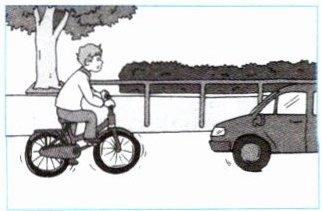
1 A: What's Mike doing?
B:
A: What mustn't he do?
B:
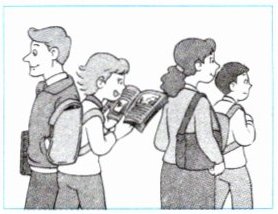
2 A: What's Helen doing?
B:
A: Is it safe?
B:
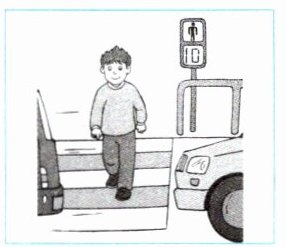
3 A: What's Liu Tao doing?
B:
A: What should he do?
B:
1 A: What's Mike doing?
B:
He's riding a bike on the road.
A: What mustn't he do?
B:
He mustn't ride on the road.
2 A: What's Helen doing?
B:
She's reading on the road/when she is walking.
A: Is it safe?
B:
No, it isn't.
3 A: What's Liu Tao doing?
B:
He's crossing the road when there is a red man.
A: What should he do?
B:
He should stop and wait for the green man.
答案
1 He's riding a bike on the road. He mustn't ride on the road. 2 She's reading on the road/when she is walking. No, it isn't. 3 He's crossing the road when there is a red man. He should stop and wait for the green man.
解析
【分析】
解题时可按以下思路进行:
1. 先根据问句“What's...doing?”,确定要用现在进行时(be+动词-ing形式)描述人物正在进行的动作;
2. 结合交通安全常识判断行为的对错或合理性:
第一题中,Mike在马路上骑车属于违规行为,用“mustn't+动词原形”表达禁止的行为;
第二题中,Helen走路时看书存在安全隐患,需给出否定的判断回答;
第三题中,刘涛红灯时过马路不符合交通规则,用“should+动词原形”给出正确的做法建议;
3. 确保句子语法正确,符合对话的逻辑连贯性。
【解析】
1. 第一组对话:
回答“What's Mike doing?”,用现在进行时描述动作:He's riding a bike on the road.
回答“What mustn't he do?”,结合交通规则说明禁止的行为:He mustn't ride on the road.
2. 第二组对话:
回答“What's Helen doing?”,用现在进行时描述动作:She's reading on the road/when she is walking.
回答“Is it safe?”,根据安全常识给出否定回答:No, it isn't.
3. 第三组对话:
回答“What's Liu Tao doing?”,用现在进行时描述动作:He's crossing the road when there is a red man.
回答“What should he do?”,结合交通规则给出正确做法:He should stop and wait for the green man.
【答案】
1 He's riding a bike on the road. He mustn't ride on the road. 2 She's reading on the road/when she is walking. No, it isn't. 3 He's crossing the road when there is a red man. He should stop and wait for the green man.
【知识点】
现在进行时运用、交通安全问答、情态动词用法
【点评】
本题结合生活中的交通安全场景,考查现在进行时的表达以及情态动词mustn't、should的实际运用,既提升了英语语言运用能力,也强化了交通安全意识,题目贴近生活,实用性较强。
【难度系数】
0.6
解题时可按以下思路进行:
1. 先根据问句“What's...doing?”,确定要用现在进行时(be+动词-ing形式)描述人物正在进行的动作;
2. 结合交通安全常识判断行为的对错或合理性:
第一题中,Mike在马路上骑车属于违规行为,用“mustn't+动词原形”表达禁止的行为;
第二题中,Helen走路时看书存在安全隐患,需给出否定的判断回答;
第三题中,刘涛红灯时过马路不符合交通规则,用“should+动词原形”给出正确的做法建议;
3. 确保句子语法正确,符合对话的逻辑连贯性。
【解析】
1. 第一组对话:
回答“What's Mike doing?”,用现在进行时描述动作:He's riding a bike on the road.
回答“What mustn't he do?”,结合交通规则说明禁止的行为:He mustn't ride on the road.
2. 第二组对话:
回答“What's Helen doing?”,用现在进行时描述动作:She's reading on the road/when she is walking.
回答“Is it safe?”,根据安全常识给出否定回答:No, it isn't.
3. 第三组对话:
回答“What's Liu Tao doing?”,用现在进行时描述动作:He's crossing the road when there is a red man.
回答“What should he do?”,结合交通规则给出正确做法:He should stop and wait for the green man.
【答案】
1 He's riding a bike on the road. He mustn't ride on the road. 2 She's reading on the road/when she is walking. No, it isn't. 3 He's crossing the road when there is a red man. He should stop and wait for the green man.
【知识点】
现在进行时运用、交通安全问答、情态动词用法
【点评】
本题结合生活中的交通安全场景,考查现在进行时的表达以及情态动词mustn't、should的实际运用,既提升了英语语言运用能力,也强化了交通安全意识,题目贴近生活,实用性较强。
【难度系数】
0.6
