

 登录
登录
B
There was a special gift for teachers when children first went to school in ancient China. It was called shu xiu (束脩之礼). It was actually a bunch of dried salted meat.
Back then, meat was very expensive and hard to get. Most families could only have it on important days. It was so valuable that people even used it to trade for rice, cloth and other daily things. So when kids started their school life, their parents gave shu xiu to teachers. This small gift showed deep respect for teachers and the great value of education.
The tradition of shu xiu started over 2,000 years ago, during the Spring and Autumn Period. It lasted for more than one thousand years until the Tang Dynasty. During these long years, its meaning slowly changed. Some families began to use it as school fees (学费) instead of just a polite gift. Later, people even called a teacher's monthly salary (薪水) shu xiu.
Today, teachers in China are still highly respected by everyone. But the way we show our respect has become different. We no longer give shu xiu as a gift. Instead, we often give teachers flowers, hand-made cards or thank-you letters. However, shu xiu remains an important part of Chinese history, reminding us of the long tradition of respecting teachers.
根据材料内容选择最佳答案。
(
A. A kind of book.
B. A bunch of dried salted meat.
C. A teacher's name.
D. A school bag.
(
A. To show respect for teachers.
B. To ask teachers for help.
C. To trade it for teaching materials.
D. To let teachers keep it as a symbol of trust.
(
A. 2,000 years ago.
B. The Tang Dynasty.
C. The Spring and Autumn Period.
D. It never ended.
(
A. Ancient people ate meat every day.
B. People today don't respect teachers.
C. Education was not important in ancient times.
D. People called a teacher's monthly salary shu xiu.
(
There was a special gift for teachers when children first went to school in ancient China. It was called shu xiu (束脩之礼). It was actually a bunch of dried salted meat.
Back then, meat was very expensive and hard to get. Most families could only have it on important days. It was so valuable that people even used it to trade for rice, cloth and other daily things. So when kids started their school life, their parents gave shu xiu to teachers. This small gift showed deep respect for teachers and the great value of education.
The tradition of shu xiu started over 2,000 years ago, during the Spring and Autumn Period. It lasted for more than one thousand years until the Tang Dynasty. During these long years, its meaning slowly changed. Some families began to use it as school fees (学费) instead of just a polite gift. Later, people even called a teacher's monthly salary (薪水) shu xiu.
Today, teachers in China are still highly respected by everyone. But the way we show our respect has become different. We no longer give shu xiu as a gift. Instead, we often give teachers flowers, hand-made cards or thank-you letters. However, shu xiu remains an important part of Chinese history, reminding us of the long tradition of respecting teachers.
根据材料内容选择最佳答案。
(
B
)6. What was shu xiu in ancient times?A. A kind of book.
B. A bunch of dried salted meat.
C. A teacher's name.
D. A school bag.
(
A
)7. Why did ancient families give shu xiu to teachers?A. To show respect for teachers.
B. To ask teachers for help.
C. To trade it for teaching materials.
D. To let teachers keep it as a symbol of trust.
(
B
)8. When did the tradition of shu xiu end?A. 2,000 years ago.
B. The Tang Dynasty.
C. The Spring and Autumn Period.
D. It never ended.
(
D
)9. What can we infer from the text?A. Ancient people ate meat every day.
B. People today don't respect teachers.
C. Education was not important in ancient times.
D. People called a teacher's monthly salary shu xiu.
(
A
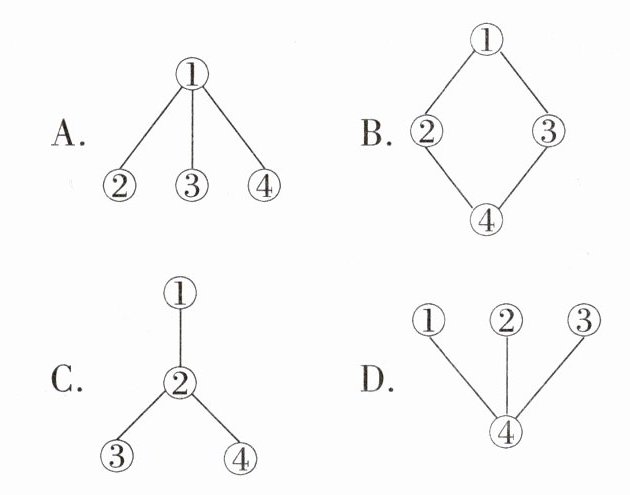
)10. What is the right structure of the text?答案
6. B 由第一段第三句可知,在古代,束脩之礼是一块干腌肉。
7. A 由第二段最后一句可知,束脩之礼显示了对老师的尊敬和对教育的重视。
8. B 由第三段第二句可知,束脩之礼持续到唐朝。
9. D 由第三段最后一句可知,后来,人们称老师的月薪为束脩。
10. A
7. A 由第二段最后一句可知,束脩之礼显示了对老师的尊敬和对教育的重视。
8. B 由第三段第二句可知,束脩之礼持续到唐朝。
9. D 由第三段最后一句可知,后来,人们称老师的月薪为束脩。
10. A
解析
【解析】
6. 根据第一段第三句“It was actually a bunch of dried salted meat.”,可知古代的“束脩”是一束干腌肉,故选B。
7. 根据第二段最后一句“This small gift showed deep respect for teachers and the great value of education.”,可知古代家庭给老师送束脩是为了表达对老师的尊敬,故选A。
8. 根据第三段第二句“It lasted for more than one thousand years until the Tang Dynasty.”,可知束脩的传统持续到唐朝,也就是在唐朝结束,故选B。
9. 根据第三段最后一句“Later, people even called a teacher's monthly salary (薪水) shu xiu.”,可知D选项表述正确;A选项与原文“Most families could only have it on important days.”不符;B选项与原文“Today, teachers in China are still highly respected by everyone.”不符;C选项与原文“showed deep respect for teachers and the great value of education.”不符,故选D。
10. 文章第一段①总起介绍“束脩”是什么;第二段②介绍送束脩的原因和它的意义;第三段③介绍束脩传统的时长和含义的演变;第四段④介绍如今人们对老师表达尊敬的方式以及束脩的历史意义。整体为总分结构,对应选项A的结构,故选A。
【答案】
6. B;7. A;8. B;9. D;10. A
【知识点】
细节理解题、文章结构分析、传统文化常识
【点评】
本题围绕中国古代的束脩之礼展开,考查学生对文章细节的抓取能力和文章结构的分析能力,同时帮助学生了解古代尊师重教的传统。
【难度系数】
0.7
6. 根据第一段第三句“It was actually a bunch of dried salted meat.”,可知古代的“束脩”是一束干腌肉,故选B。
7. 根据第二段最后一句“This small gift showed deep respect for teachers and the great value of education.”,可知古代家庭给老师送束脩是为了表达对老师的尊敬,故选A。
8. 根据第三段第二句“It lasted for more than one thousand years until the Tang Dynasty.”,可知束脩的传统持续到唐朝,也就是在唐朝结束,故选B。
9. 根据第三段最后一句“Later, people even called a teacher's monthly salary (薪水) shu xiu.”,可知D选项表述正确;A选项与原文“Most families could only have it on important days.”不符;B选项与原文“Today, teachers in China are still highly respected by everyone.”不符;C选项与原文“showed deep respect for teachers and the great value of education.”不符,故选D。
10. 文章第一段①总起介绍“束脩”是什么;第二段②介绍送束脩的原因和它的意义;第三段③介绍束脩传统的时长和含义的演变;第四段④介绍如今人们对老师表达尊敬的方式以及束脩的历史意义。整体为总分结构,对应选项A的结构,故选A。
【答案】
6. B;7. A;8. B;9. D;10. A
【知识点】
细节理解题、文章结构分析、传统文化常识
【点评】
本题围绕中国古代的束脩之礼展开,考查学生对文章细节的抓取能力和文章结构的分析能力,同时帮助学生了解古代尊师重教的传统。
【难度系数】
0.7
