

 登录
登录
四、阅读理解
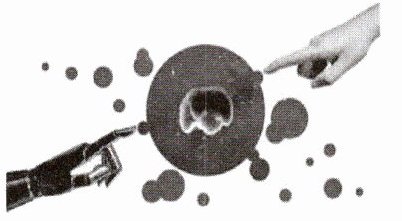
What would naturalist Charles Darwin, author of 1859's the Origin of Species, think of today's pioneering evolutionary(进化的)development? Scientists at the University of Vermont (UVM) have just "designed" a living robot made of living cells on a supercomputer, called "xenobots".
Unlike traditional robots, an xenobot is a very small robot. Its size is smaller than a grain of salt. It's not made of metal, plastic, or other synthetic(人造的)materials. Rather, it is made from living cells taken from an African frog(青蛙). These robots cure themselves after being cut and they are ALIVE! They are living robots!
The purpose of inventing xenobots is to make them improve our lives, especially we want them to solve problems troubling our planet. There are some future uses of xenobots that have been proposed. Let's look at some of them!
In the future, scientists may develop xenobots to detect and fight cancer. They are tiny and can go through human bodies. When something is wrong with human bodies, they could receive the order to find the problems in the human body and fight diseases or cancers. With these usages, xenobots would become a revolutionary element in the medical field.
These xenobots aren't just limited to the medical field. They could also become the saviors of our planet! Due to increased industrial activity over the past few decades, the oceans and other water bodies of the planet are being badly polluted, as waste materials from industries and factories are being recklessly poured into the oceans and nearby water bodies. Thus, water bodies are littered with microplastics, which cannot be easily recycled. Xenobots could help. They could collect or even break down(分解)these microplastics in the oceans and other water bodies. They could clean radioactive material in dangerous places.
The technology of such kind of robots improves amazingly with the help of artificial intelligence(AI). However, some people are worrying about the challenges that xenobots would bring. What if this technology could be used in a wrong way? What would happen if the technology were used against the international law? Would xenobots finally take place of human beings? While we still don't have the answer connected to this brand-new technology, one thing is sure: it is here to help us, and it works!
()1. What does the underlined word "detect" in Paragraph 4 mean in this passage?
A. Avoid.
B. Discover.
C. Record.
D. Control.
()2. Which of the following are mentioned in the passage?
① What xenobots are.
② Why scientists invent xenobots.
③ How xenebots could help.
④ What disasters xenobots bring.
A. ①②③
B. ①②④
C. ①③④
D. ②③④
()3. What can we learn about xenobots?
A. They are shaped like African frogs.
B. They could cure patients of their cancers.
C. They are designed with the help of Darwin.
D. They could help fight against water pollution.
()4. The writer feels about the future of xenobots.
A. confident
B. crazy
C. uncertain
D. worried
What would naturalist Charles Darwin, author of 1859's the Origin of Species, think of today's pioneering evolutionary(进化的)development? Scientists at the University of Vermont (UVM) have just "designed" a living robot made of living cells on a supercomputer, called "xenobots".
Unlike traditional robots, an xenobot is a very small robot. Its size is smaller than a grain of salt. It's not made of metal, plastic, or other synthetic(人造的)materials. Rather, it is made from living cells taken from an African frog(青蛙). These robots cure themselves after being cut and they are ALIVE! They are living robots!
The purpose of inventing xenobots is to make them improve our lives, especially we want them to solve problems troubling our planet. There are some future uses of xenobots that have been proposed. Let's look at some of them!
In the future, scientists may develop xenobots to detect and fight cancer. They are tiny and can go through human bodies. When something is wrong with human bodies, they could receive the order to find the problems in the human body and fight diseases or cancers. With these usages, xenobots would become a revolutionary element in the medical field.
These xenobots aren't just limited to the medical field. They could also become the saviors of our planet! Due to increased industrial activity over the past few decades, the oceans and other water bodies of the planet are being badly polluted, as waste materials from industries and factories are being recklessly poured into the oceans and nearby water bodies. Thus, water bodies are littered with microplastics, which cannot be easily recycled. Xenobots could help. They could collect or even break down(分解)these microplastics in the oceans and other water bodies. They could clean radioactive material in dangerous places.
The technology of such kind of robots improves amazingly with the help of artificial intelligence(AI). However, some people are worrying about the challenges that xenobots would bring. What if this technology could be used in a wrong way? What would happen if the technology were used against the international law? Would xenobots finally take place of human beings? While we still don't have the answer connected to this brand-new technology, one thing is sure: it is here to help us, and it works!
()1. What does the underlined word "detect" in Paragraph 4 mean in this passage?
A. Avoid.
B. Discover.
C. Record.
D. Control.
()2. Which of the following are mentioned in the passage?
① What xenobots are.
② Why scientists invent xenobots.
③ How xenebots could help.
④ What disasters xenobots bring.
A. ①②③
B. ①②④
C. ①③④
D. ②③④
()3. What can we learn about xenobots?
A. They are shaped like African frogs.
B. They could cure patients of their cancers.
C. They are designed with the help of Darwin.
D. They could help fight against water pollution.
()4. The writer feels about the future of xenobots.
A. confident
B. crazy
C. uncertain
D. worried
答案
1. B
2. A
3. D
4. A
2. A
3. D
4. A
