

 登录
(B)
Happiness beats cold
Winter is cold in many parts of the world. But people there beat the cold with carnivals(狂欢节)!
In the old days, people asked the sky for good weather and harvest during carnivals. Today, carnivals are like big parties. People have fun eating and playing.
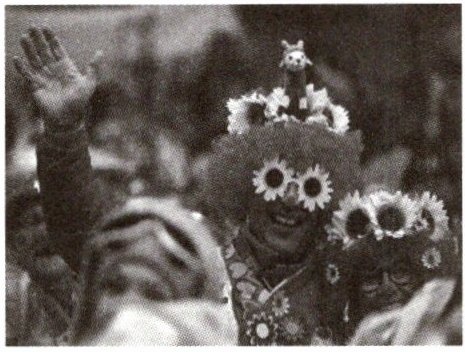
Germany has some of the best "parties", such as the Cologne(科隆) Carnival. People dress up, sing and dance in the streets. They also throw flowers and candy into the air. The celebrations in different parts of Germany are from November to February. People say that carnival season is their fifth season.
The Netherlands(荷兰)has a tradition on November 11 every year. People come to the city center and count down to the beginning of carnival season. The country is filled with happiness.
根据短文内容选择正确的答案。
(
A. For good luck and healthy body.
B. For a lot of fruits and vegetables.
C. For good weather and harvest.
D. For much money and more jobs.
(
A. Eat and play.
B. Run and jump.
C. Read and write.
D. Cook and eat.
(
A. Sing and dance.
B. Throw flowers and candy.
C. Dress up.
D. Ask the sky for good weather.
(
A.跳动。
B.战胜。
C.敲打。
D.不敌。
Happiness beats cold
Winter is cold in many parts of the world. But people there beat the cold with carnivals(狂欢节)!
In the old days, people asked the sky for good weather and harvest during carnivals. Today, carnivals are like big parties. People have fun eating and playing.
Germany has some of the best "parties", such as the Cologne(科隆) Carnival. People dress up, sing and dance in the streets. They also throw flowers and candy into the air. The celebrations in different parts of Germany are from November to February. People say that carnival season is their fifth season.
The Netherlands(荷兰)has a tradition on November 11 every year. People come to the city center and count down to the beginning of carnival season. The country is filled with happiness.
根据短文内容选择正确的答案。
(
C
)1. Why did people ask the sky in the old days?A. For good luck and healthy body.
B. For a lot of fruits and vegetables.
C. For good weather and harvest.
D. For much money and more jobs.
(
A
)2. What do people do in carnivals today?A. Eat and play.
B. Run and jump.
C. Read and write.
D. Cook and eat.
(
D
)3. What don't people do in the Cologne carnival?A. Sing and dance.
B. Throw flowers and candy.
C. Dress up.
D. Ask the sky for good weather.
(
B
)4. What's the Chinese meaning of beats in the title(标题)?A.跳动。
B.战胜。
C.敲打。
D.不敌。
答案
1.C 2.A 3.D 4.B
解析
【分析】
这是一篇关于狂欢节的阅读理解题,解题思路为:先通读短文掌握大意,再针对每个题目回到原文定位对应信息,逐一比对选项得出答案。第1题定位“过去人们向天空祈求的内容”,第2题定位“现在狂欢节人们的活动”,第3题定位“科隆狂欢节的活动内容”,第4题通过标题语境猜测单词含义。
【解析】
1. 细节理解题:根据短文第二段第一句“In the old days, people asked the sky for good weather and harvest during carnivals.”可知,过去人们向天空祈求好天气和丰收,对应选项C,故选C。
2. 细节理解题:根据短文第二段最后两句“Today, carnivals are like big parties. People have fun eating and playing.”可知,现在人们在狂欢节吃和玩,对应选项A,故选A。
3. 细节理解题:根据短文第三段“People dress up, sing and dance in the streets. They also throw flowers and candy into the air.”可知,科隆狂欢节人们会盛装打扮、唱歌跳舞、扔花和糖果;而“向天空祈求好天气”是过去狂欢节的做法,不是现在科隆狂欢节的活动,对应选项D,故选D。
4. 词义猜测题:标题“Happiness beats cold”意为“快乐战胜寒冷”,结合语境,beats在此处表示“战胜”,对应选项B,故选B。
【答案】
1.C 2.A 3.D 4.B
【知识点】
阅读理解、细节理解题、词义猜测题
【点评】
本题围绕狂欢节的过去与现在的活动展开,考查学生快速定位原文信息和猜测词义的能力,题目难度较低,适合基础阶段学生练习。
【难度系数】
0.7
(C)
On October 16, Shenzhou ⅩⅢ carried three Chinese astronauts(宇航员)into space. They are Zhai Zhigang, Wang Yaping and Ye Guangfu. They will live and work in Tiangong's core module(舱), Tianhe, for six months. This will be the longest space journey by astronauts.
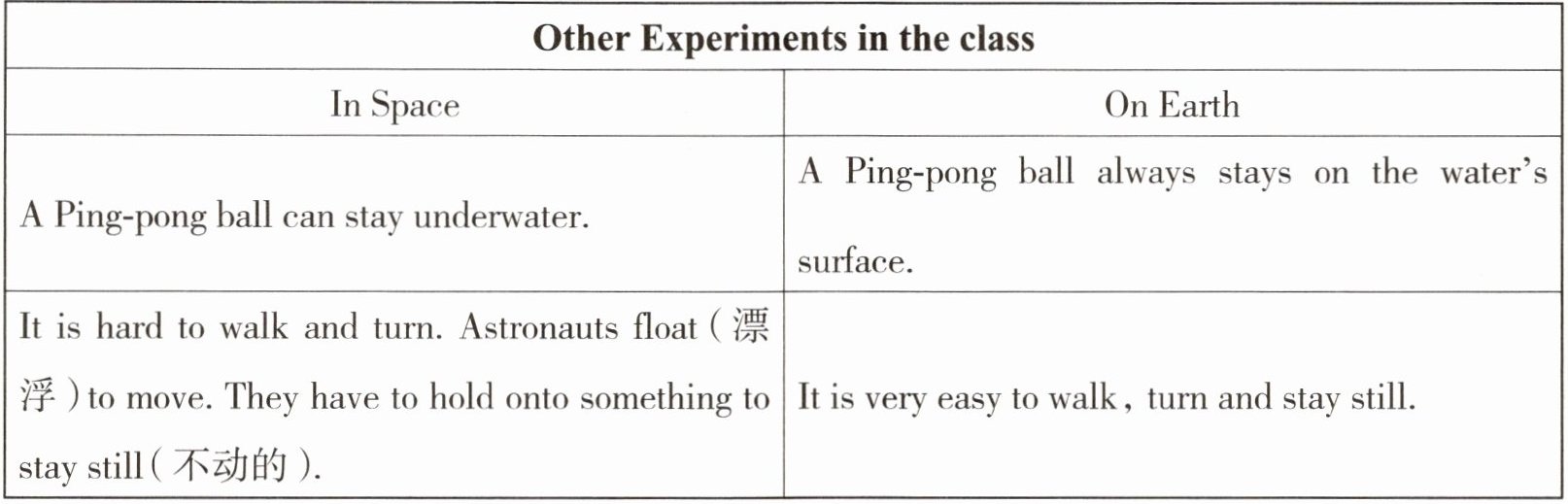
During their stay, they have many tasks to do. They will do scientific experiments(科学实验)and spacewalks. Wang will be the first Chinese woman to carry out a spacewalk. She will also become a "space teacher" and give a lesson to students on Earth.
根据材料内容选择正确的答案。
(
A. October 16 B. December 20 C. September 16 D. November 22
(
A. May B. April C. June D. March
(
A. the highest B. the longest C. the shortest D. the biggest
(
A. Ye Guangfu B. Zhai Zhigang C. Wang Yaping D. Yang Liwei
(
A. sports B. maths C. English D. science
On October 16, Shenzhou ⅩⅢ carried three Chinese astronauts(宇航员)into space. They are Zhai Zhigang, Wang Yaping and Ye Guangfu. They will live and work in Tiangong's core module(舱), Tianhe, for six months. This will be the longest space journey by astronauts.
During their stay, they have many tasks to do. They will do scientific experiments(科学实验)and spacewalks. Wang will be the first Chinese woman to carry out a spacewalk. She will also become a "space teacher" and give a lesson to students on Earth.
根据材料内容选择正确的答案。
(
A
)1. On A
Shenzhou ⅩⅢ carried the Chinese astronauts into space.A. October 16 B. December 20 C. September 16 D. November 22
(
B
)2. They will come back in B
.A. May B. April C. June D. March
(
B
)3. This is the B
space journey by astronauts.A. the highest B. the longest C. the shortest D. the biggest
(
C
)4. C
will give a lesson to students in space.A. Ye Guangfu B. Zhai Zhigang C. Wang Yaping D. Yang Liwei
(
D
)5. The experiments teach us a lot about D
.A. sports B. maths C. English D. science
答案
1.A 2.B 3.B 4.C 5.D
解析
【分析】
本题为英语阅读理解细节类题目,解题思路是:先阅读题干,明确每个问题的关键词(如日期、时长、人物、实验类型等),再带着关键词回到原文中定位对应信息,最后将原文信息与选项逐一匹配,选出正确答案即可。
【解析】
1. 定位原文第一句“On October 16, Shenzhou ⅩⅢ carried three Chinese astronauts into space.”,可知发射日期是10月16日,对应选项A。
2. 原文提到“they will live and work in Tiangong's core module for six months”,出发时间是10月,6个月后为次年4月,对应选项B。
3. 原文明确表述“This will be the longest space journey by astronauts.”,对应选项B。
4. 原文提到“Wang will also become a 'space teacher' and give a lesson to students on Earth.”,可知是王亚平,对应选项C。
5. 原文提到“They will do scientific experiments”,说明实验与科学相关,对应选项D。
【答案】
1.A 2.B 3.B 4.C 5.D
【知识点】
英语阅读理解、细节理解题
【点评】
本题以神舟十三号航天任务为背景,考查学生提取文章关键细节的能力,内容贴近时事,难度适中,只要仔细阅读原文即可正确作答。
【难度系数】
0.6
