

 登录
三、完形填空
KEY→P35
范畴:人与社会 主题:名人故事 体裁:记叙文 难度:★★★★ 建议用时:9分钟 评价:/15
Who is the most famous artist in the world?
Picasso(1881-1973) was one of the most famous
People
This new way of painting
(
(
(
(
(
(
(
(
(
(
(
(
(
(
(
KEY→P35
范畴:人与社会 主题:名人故事 体裁:记叙文 难度:★★★★ 建议用时:9分钟 评价:/15
Who is the most famous artist in the world?
A
1 not Leonardo da Vinci, it might be Pablo Picasso.Picasso(1881-1973) was one of the most famous
B
2 of the 20th century. He had a D
3 for drawing. Born in Spain, Picasso A
4 his talent at an early age. He first learned C
5 from his father, who was an art teacher. By the time he was 13, he could already draw B
6 than his father. He could A
7 and paint anything in any style. He liked to D
8 new ideas by himself. This made him special.People
A
9 his life and art into different periods. One of C
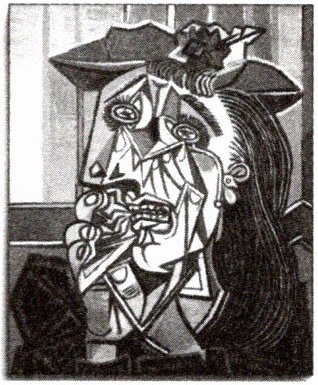
10 most famous periods was his Cubism period. Cubism means that a(n) B
11 paints things, like a bottle, from many A
12 angles all in the same picture. D
13 you can see the front, the back and the sides of the bottle all D
14 the same time. In a way, it's a bit like having X-ray eyes.This new way of painting
D
15 the art world in the 20th century. Picasso has become many artists' idol nowadays. People say he helps us see the world in new ways.(
A
)1. A. If B. Because C. Though D. When(
B
)2. A. teachers B. artists C. scientists D. managers(
D
)3. A. try B. job C. time D. talent(
A
)4. A. showed B. found C. picked D. took(
C
)5. A. dancing B. singing C. painting D. working(
B
)6. A. well B. better C. badly D. worse(
A
)7. A. draw B. write C. sing D. speak(
D
)8. A. try to B. try for C. try on D. try out(
A
)9. A. divided B. turned C. threw D. carried(
C
)10. A. her B. your C. his D. their(
B
)11. A. writer B. artist C. musician D. singer(
A
)12. A. different B. small C. large D. difficult(
D
)13. A. However B. But C. Or D. So(
D
)14. A. in B. for C. on D. at(
D
)15. A. finished B. made C. found D. surprised答案
完形填空
本文对画家毕加索进行了简单的介绍。毕加索是20世纪最著名的艺术家之一。他很有绘画天赋,因此成为很多艺术家的偶像。
1. A 这里表达的是“如果”,所以用连词If。
2. B 由短文开头句“Who is the most famous artist in the world?”可知,他是一位著名的艺术家。
3. D 由上文可知,他在画画方面有天赋。“have a talent for ...”意为“在……方面有天赋”,为固定短语。
4. A show one's talent 意为“展现某人的天赋”。
5. C 由语境可知,此处表示毕加索跟他的父亲学画画。
6. B 由句中的than可判断,这里用比较级形式;由句意可知,到13岁时,他的画功已经比他父亲还要好。
7. A 他能用任何风格画出任何东西。由下文paint可知,这里填写动词draw。
8. D 他喜欢自己尝试新想法。try out意为“尝试”。
9. A 由下文的描述可判断,人们把他的生活和艺术分成了不同的时期。“divide ... into ...”意为“把……分成……”。
10. C 所填单词指代“毕加索的”,用his。
11. B 立体主义是指艺术家从不同的角度来描绘对象,将其置于同一个画面中。
12. A 由下文中的“... you can see the front, the back and the sides of the bottle ...”可知,人们可以看到不同的角度。
13. D 空后句子表结果,用连词So。
14. D at the same time意为“同时”,为固定短语。
15. D 由上文的描述可知,这种新的绘画方式震惊了20世纪的艺术界。
