

 登录
三、[新情境·传统文化]人们常用“高山流水”来形容知音。你知道这个典故的来历吗?阅读俞伯牙和钟子期的故事,完成下列任务。
It is a rainy day. Boya is playing the guqin by the river. He sees a woodcutter(砍柴人) named Ziqi and asks him to listen to his music.
Boya begins playing the guqin, imagining(想象) high mountains. After listening, Ziqi says,“I can hear mountains singing in your music!” Boya then plays the guqin very fast and imagines rushing water. Ziqi listens carefully and says, “Your music sounds strong!” Boya is surprised(惊讶的) because Ziqi can tell what Boya wants to express(表达).
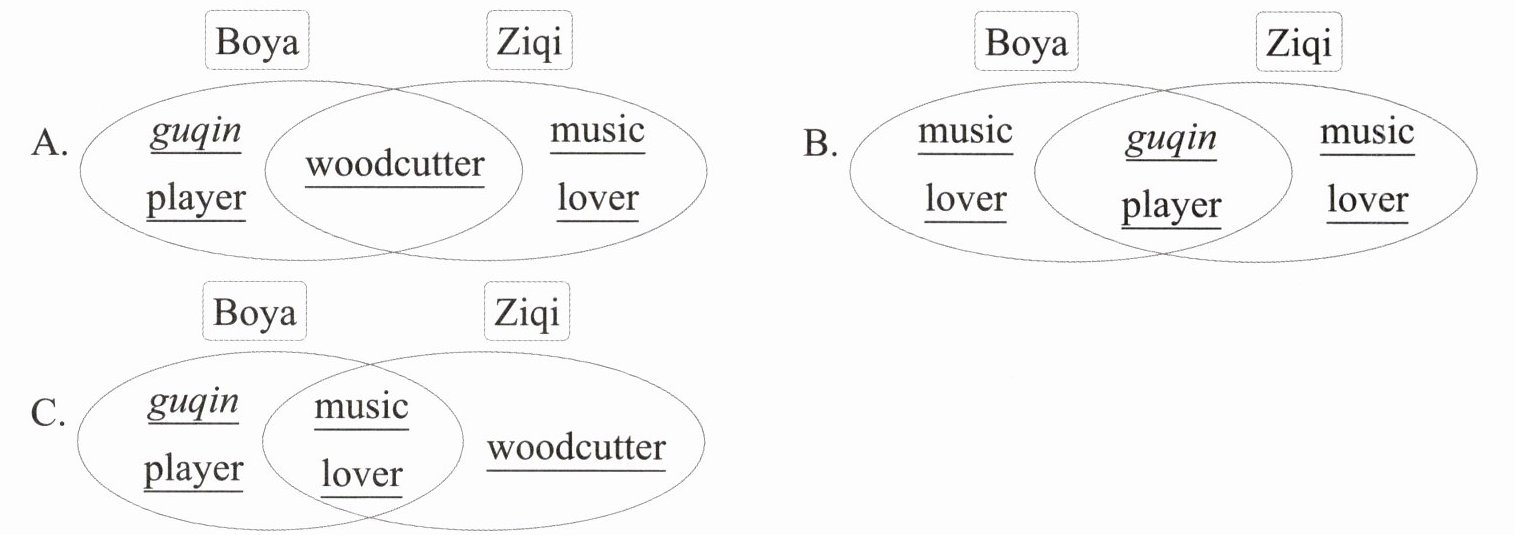
Boya is a guqin player and Ziqi is a woodcutter. They are different. But they both like music and understand(理解) each other. That’s why they become good friends.
任务一:选择正确的答案。
(
A. Friendship. B. Music. C. Mountains and rivers.
(
A. Moving slowly. B. Moving quickly. C. Moving gently.
(
A. Because they both play the guqin.
B. Because they have the same job.
C. Because they can understand each other.
(
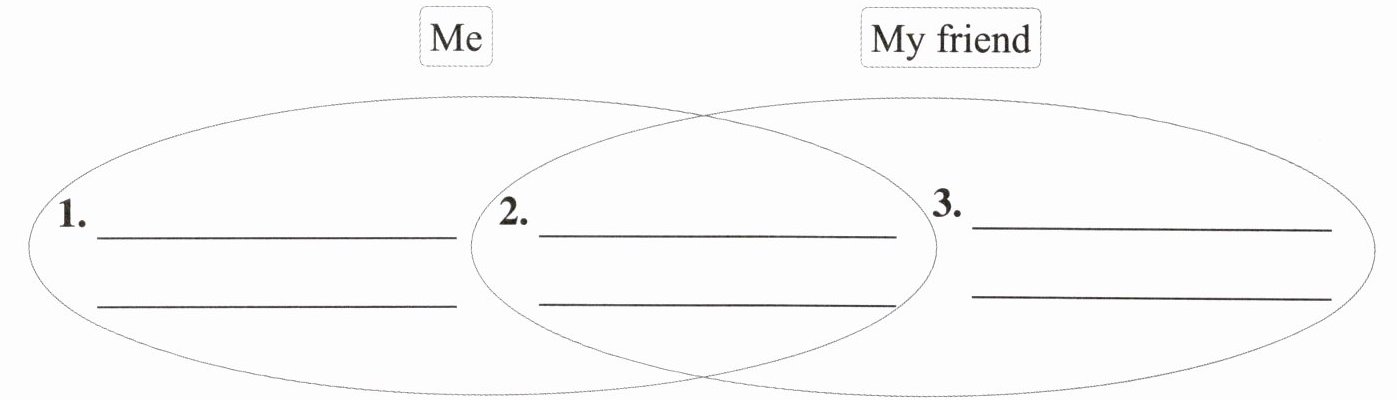
任务二:你和你的好朋友有什么相同和不同的兴趣爱好?请完成以下思维导图。
It is a rainy day. Boya is playing the guqin by the river. He sees a woodcutter(砍柴人) named Ziqi and asks him to listen to his music.
Boya begins playing the guqin, imagining(想象) high mountains. After listening, Ziqi says,“I can hear mountains singing in your music!” Boya then plays the guqin very fast and imagines rushing water. Ziqi listens carefully and says, “Your music sounds strong!” Boya is surprised(惊讶的) because Ziqi can tell what Boya wants to express(表达).
Boya is a guqin player and Ziqi is a woodcutter. They are different. But they both like music and understand(理解) each other. That’s why they become good friends.
任务一:选择正确的答案。
(
A
) 1. What is this story mainly about?A. Friendship. B. Music. C. Mountains and rivers.
(
B
) 2. What does “rushing” mean in this story?A. Moving slowly. B. Moving quickly. C. Moving gently.
(
C
) 3. Why can Boya and Ziqi be good friends?A. Because they both play the guqin.
B. Because they have the same job.
C. Because they can understand each other.
(
C
) 4. According to(依据) this passage, which mind map is right?任务二:你和你的好朋友有什么相同和不同的兴趣爱好?请完成以下思维导图。
答案
任务一:1. A 2. B 3. C 4. C
任务二:1. reading books; drawing pictures
2. listening to music; playing basketball
3. playing the piano; dancing
(任务二答案不唯一)
任务二:1. reading books; drawing pictures
2. listening to music; playing basketball
3. playing the piano; dancing
(任务二答案不唯一)
解析
【分析】首先通读全文理解俞伯牙与钟子期的典故故事,任务一的题目需结合原文内容分析:第1题是主旨题,需提炼核心内容;第2题是词义猜测题,结合上下文语境判断词义;第3题是细节理解题,定位原文找关键原因;第4题结合故事内容选择正确思维导图。任务二为开放性题目,需结合自身实际写出和好友的相同、不同兴趣爱好即可。
【解析】任务一:1. 主旨题:全文围绕伯牙与子期成为知音好友的故事展开,核心是友谊,故选A;2. 词义猜测题:前文提到伯牙弹快节奏的琴音对应rushing water,结合选项,rushing意为“快速流动的”,故选B;3. 细节理解题:原文明确说明“they both like music and understand each other. That’s why they become good friends”,故选C;4. 结合故事内容,正确思维导图为C。任务二:开放性题目,需结合自身实际作答,答案不唯一,示例:相同兴趣如读书、画画;不同兴趣如听音乐、打篮球等。
【答案】任务一:1. A 2. B 3. C 4. C;任务二:(示例)相同兴趣:reading books; drawing pictures;不同兴趣:listening to music; playing basketball(答案不唯一)
【知识点】英语阅读理解、主旨大意、词义猜测
【点评】本题结合传统文化“高山流水遇知音”的典故,以英语阅读形式呈现,既考查学生的英语阅读能力,又渗透传统文化教育,任务二的开放性设计贴近学生生活实际,难度适中。
【难度系数】0.6
