

 登录
[2026 重庆改编]By 2030, the world's data(数据) centres are expected to use more than double the electricity they use today. AI is the main driver. It forces countries to look for new ways to solve the big problem. China is leading the way by putting data centres under the sea as a greener solution.
In December 2022, Hainan became home to China's first underwater data centre. This was followed by a more advanced project in Shanghai in 2025.
AI servers give off heat while working, making the temperature rise. If the heat isn't taken away in time, the servers won't run well or even break down. On-land data centres have to use up to 40% of their electricity just for cooling AI servers.
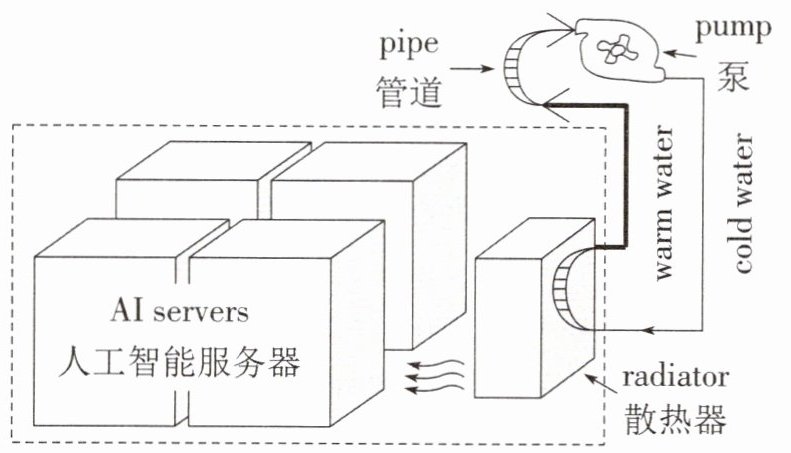
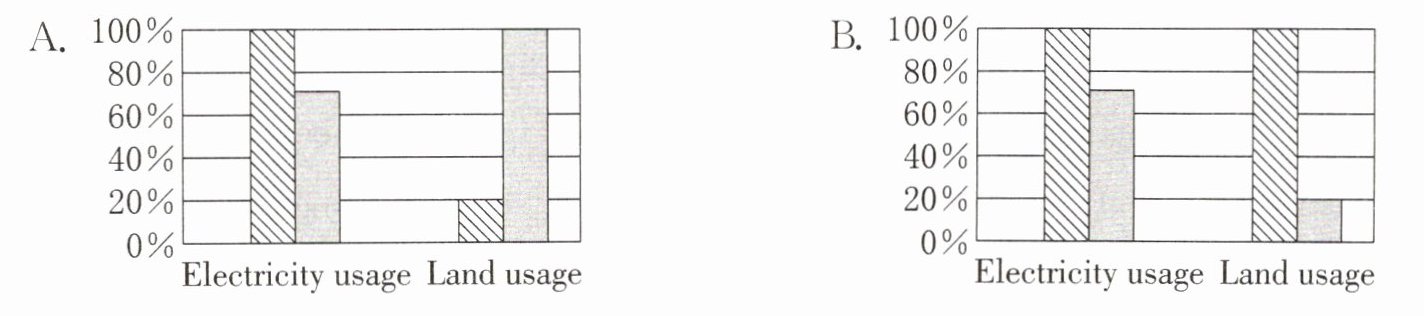
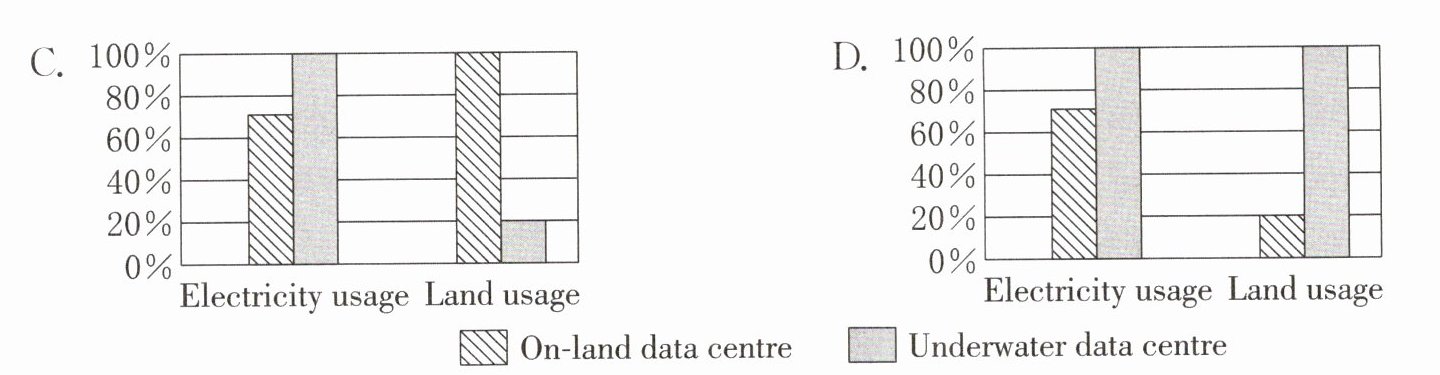
Underwater data centres, like the one in Shanghai, use pipes to pump(输送) seawater. Seawater goes through the radiators on the back of the servers. It takes in heat and carries it away. The sea temperature is about $15° \mathrm{C}$, perfect for natural cooling. In this way, the electricity is saved. An assessment(评估) from the China Academy of Information and Communications Technology shows the underwater data centre uses at least 30% less electricity than on-land data centres thanks to natural cooling.
Underwater data centres can also reduce land usage by 80%. And the one in Shanghai offers another benefit: it will get more than 95% of its electricity from a kind of renewable energy—wind energy. And the use of tidal and wave energy is also taken into consideration.
China's efforts in developing underwater data centres show its promise to create low-carbon digital infrastructure(低碳数字基础设施). The act not only helps reduce the environmental influence of AI, but also could set a new standard for sustainable computing.
11. What is the main reason for China to develop underwater data centres?
A. To provide more electricity for AI servers directly.
B. To reduce the cost of building on-land data centres.
C. To solve the problem of high energy use caused by AI.
D. To increase the speed of internet connections worldwide.
12. What does the underlined word "advanced" in Paragraph 2 most probably mean?
A. Modern and well-developed.
B. Expensive but useful.
C. Simple and cheap.
D. Common but helpful.
13. (创新考法·跨学科融合)Which is true according to Paragraph 4 and Paragraph 5?
14. What is the writer's purpose in writing the passage?
A. To introduce a new green technology for AI computing.
B. To explain how to build underwater data centres step by step.
C. To call on people to protect the ocean environment.
D. To compare different kinds of new energy around the world.
15. What would you do next if you were the developer of China's underwater data centres?
A. Close all the on-land data centres to save electricity in the near future.
B. Focus on developing on-land data centres instead of underwater data centres.
C. Cut down the cost of research and development since the projects are successful.
D. Explore the use of tidal and wave energy to further improve sustainable computing.
In December 2022, Hainan became home to China's first underwater data centre. This was followed by a more advanced project in Shanghai in 2025.
AI servers give off heat while working, making the temperature rise. If the heat isn't taken away in time, the servers won't run well or even break down. On-land data centres have to use up to 40% of their electricity just for cooling AI servers.
Underwater data centres, like the one in Shanghai, use pipes to pump(输送) seawater. Seawater goes through the radiators on the back of the servers. It takes in heat and carries it away. The sea temperature is about $15° \mathrm{C}$, perfect for natural cooling. In this way, the electricity is saved. An assessment(评估) from the China Academy of Information and Communications Technology shows the underwater data centre uses at least 30% less electricity than on-land data centres thanks to natural cooling.
Underwater data centres can also reduce land usage by 80%. And the one in Shanghai offers another benefit: it will get more than 95% of its electricity from a kind of renewable energy—wind energy. And the use of tidal and wave energy is also taken into consideration.
China's efforts in developing underwater data centres show its promise to create low-carbon digital infrastructure(低碳数字基础设施). The act not only helps reduce the environmental influence of AI, but also could set a new standard for sustainable computing.
11. What is the main reason for China to develop underwater data centres?
A. To provide more electricity for AI servers directly.
B. To reduce the cost of building on-land data centres.
C. To solve the problem of high energy use caused by AI.
D. To increase the speed of internet connections worldwide.
12. What does the underlined word "advanced" in Paragraph 2 most probably mean?
A. Modern and well-developed.
B. Expensive but useful.
C. Simple and cheap.
D. Common but helpful.
13. (创新考法·跨学科融合)Which is true according to Paragraph 4 and Paragraph 5?
14. What is the writer's purpose in writing the passage?
A. To introduce a new green technology for AI computing.
B. To explain how to build underwater data centres step by step.
C. To call on people to protect the ocean environment.
D. To compare different kinds of new energy around the world.
15. What would you do next if you were the developer of China's underwater data centres?
A. Close all the on-land data centres to save electricity in the near future.
B. Focus on developing on-land data centres instead of underwater data centres.
C. Cut down the cost of research and development since the projects are successful.
D. Explore the use of tidal and wave energy to further improve sustainable computing.
答案
11. C 细节理解题。根据第一段中“AI is the main driver. It forces countries to look for new ways to solve the big problem. China is leading the way by putting data centres under the sea as a greener solution.”可知,中国发展水下数据中心的主要原因是解决 AI 导致的高能耗问题。
12. A 词义猜测题。根据第二段内容可知,海南是国内首个水下数据中心,上海的项目在它之后,技术会更完善、更先进,因此画线词意为“先进的”。
13. B 跨学科融合题。根据第四段中 the underwater data centre uses at least 30% less electricity than on-land data centres 和第五段中“Underwater data centres can also reduce land usage by 80%.”可知,水下数据中心用电减少至少 30%,用地减少 80%,与选项 B 的图表信息一致。
14. A 推理判断题。依据全文介绍水下数据中心的降温方式、节能优势以及可搭配海洋清洁能源降低 AI 算力能耗的内容可知,作者的写作目的是介绍一款服务于人工智能运算的新型绿色技术。
15. D 推理判断题。根据第五段中“And the use of tidal and wave energy is also taken into consideration.”可知,作为开发者,下一步可探索潮汐和波浪能的使用,进一步提升算力的可持续性。
