

 登录
1.用 take place 或 happen 的适当形式填空
①Great changes
② I didn’t understand Dad until a similar experience
③When Hiller went to find out what
④The rainy season usually
2. 微语篇·完形填空 (2026 南京一模节选) In recent years, the festival has gained international attention. Many dragon boat races
A.hold B.were held
C.take place D.are happened
3. 微写作 昨天我在图书馆偶然遇到了我的小学老师。
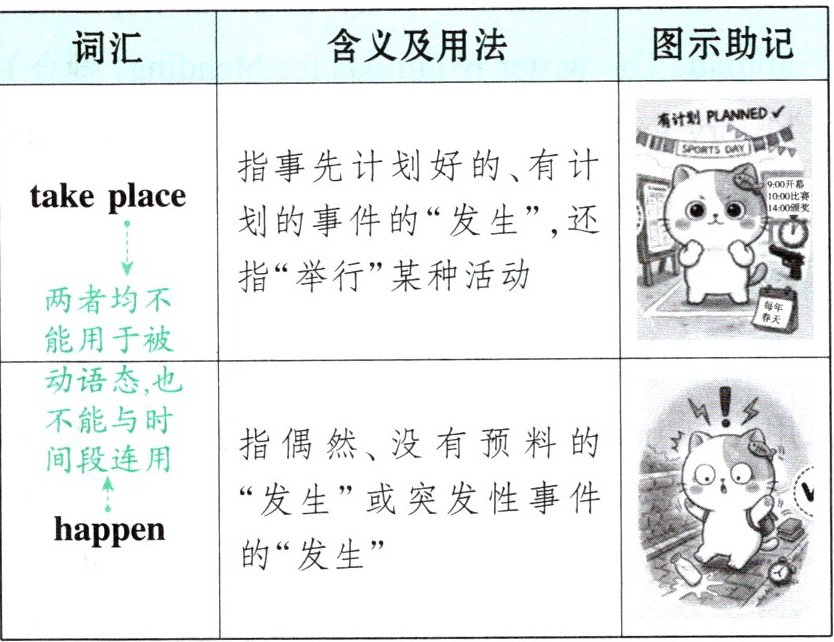
take place
两者均不能用于被动语态,也不能与时间段连用
↓
happen
take place:指事先计划好的、有计划的事件的“发生”,还指“举行”某种活动
happen:指偶然、没有预料的“发生”或突发性事件的“发生”
【考点联动】 happen 的用法
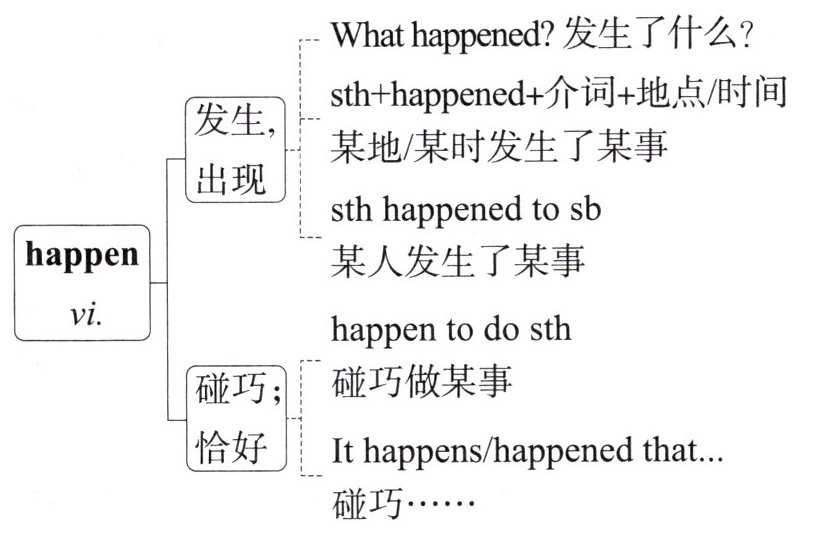
happen vi.
├─ 发生,出现
│ ├─ What happened? 发生了什么?
│ ├─ sth+happened+介词+地点/时间
│ │ 某地/某时发生了某事
│ └─ sth happened to sb
│ 某人发生了某事
└─ 碰巧;恰好
├─ happen to do sth
│ 碰巧做某事
└─ It happens/happened that...
碰巧……
①Great changes
have taken place
in Lianyungang since I moved here.② I didn’t understand Dad until a similar experience
happened
to my son.③When Hiller went to find out what
was happening
, he saw a stranger at the top of the stairs.④The rainy season usually
takes place
from June to September in my hometown.2. 微语篇·完形填空 (2026 南京一模节选) In recent years, the festival has gained international attention. Many dragon boat races
C
abroad.A.hold B.were held
C.take place D.are happened
3. 微写作 昨天我在图书馆偶然遇到了我的小学老师。
I happened to meet/see
my primary school teacher in the library yesterday.take place
两者均不能用于被动语态,也不能与时间段连用
↓
happen
take place:指事先计划好的、有计划的事件的“发生”,还指“举行”某种活动
happen:指偶然、没有预料的“发生”或突发性事件的“发生”
【考点联动】 happen 的用法
happen vi.
├─ 发生,出现
│ ├─ What happened? 发生了什么?
│ ├─ sth+happened+介词+地点/时间
│ │ 某地/某时发生了某事
│ └─ sth happened to sb
│ 某人发生了某事
└─ 碰巧;恰好
├─ happen to do sth
│ 碰巧做某事
└─ It happens/happened that...
碰巧……
答案
1. ①have taken place ②happened ③was happening ④takes place 2. C 3. I happened to meet/see
4.A single flower does not make spring, while one h
5. (2026 扬州一模节选) 用英语讲中国故事 Chinese writing began t
6. 传统文化——京剧 Peking Opera, also called Jingju, listed by UNESCO as an Intangible
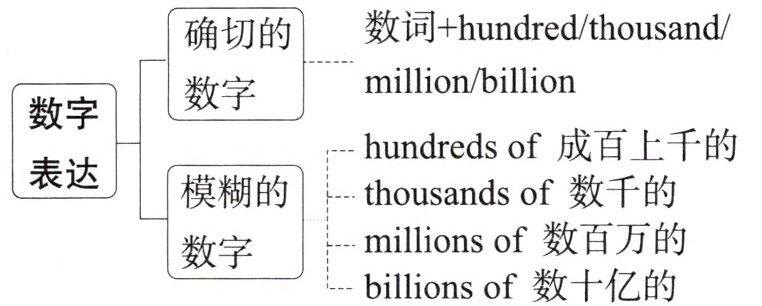
【用法】 thousands of 表示不确切的数量,意为“成千上万的;数以千计的”,后跟可数名词复数或代词的复数形式。表示确切的数目时, thousand 前面加具体数字,词尾不加 s,也不与 of 连用。有相似用法的词还有 hundred、million 和 billion。
Cultural Heritage of Humanity, is the most important one among ①
7. 经典文学作品《长安的荔枝》 Ma Boyong's novel The Lychee Road is widely loved at home and abroad. The writer is famous for blending(融合) history with engaging stories, and the book has sold thousands of
口诀助记
前有数词,后无 s,不跟 of;前无数词,后加 s,要跟 of。
避坑指南
表示“……中的几百/几千……时”,后面须加“of +范围”。
· Our school held a sports meeting on 24th April, and four hundred of the students took part in it actively, which made the event very successful.
undred
flowers in full blossom (盛开) bring spring to the garden.5. (2026 扬州一模节选) 用英语讲中国故事 Chinese writing began t
housands
of years ago. According to an ancient story, a man named Cang Jie invented Chinese writing.6. 传统文化——京剧 Peking Opera, also called Jingju, listed by UNESCO as an Intangible
【用法】 thousands of 表示不确切的数量,意为“成千上万的;数以千计的”,后跟可数名词复数或代词的复数形式。表示确切的数目时, thousand 前面加具体数字,词尾不加 s,也不与 of 连用。有相似用法的词还有 hundred、million 和 billion。
Cultural Heritage of Humanity, is the most important one among ①
hundreds
of forms of local operas in China. It arose in the late 18th century and has a history of more than two ②hundred
years.(hundred)7. 经典文学作品《长安的荔枝》 Ma Boyong's novel The Lychee Road is widely loved at home and abroad. The writer is famous for blending(融合) history with engaging stories, and the book has sold thousands of
copies
(copy) so far.口诀助记
前有数词,后无 s,不跟 of;前无数词,后加 s,要跟 of。
避坑指南
表示“……中的几百/几千……时”,后面须加“of +范围”。
· Our school held a sports meeting on 24th April, and four hundred of the students took part in it actively, which made the event very successful.
答案
4. (h)undred 5. (t)housands 6. ①hundreds ②hundred 7. copies
