

 登录
登录
C(2026·名师原创)
KEY→P39
范畴:人与社会 主题:历史故事 体裁:记叙文 难度:★★★★ 建议用时:8分钟 评价:/5
热考素材 中华优秀传统文化 How far is "sanshe" in the idiom "tuibi sanshe(退避三舍)"? In ancient times, it was a unit of distance(距离). One she is equal to 30 li. One li is 500 meters and 30 li is 15,000 meters. So sanshe, meaning three she, is 90 li.
There is a story behind this idiom. During the Spring and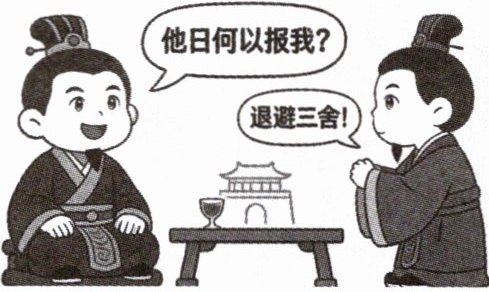 Autumn Period, Prince Chong'er of the state of Jin fled(逃离) from his home state. He had to travel to other states.
英语嗨吧
Once, he went to the state of Chu. King Cheng of Chu saw him as an important guest and served him a big dinner. He asked Chong'er, "If you rule the state of Jin one day, how would you thank me?" "It seems your state has everything you want. I have nothing that you like," Chong'er said. However, the king still asked for something. Finally, Chong'er said, "I would ask my army to retreat(撤退) three she if we ever fight."
Later, Chong'er returned to his home state Jin and became its ruler. Both of the two states wanted to become stronger and get more land. They went to war with each other.
Chong'er didn't break his promise. He asked his army to retreat three she and stay in Chengpu. The Chu army thought the Jin soldiers were afraid to fight, so they followed them. To their surprise, the Jin army surrounded them. In the end, Jin won the war. This was the famous Battle of Chengpu. After this war, people used "tuibi sanshe" to mean retreating to avoid a conflict.
(
A. 500 m.
B. 15 km.
C. 30 km.
D. 45 km.
(
A. Because he thought Chong'er had everything he wanted.
B. Because he wanted Chong'er to thank him someday.
C. Because he liked making friends with people.
D. Because he was a kind person who always helped others.
(
A. 包围
B. 信任
C. 逃避
D. 款待
(
A. Keeping one's word to do something.
B. Retreating to avoid a conflict.
C. Staying cheerful when we feel down.
D. Staying away from bad people.
(
A. To tell a way of avoiding the conflict.
B. To list Chinese idioms for readers.
C. To explain a Chinese idiom.
D. To tell the ways of learning idioms.
KEY→P39
范畴:人与社会 主题:历史故事 体裁:记叙文 难度:★★★★ 建议用时:8分钟 评价:/5
热考素材 中华优秀传统文化 How far is "sanshe" in the idiom "tuibi sanshe(退避三舍)"? In ancient times, it was a unit of distance(距离). One she is equal to 30 li. One li is 500 meters and 30 li is 15,000 meters. So sanshe, meaning three she, is 90 li.
There is a story behind this idiom. During the Spring and
Autumn Period, Prince Chong'er of the state of Jin fled(逃离) from his home state. He had to travel to other states.英语嗨吧
Once, he went to the state of Chu. King Cheng of Chu saw him as an important guest and served him a big dinner. He asked Chong'er, "If you rule the state of Jin one day, how would you thank me?" "It seems your state has everything you want. I have nothing that you like," Chong'er said. However, the king still asked for something. Finally, Chong'er said, "I would ask my army to retreat(撤退) three she if we ever fight."
Later, Chong'er returned to his home state Jin and became its ruler. Both of the two states wanted to become stronger and get more land. They went to war with each other.
Chong'er didn't break his promise. He asked his army to retreat three she and stay in Chengpu. The Chu army thought the Jin soldiers were afraid to fight, so they followed them. To their surprise, the Jin army surrounded them. In the end, Jin won the war. This was the famous Battle of Chengpu. After this war, people used "tuibi sanshe" to mean retreating to avoid a conflict.
(
D
)1. How far is "sanshe"?A. 500 m.
B. 15 km.
C. 30 km.
D. 45 km.
(
B
)2. Why did King Cheng of Chu treat Chong'er as an important guest?A. Because he thought Chong'er had everything he wanted.
B. Because he wanted Chong'er to thank him someday.
C. Because he liked making friends with people.
D. Because he was a kind person who always helped others.
(
A
)3. What's the meaning of the underlined word in the last paragraph?A. 包围
B. 信任
C. 逃避
D. 款待
(
B
)4. What does the idiom "tuibi sanshe" mean today?A. Keeping one's word to do something.
B. Retreating to avoid a conflict.
C. Staying cheerful when we feel down.
D. Staying away from bad people.
(
C
)5. What's the purpose of the text?A. To tell a way of avoiding the conflict.
B. To list Chinese idioms for readers.
C. To explain a Chinese idiom.
D. To tell the ways of learning idioms.
答案
阅读理解C
本文主要介绍了成语"退避三舍"中"三舍"的距离含义,讲述了该成语背后的历史故事,并解释了该成语在今天的含义。
1. D 推理判断题。根据"One she is equal to 30 li ... So sanshe, meaning three she, is 90 li."可知,1舍等于30里,1里等于500米,那么三舍就是90里,即45千米。
2. B 推理判断题。根据"He asked Chong'er, 'If you rule the state of Jin one day, how would you thank me?'"可知,楚成王在款待重耳时,问他日后若掌权将如何报答自己。因此,他款待重耳是因为他希望重耳将来能报答他。
3. A 词义猜测题。根据"The Chu army thought the Jin soldiers were afraid to fight, so they followed them. To their surprise, the Jin army surrounded them. In the end, Jin won the war."可知,楚军以为晋军害怕,于是追击,结果反而被晋军包围了,最终晋国赢得了战争。surround意为"包围"。
4. B 细节理解题。根据"After this war, people used 'tuibi sanshe' to mean retreating to avoid a conflict."可知,现在人们用这个成语来表示退让以避免冲突。
5. C 推理判断题。通读全文可知,文章主要讲述了成语"退避三舍"背后的故事,并解释了它的现代含义。因此,文章的目的是解释一个中国成语。
本文主要介绍了成语"退避三舍"中"三舍"的距离含义,讲述了该成语背后的历史故事,并解释了该成语在今天的含义。
1. D 推理判断题。根据"One she is equal to 30 li ... So sanshe, meaning three she, is 90 li."可知,1舍等于30里,1里等于500米,那么三舍就是90里,即45千米。
2. B 推理判断题。根据"He asked Chong'er, 'If you rule the state of Jin one day, how would you thank me?'"可知,楚成王在款待重耳时,问他日后若掌权将如何报答自己。因此,他款待重耳是因为他希望重耳将来能报答他。
3. A 词义猜测题。根据"The Chu army thought the Jin soldiers were afraid to fight, so they followed them. To their surprise, the Jin army surrounded them. In the end, Jin won the war."可知,楚军以为晋军害怕,于是追击,结果反而被晋军包围了,最终晋国赢得了战争。surround意为"包围"。
4. B 细节理解题。根据"After this war, people used 'tuibi sanshe' to mean retreating to avoid a conflict."可知,现在人们用这个成语来表示退让以避免冲突。
5. C 推理判断题。通读全文可知,文章主要讲述了成语"退避三舍"背后的故事,并解释了它的现代含义。因此,文章的目的是解释一个中国成语。
