

 登录
八、阅读Tom的旅行手账,回答问题。(5分)
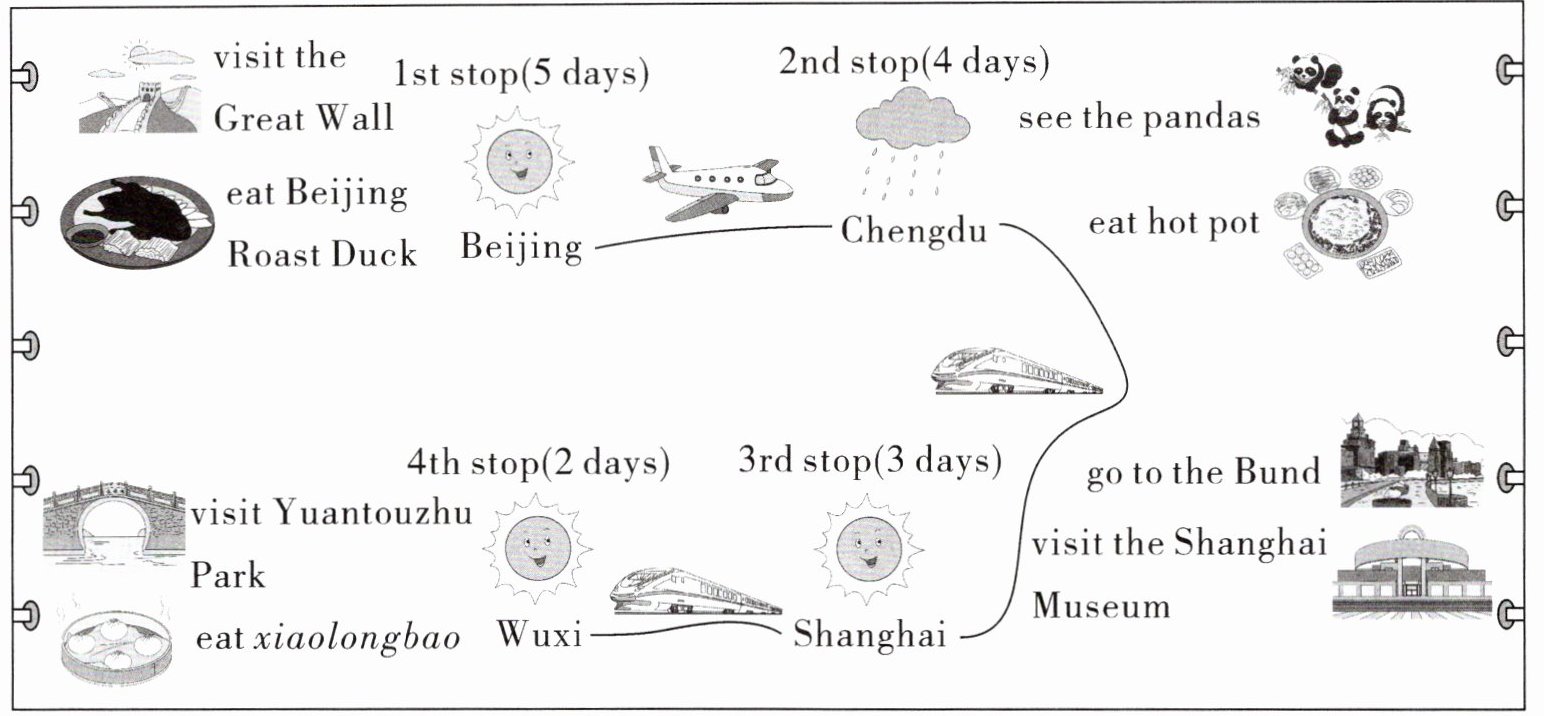
11.Was it rainy in Beijing?
12.What did Tom eat in Wu xi?
13.Did Tom visit the Bund at the second stop?
14.How did Tom go to Shanghai from Chengdu?
15.How many days did Tom stay in China?
11.Was it rainy in Beijing?
No, it wasn't.
12.What did Tom eat in Wu xi?
He ate xiaolongbao.
13.Did Tom visit the Bund at the second stop?
No, he didn't.
14.How did Tom go to Shanghai from Chengdu?
He went to Shanghai from Chengdu by train.
15.How many days did Tom stay in China?
He stayed in China for 14 days.
答案
11. No, it wasn't.
12. He ate xiaolongbao.
13. No, he didn't.
14. He went to Shanghai from Chengdu by train.
15. He stayed in China for 14 days.
12. He ate xiaolongbao.
13. No, he didn't.
14. He went to Shanghai from Chengdu by train.
15. He stayed in China for 14 days.
解析
【分析】
这是一道基于旅行手账(图文结合)的英语阅读理解题,需先梳理图中各地点的信息:1st stop北京(5天,晴天,景点长城,吃北京烤鸭);2nd stop成都(4天,雨天,看熊猫,吃火锅);3rd stop上海(3天,晴天,外滩、上海博物馆);4th stop无锡(2天,晴天,逛鼋头渚,吃小笼包)。再逐个对应问题提取信息作答。
【解析】
11题:观察图中北京的天气为晴天,并非雨天,故作否定回答;
12题:找到无锡的饮食信息为小笼包(xiaolongbao),据此作答;
13题:第二站是成都,外滩属于第三站上海的景点,故作否定回答;
14题:图中成都到上海的交通方式为高铁(train),据此作答;
15题:将各站停留天数相加:5+4+3+2=14,得出总天数。
【答案】
11. No, it wasn't.
12. He ate xiaolongbao.
13. No, he didn't.
14. He went to Shanghai from Chengdu by train.
15. He stayed in China for 14 days.
【知识点】
英语阅读理解、图文信息提取、数字计算
【点评】
本题考查学生从图文材料中精准提取信息的能力,需仔细对应问题与图中细节,计算总天数时需准确求和,整体难度适中。
【难度系数】
0.3
九、阅读下列短文,完成思维导图,每空一词。(4分)
Many years ago,there were no computers or Internet.How did people find a way?There
was no light.They could find a way through(依靠)the stars.
Later,people could make a map.They walked around a place and took notes.Then they
drew a map.Sometimes,people went to other cities.There were no planes or trains then.So
they went by ship.The compass could help them at sea.
Now , when people walk on the road or drive a car,they can use BDS(北斗卫星导航系统).
It's very helpful !
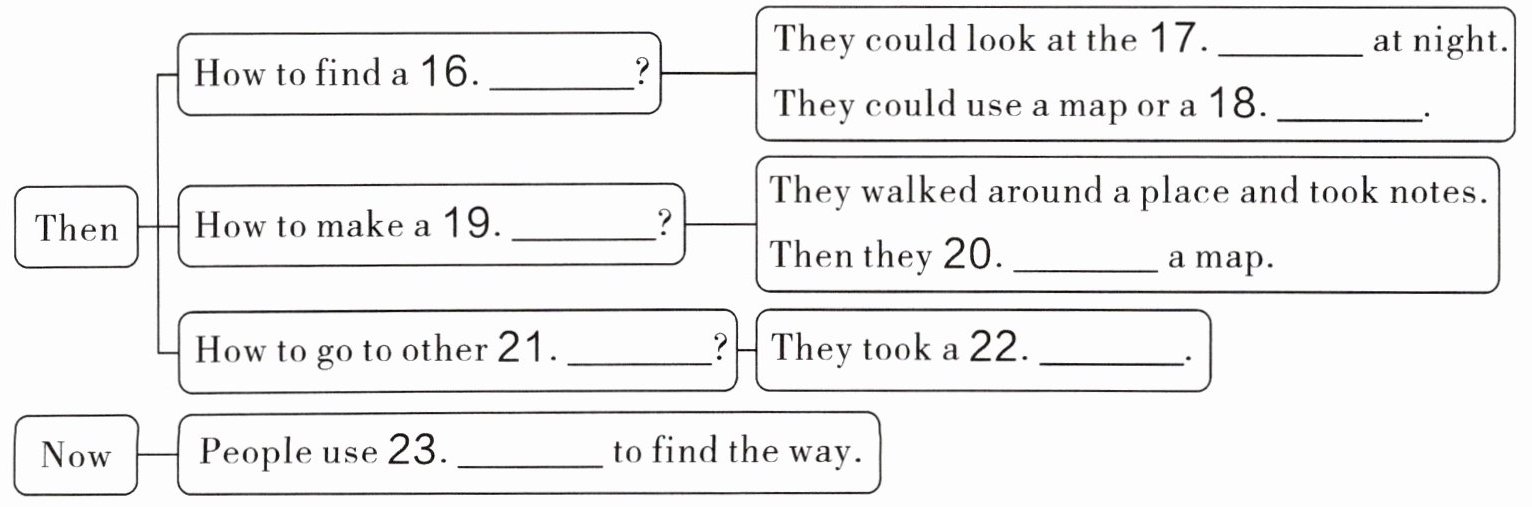
Many years ago,there were no computers or Internet.How did people find a way?There
was no light.They could find a way through(依靠)the stars.
Later,people could make a map.They walked around a place and took notes.Then they
drew a map.Sometimes,people went to other cities.There were no planes or trains then.So
they went by ship.The compass could help them at sea.
Now , when people walk on the road or drive a car,they can use BDS(北斗卫星导航系统).
It's very helpful !
答案
九、16. way 17. stars 18. compass 19. map
20. drew 21. cities 22. ship 23. BDS
20. drew 21. cities 22. ship 23. BDS
解析
【分析】首先通读短文,明确每个问题对应的短文内容,定位到相关句子,提取符合语境的单词,注意单词的正确形式(如动词过去式),确保答案与短文细节一致。
【解析】16. 对应问题“How to find a...”,短文第一段提到“How did people find a way?”,故填way;17. 对应“look at...at night”,短文第一段提到“They could find a way through the stars”,故填stars;18. 对应“use a map or a...”,短文第二段提到“The compass could help them at sea”,结合语境,故填compass;19. 对应“make a...”,短文第二段提到“Later, people could make a map”,故填map;20. 对应“Then they...a map”,短文第二段提到“Then they drew a map”,故填drew;21. 对应“go to other...”,短文第二段提到“Sometimes, people went to other cities”,故填cities;22. 对应“took a...”,短文第二段提到“So they went by ship”,故填ship;23. 对应“Now people use...to find the way”,短文第三段提到“Now...they can use BDS”,故填BDS。
【答案】16. way 17. stars 18. compass 19. map 20. drew 21. cities 22. ship 23. BDS
【知识点】英语阅读理解、词汇运用、信息提取
【点评】本题以思维导图形式考查学生对英语短文细节的理解与信息定位能力,题型基础,只要仔细阅读短文即可完成,侧重考查学生的细节查找能力。
【难度系数】0.6
十、书面表达。(5分)
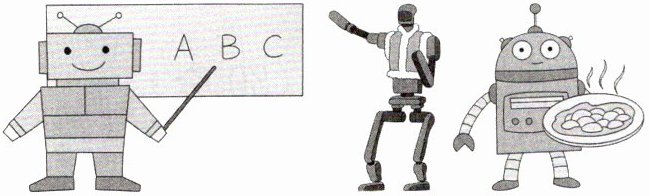
机器人在2025年春晚上一炮而红,它们也逐渐走进了我们的生活。请从它们的外观与结
构、功能与本领、行为与互动等方面进行介绍,以“ My AI friend "为题,写一篇短文。(从所给图
片中任选一机器人进行描写即可)。
要求:1.契合主题,表达流畅;
2.书写规范,注意标点;
3.词数50左右。
机器人在2025年春晚上一炮而红,它们也逐渐走进了我们的生活。请从它们的外观与结
构、功能与本领、行为与互动等方面进行介绍,以“ My AI friend "为题,写一篇短文。(从所给图
片中任选一机器人进行描写即可)。
要求:1.契合主题,表达流畅;
2.书写规范,注意标点;
3.词数50左右。
答案
十、One possible version:
My AI friend
I have an AI friend. It has a cool look. It has two big eyes and a small mouth. Its body is fat. It can do many things. It can cook delicious food. It often plays games with me. When I'm sad, it tells funny jokes to make me happy.
My AI friend brings my life more fun!
My AI friend
I have an AI friend. It has a cool look. It has two big eyes and a small mouth. Its body is fat. It can do many things. It can cook delicious food. It often plays games with me. When I'm sad, it tells funny jokes to make me happy.
My AI friend brings my life more fun!
解析
【分析】
本题为英语话题书面表达题,要求以“My AI friend”为题,从给定图片中选一个机器人,围绕外观结构、功能本领、行为互动等方面写作,词数50左右。解题思路:1. 确定描写对象(选图中右侧端食物的机器人);2. 先描述机器人外观特征;3. 再介绍其功能(如做饭)和与“我”的互动(玩游戏、讲笑话);4. 结尾点明机器人给生活带来的乐趣,确保表达流畅、符合词数要求。
【解析】
首先确定描写右侧端食物的机器人,先写外观:“It has two big eyes and a small mouth. Its body is fat.”;接着写功能:“It can cook delicious food.”;再写互动:“It often plays games with me. When I'm sad, it tells funny jokes to make me happy.”;最后结尾:“My AI friend brings my life more fun!”,整体符合主题,表达流畅,词数达标。
【答案】
My AI friend
I have an AI friend. It has a cool look. It has two big eyes and a small mouth. Its body is fat. It can do many things. It can cook delicious food. It often plays games with me. When I'm sad, it tells funny jokes to make me happy.
My AI friend brings my life more fun!
【知识点】
英语书面表达、话题作文
【点评】
本题围绕“AI朋友”话题考查学生英语写作能力,要求结合图片内容,从外观、功能、互动等方面展开,难度适中,能有效检验学生的英语综合运用能力。
【难度系数】
0.5
