

 登录
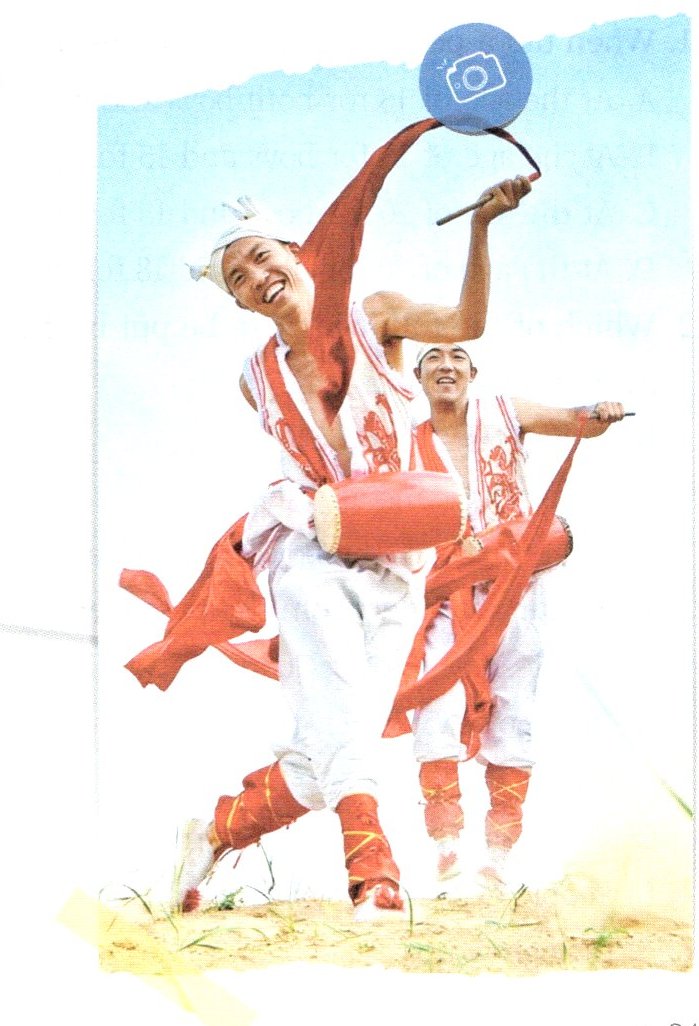
The Ansai waist drum, a famous cultural treasure from Shaanxi, has a history of more than 2 000 years. It started in China’s Qin Dynasty (221 BCE-207 BCE) and was a communication tool in the army. Soldiers used drum beats to send messages. Later, farmers used it in special dances to wish for rain and good harvests. Now, it stands for the brave and joyful spirit of Shaanxi people.
The Ansai waist drum performances are lively and powerful. Dancers wear white headbands to symbolize the waves of the Yellow River and tie bright red drums around their waists. They jump, spin(旋转), and stomp(重踩) the ground with more than 30 strong movements. For example, the “stomping the sky” step comes from farmers’ work, while “spinning like a whirlwind” copies ancient war skills. These shows are often held in open fields during holidays like the Spring Festival or after harvests. With teams of 50 to 500 drummers playing together, the loud beats and cheers can even make the ground shake!
To protect this art, China listed it as a national intangible heritage in 2006. With the local government’s encouragement, some old local folk artists teach children to play the drums, and they perform together in ceremonies and festivals. In cities, drummers mix traditional beats with hip-hop dances. The drum even connects with AI technology and they create more fantastic and shocking visual performances. Through these creative changes, the ancient drum keeps connecting young people to their culture while spreading Shaanxi’s voice to the world.
答案
篇章导读
本文主要介绍了陕西安塞腰鼓的起源、表演特点及其传承与发展。
全文翻译
安塞腰鼓,来自陕西的著名的文化瑰宝,已有超过2 000年的历史。它始于中国的秦朝(公元前221年至公元前207年),是军队中的通信工具。士兵们利用鼓声传递消息。后来,农民们将其用在特殊的舞蹈中,以祈求雨水和丰收。如今,它象征着陕西人民勇敢而欢乐的精神。
安塞腰鼓的表演充满活力且气势磅礴。舞者们头戴象征黄河波涛的白色头巾,腰间系着鲜红的腰鼓。他们跳跃、旋转、重踩地面,做出30多种强劲的动作。例如,“蹬天”步法源自农民的劳作,而“旋风转”模仿了古代的战争技巧。这些表演经常在春节等节日期间或丰收后,在开阔的田野上举行。当50至500名鼓手组成的团队齐奏时,响亮的鼓声与欢呼声甚至能让大地震动!
为了保护这项艺术,中国于2006年将其列为国家级非物质文化遗产。在当地政府的鼓励下,一些本地民间老艺术家教孩子们打鼓,他们一起在典礼和节日时表演。在城市里,鼓手们将传统鼓点与嘻哈舞蹈相融合。腰鼓甚至与人工智能技术结合,它们创造出更精彩和震撼的视觉表演。通过这些创新改变,这面古老的腰鼓不断将年轻人与他们的文化相连,同时将陕西的声音传向世界。
1. The Ansai waist drum was used
A. for fun for emperors
B. as a tourist fascination
C. in farming ceremonies
D. as a communication tool
2. Why is the Ansai waist drum performed in open fields?
A. To save electricity.
B. To allow large team movements.
C. To avoid scaring the animals.
D. To follow ancient temple rules.
3. Why does the passage mention “hip-hop dances” and “AI technology”?
A. To compare different drumming styles.
B. To show challenges in protecting traditions.
C. To present the drum’s international popularity.
D. To explain how drum tradition mixes with new ideas.
D
first in the Qin Dynasty.A. for fun for emperors
B. as a tourist fascination
C. in farming ceremonies
D. as a communication tool
2. Why is the Ansai waist drum performed in open fields?
A. To save electricity.
B. To allow large team movements.
C. To avoid scaring the animals.
D. To follow ancient temple rules.
3. Why does the passage mention “hip-hop dances” and “AI technology”?
A. To compare different drumming styles.
B. To show challenges in protecting traditions.
C. To present the drum’s international popularity.
D. To explain how drum tradition mixes with new ideas.
答案
1. D 细节理解题。由第一段中的“The Ansai waist drum... It started in China’s Qin Dynasty (221 BCE - 207 BCE) and was a communication tool in the army.”可知,安塞腰鼓最初在秦朝是作为军队的通信工具使用的。
2. B 推理判断题。由第二段中的“These shows are often held in open fields... With teams of 50 to 500 drummers playing together...”可知,安塞腰鼓表演经常在开阔的田野上举行,一般由50至500名鼓手组成的团队齐奏。由此可推知,安塞腰鼓选择在开阔的田野上表演是为了让大规模的表演团队能够有足够的空间完成强劲的动作,故选B项。
3. D 推理判断题。由第三段内容,尤其是最后一句“Through these creative changes, the ancient drum keeps connecting young people to their culture while spreading Shaanxi’s voice to the world.”可推知,提及嘻哈舞蹈和AI是为了说明传统鼓乐是如何通过创新形式焕发新生的。
