

 登录
句子还原。 ▶“答案与解析”见D10
根据短文内容,从方框内的选项中选出能填入空白处的最佳选项(有两项多余)。
It's fun to visit the monkeys at the zoo and watch them play and climb. Sometimes they sit and look at us, or care for their babies. We think how smart they are. 1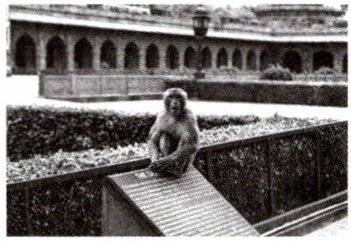
And then we go home, where we don't see monkeys. But in some parts of the world, monkeys live in cities right alongside people. They play near the roads or climb up the trees. 2 But sometimes, it isn't good at all. We may feel bored with them.
In New Delhi, India, thousands of small monkeys live in the city. They take food away from street sellers and break into people's houses and leave a mess(杂乱). 3
Lots of people would like to just stay away from the monkeys. Others believe that they should be kind to them. At temples(庙宇), monks(僧侣) feed and care for wild monkeys. 4
Many years ago, New Delhi had forests around it. Monkeys had much space to live there. But more and more people are moving to the city. Every year the city grows and more parts of the forests are cut down. Sometimes, the monkeys aren't moving into the city. 5 Monkeys are smart animals that can adapt to new living conditions(条件)—a lot like people. And now monkeys are learning to live in the city.
(素材来源:Ask)
A. But the city is moving out to the monkeys.
B. And we think how much they seem like us.
C. It's not lucky for monkeys that live in zoos.
D. There are many kinds of monkeys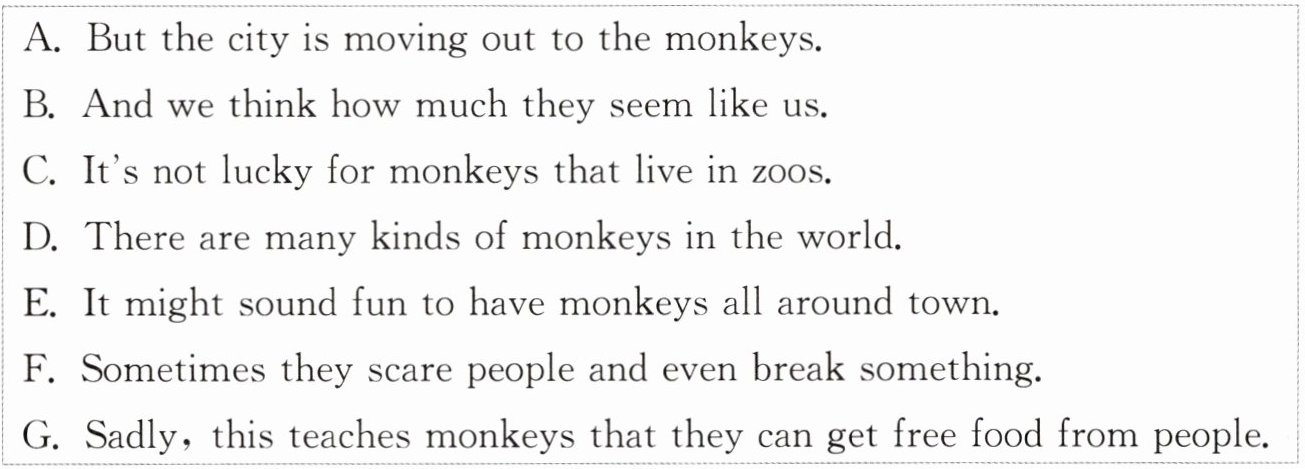 in the world.
E. It might sound fun to have monkeys all around town.
F. Sometimes they scare people and even break something.
G. Sadly, this teaches monkeys that they can get free food from people.
1.
6. 拓展迁移 What can we learn from monkeys living in cities?
7. 拓展迁移 How should we get along well with animals?
根据短文内容,从方框内的选项中选出能填入空白处的最佳选项(有两项多余)。
It's fun to visit the monkeys at the zoo and watch them play and climb. Sometimes they sit and look at us, or care for their babies. We think how smart they are. 1
And then we go home, where we don't see monkeys. But in some parts of the world, monkeys live in cities right alongside people. They play near the roads or climb up the trees. 2 But sometimes, it isn't good at all. We may feel bored with them.
In New Delhi, India, thousands of small monkeys live in the city. They take food away from street sellers and break into people's houses and leave a mess(杂乱). 3
Lots of people would like to just stay away from the monkeys. Others believe that they should be kind to them. At temples(庙宇), monks(僧侣) feed and care for wild monkeys. 4
Many years ago, New Delhi had forests around it. Monkeys had much space to live there. But more and more people are moving to the city. Every year the city grows and more parts of the forests are cut down. Sometimes, the monkeys aren't moving into the city. 5 Monkeys are smart animals that can adapt to new living conditions(条件)—a lot like people. And now monkeys are learning to live in the city.
(素材来源:Ask)
A. But the city is moving out to the monkeys.
B. And we think how much they seem like us.
C. It's not lucky for monkeys that live in zoos.
D. There are many kinds of monkeys
in the world.E. It might sound fun to have monkeys all around town.
F. Sometimes they scare people and even break something.
G. Sadly, this teaches monkeys that they can get free food from people.
1.
B
2. E
3. F
4. G
5. A
6. 拓展迁移 What can we learn from monkeys living in cities?
Animals are smart and can get used to new living conditions.
7. 拓展迁移 How should we get along well with animals?
We should respect them, protect their living space and not disturb their life.
答案
1. B 上文提及“有时它们坐着看着我们,或照顾它们的幼崽时,我们会想它们是多么的聪明”,此处对应表示:我们觉得它们和我们有多么相像。
2. E 下文提及“但有时,这一点也不好”,此处对应表示:城里到处都是猴子听起来可能很有趣。
3. F 上文提及“它们闯入人们的家里,留下一片狼藉”,此处递进表示:有时它们吓唬人,甚至破坏东西。
4. G 上文提及“在寺庙里,僧侣们喂养和照顾野生猴子”,此处对应表示:可悲的是,这教会了猴子,它们可以从人类那里得到免费的食物。
5. A 由上文“有时候,并不是猴子主动闯入城市”可知,此处对应表示:而是城市不断扩张,逼近了猴子的栖息地。
6. 【拓展迁移】Animals are smart and can get used to new living conditions.(答案不唯一)
7. 【拓展迁移】We should respect them, protect their living space and not disturb their life.(答案不唯一)
解析
【分析】做句子还原题时,需先通读全文把握主旨(本文围绕猴子在动物园与城市的生存情况展开),再分析每个空白处的上下文逻辑关系(如转折、递进、因果、对应等),结合选项内容逐一匹配,最后完成拓展迁移时需紧扣文章核心观点提炼作答。
【解析】1. 上文提及“我们觉得猴子多么聪明”,B选项“我们觉得它们和我们有多么相像”承接上文对猴子的评价,符合语境;2. 下文由“but”转折指出“有时并不好”,E选项“城里到处都是猴子听起来可能很有趣”与下文形成转折逻辑,通顺合理;3. 上文说明猴子“闯入家里留下狼藉”,F选项“有时它们吓唬人甚至破坏东西”是对猴子不当行为的递进补充,符合语境;4. 上文提到僧侣喂养猴子,G选项“可悲的是,这教会猴子能从人类那里得到免费食物”承接上文行为,说明其带来的影响;5. 上文提到“不是猴子主动闯入城市”,A选项“而是城市不断扩张逼近猴子栖息地”与上文形成“不是…而是…”的对应逻辑,符合语境;拓展迁移6结合文章“猴子适应新环境”的主旨作答,7结合人与动物相处的启示作答。
【答案】1.B 2.E 3.F 4.G 5.A;6.Animals are smart and can get used to new living conditions.(答案不唯一);7.We should respect them, protect their living space and not disturb their life.(答案不唯一)
【知识点】语篇逻辑推理、阅读理解(句子还原)、主旨理解
【点评】本题为英语句子还原常规题型,考查学生对语篇上下文逻辑关系的分析与应用能力,拓展部分侧重主旨提炼,整体难度适中,适合初中阶段学生练习。
【难度系数】0.6
