

 登录
登录
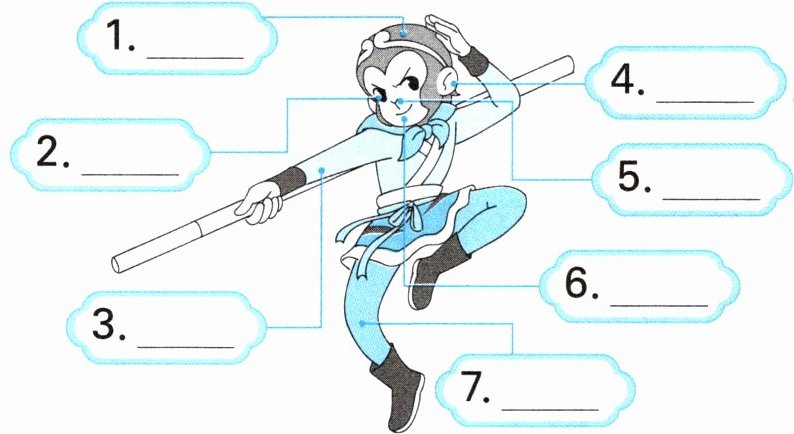
一、【身体部位类单词】写出美猴王的身体部位名称。
1.
2.
3.
4.
5.
6.
7.
1.
hair
2.
eye
3.
arm
4.
ear
5.
nose
6.
mouth
7.
leg
答案
1. hair 2. eye 3. arm 4. ear
5. nose 6. mouth 7. leg
5. nose 6. mouth 7. leg
二、【can的用法】根据句意或图片提示补全句子或对话。
1. —
2. Lily can dance, but I
3. —What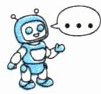
4. Look at this toy. It can
1. —
Can
you play basketball? —Yes, I can.2. Lily can dance, but I
can't
.3. —What
can
the robot do? —It can talk
. 4. Look at this toy. It can
dance
. 答案
1. Can 2. can't 3. can, talk
4. dance
4. dance
三、【人称代词】用所给单词的适当形式填空。
1. Tom is ten.
2. Hurry up, Sally! Here is
3. —Do
4. —Where's
1. Tom is ten.
He
is tall, and his
hair is brown.(he)2. Hurry up, Sally! Here is
our
basketball. Come and play with us
.(we)3. —Do
you
(you) have a girl doll? —Yes, I like her
(she) very much.4. —Where's
your
(you) father? —He
(he) is under the tree.答案
1. He, his 2. our, us 3. you, her
4. your, He
4. your, He
四、【反义词】根据句意,写出画线单词的反义词。
1. I have
2. Helen is
3. This pencil is short. That one is
4. We are in different places, but our love for China is the
1. I have
big
eyes and small ears.2. Helen is
tall
but her little brother is short.3. This pencil is short. That one is
long
.4. We are in different places, but our love for China is the
same
.答案
1. big 2. tall 3. long 4. same
五、【描写外貌特征的不同表达法】同义句转换。
1. My eyes are big. =
2. I have a small nose. =
3. He has short arms. =
4. You have a small mouth. =
5. Her ears are small, but her nose is big. =
1. My eyes are big. =
I have big eyes.
2. I have a small nose. =
My nose is small.
3. He has short arms. =
His arms are short.
4. You have a small mouth. =
Your mouth is small.
5. Her ears are small, but her nose is big. =
She has small ears but a big nose.
答案
1. I have big eyes.
2. My nose is small.
3. His arms are short.
4. Your mouth is small.
5. She has small ears but a big nose.
2. My nose is small.
3. His arms are short.
4. Your mouth is small.
5. She has small ears but a big nose.
