

 登录
登录
一、核心素养 语言能力 完形填空。(每小题1.5分,共15分)
[2025 锦州期中改编]When you begin learning English, you probably just want to be able to order a coffee. But the ______ you study, the more probably you'll want to really sound like a native speaker. So how can you make your speech sound more natural?
“First of all, make sure you know your ,” says Emile Dodds. “Bad grammar will you back,” he says.
When native speakers talk , they use things like contractions(缩略词) and filler words(填充词). And contractions aren't just things like “can't” and “won't”. Native speakers also shorten “going to” to “gonna” and “got to” to “gotta”. You wouldn't use these in writing, but they sound natural when you .
Filler words—words that fill space are great because they sound natural, and give you time to . These are little words like “so”, “um” and “you know”.
And while you might have learned in school to answer in full sentences(句子), it's not something you need to do in casual(随意的) conversation.
Of course, learning to speak naturally takes . You can learn by native speakers on the internet or watching movies to hear how they speak, and you might even hear some phrases and idioms!
1. A. slower B. longer C. higher D. faster
2. A. word B. sentence C. grammar D. text
3. A. hold B. take C. make D. fight
4. A. differently B. naturally C. directly D. freshly
5. A. speak B. write C. listen D. read
6. A. talk B. solve C. listen D. think
7. A. interest B. questions C. reasons D. facts
8. A. treasure B. money C. interest D. time
9. A. looking for B. listening to C. reaching for D. caring about
10. A. careful B. useless C. useful D. peaceful
[2025 锦州期中改编]When you begin learning English, you probably just want to be able to order a coffee. But the ______ you study, the more probably you'll want to really sound like a native speaker. So how can you make your speech sound more natural?
“First of all, make sure you know your ,” says Emile Dodds. “Bad grammar will you back,” he says.
When native speakers talk , they use things like contractions(缩略词) and filler words(填充词). And contractions aren't just things like “can't” and “won't”. Native speakers also shorten “going to” to “gonna” and “got to” to “gotta”. You wouldn't use these in writing, but they sound natural when you .
Filler words—words that fill space are great because they sound natural, and give you time to . These are little words like “so”, “um” and “you know”.
And while you might have learned in school to answer in full sentences(句子), it's not something you need to do in casual(随意的) conversation.
Of course, learning to speak naturally takes . You can learn by native speakers on the internet or watching movies to hear how they speak, and you might even hear some phrases and idioms!
1. A. slower B. longer C. higher D. faster
2. A. word B. sentence C. grammar D. text
3. A. hold B. take C. make D. fight
4. A. differently B. naturally C. directly D. freshly
5. A. speak B. write C. listen D. read
6. A. talk B. solve C. listen D. think
7. A. interest B. questions C. reasons D. facts
8. A. treasure B. money C. interest D. time
9. A. looking for B. listening to C. reaching for D. caring about
10. A. careful B. useless C. useful D. peaceful
答案
1. B 根据you'll want to really sound like a native speaker可知,学习时间越长越想说得地道。
2. C 根据“Bad grammar will ... you back”可知,此处说的是语法。
3. A hold sb. back 阻碍某人,此处指糟糕的语法会阻碍你。
4. B 句意:当母语者自然地说话时,他们会使用缩略词和填充词之类的东西。differently 不同地;naturally 自然地;directly 直接地;freshly 刚刚。
5. A 根据You wouldn't use these in writing可知,此处与writing相对应,指的是说话时。
6. D 句意:填充词——填充空间的词——很棒,因为它们听起来很自然,还给了你思考的时间。talk谈话;solve解决;listen听;think思考。
7. B 此处表示用完整的句子回答问题。
8. D 语言学习中,学会自然地说话需要时间。
9~10. BC
2. C 根据“Bad grammar will ... you back”可知,此处说的是语法。
3. A hold sb. back 阻碍某人,此处指糟糕的语法会阻碍你。
4. B 句意:当母语者自然地说话时,他们会使用缩略词和填充词之类的东西。differently 不同地;naturally 自然地;directly 直接地;freshly 刚刚。
5. A 根据You wouldn't use these in writing可知,此处与writing相对应,指的是说话时。
6. D 句意:填充词——填充空间的词——很棒,因为它们听起来很自然,还给了你思考的时间。talk谈话;solve解决;listen听;think思考。
7. B 此处表示用完整的句子回答问题。
8. D 语言学习中,学会自然地说话需要时间。
9~10. BC
解析
【分析】
本题为英语语言能力考查的完形填空,需结合上下文语境、词汇词义辨析及固定搭配逐一分析选项:
1. 第1题:根据后半句“越想说得像母语者”,可知是学习时间越长,故选longer;
2. 第2题:由后文“Bad grammar will ... you back”可知,此处指语法,选grammar;
3. 第3题:固定搭配hold sb. back意为“阻碍某人”,符合语境;
4. 第4题:结合语境,母语者说话时会用缩略词等,是自然地表达,选naturally;
5. 第5题:与前文“in writing”对应,此处指说话时,选speak;
6. 第6题:填充词能给人思考的时间,选think;
7. 第7题:固定搭配answer questions意为“回答问题”,符合语境;
8. 第8题:学习自然的口语需要时间,选time;
9. 第9题:学习口语需听母语者,listen to符合;
10. 第10题:能学到有用的短语和习语,选useful。
【解析】
1. B:根据后文“you'll want to really sound like a native speaker”可知,学习时间越长越想地道表达,故选B;
2. C:由“Bad grammar will ... you back”可知,此处强调语法的重要性,故选C;
3. A:固定搭配hold sb. back表示“阻碍某人”,符合“糟糕的语法会阻碍你”的语境,故选A;
4. B:句意:母语者自然地说话时,会使用缩略词和填充词,naturally(自然地)符合语境,故选B;
5. A:由“You wouldn't use these in writing”可知,此处与“写作”对应,指说话时,故选A;
6. D:填充词能给人思考的时间,think(思考)符合语境,故选D;
7. B:此处表示“回答问题”,answer questions为固定搭配,故选B;
8. D:学习自然的口语需要时间,time符合语境,故选D;
9. B:学习口语可通过听母语者的内容,listen to符合,故选B;
10. C:能学到有用的短语和习语,useful(有用的)符合语境,故选C。
【答案】
1.B 2.C 3.A 4.B 5.A 6.D 7.B 8.D 9.B 10.C
【知识点】
英语完形填空、词义辨析、固定搭配
【点评】
本题围绕英语口语自然表达的技巧展开,考查学生对上下文语境的理解、词汇词义辨析及固定搭配的掌握,贴近实际语言运用场景,符合语言能力核心素养的考查要求。
【难度系数】
0.6
本题为英语语言能力考查的完形填空,需结合上下文语境、词汇词义辨析及固定搭配逐一分析选项:
1. 第1题:根据后半句“越想说得像母语者”,可知是学习时间越长,故选longer;
2. 第2题:由后文“Bad grammar will ... you back”可知,此处指语法,选grammar;
3. 第3题:固定搭配hold sb. back意为“阻碍某人”,符合语境;
4. 第4题:结合语境,母语者说话时会用缩略词等,是自然地表达,选naturally;
5. 第5题:与前文“in writing”对应,此处指说话时,选speak;
6. 第6题:填充词能给人思考的时间,选think;
7. 第7题:固定搭配answer questions意为“回答问题”,符合语境;
8. 第8题:学习自然的口语需要时间,选time;
9. 第9题:学习口语需听母语者,listen to符合;
10. 第10题:能学到有用的短语和习语,选useful。
【解析】
1. B:根据后文“you'll want to really sound like a native speaker”可知,学习时间越长越想地道表达,故选B;
2. C:由“Bad grammar will ... you back”可知,此处强调语法的重要性,故选C;
3. A:固定搭配hold sb. back表示“阻碍某人”,符合“糟糕的语法会阻碍你”的语境,故选A;
4. B:句意:母语者自然地说话时,会使用缩略词和填充词,naturally(自然地)符合语境,故选B;
5. A:由“You wouldn't use these in writing”可知,此处与“写作”对应,指说话时,故选A;
6. D:填充词能给人思考的时间,think(思考)符合语境,故选D;
7. B:此处表示“回答问题”,answer questions为固定搭配,故选B;
8. D:学习自然的口语需要时间,time符合语境,故选D;
9. B:学习口语可通过听母语者的内容,listen to符合,故选B;
10. C:能学到有用的短语和习语,useful(有用的)符合语境,故选C。
【答案】
1.B 2.C 3.A 4.B 5.A 6.D 7.B 8.D 9.B 10.C
【知识点】
英语完形填空、词义辨析、固定搭配
【点评】
本题围绕英语口语自然表达的技巧展开,考查学生对上下文语境的理解、词汇词义辨析及固定搭配的掌握,贴近实际语言运用场景,符合语言能力核心素养的考查要求。
【难度系数】
0.6
二、阅读理解。(A~C每小题2分,共30分;D每小题2.5分,共10分)
A
[2026 广安期末]We have quite a few rules in our daily life. I think some of them are good for us.
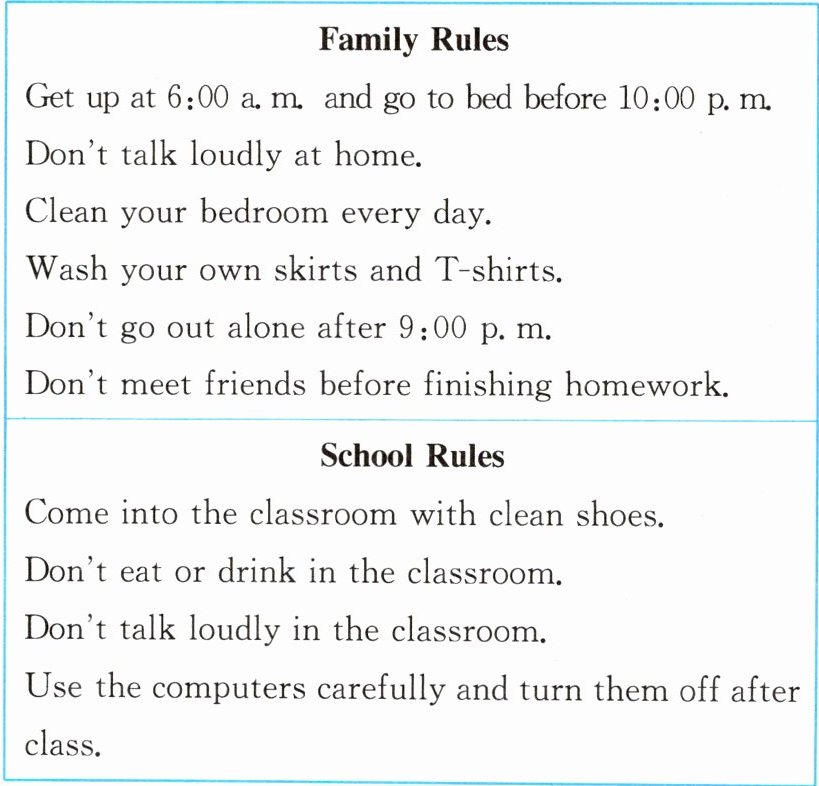
These rules help us grow better. We should follow them.
1. According to the family rules, when can children meet friends?
A. Before doing homework.
B. After finishing homework.
C. After 9:00 p. m.
D. On school mornings.
2. What should children wash by themselves?
A. Skirts and T-shirts.
B. Coats and trousers.
C. Parents' shoes.
D. Bed sheets and quilts.
3. What is needed when students go into the classroom?
A. Wearing new shoes.
B. Wearing clean shoes.
C. Taking food and drinks.
D. Turning on the computers.
4. What does the underlined word "them" refer to?
A. Rules.
B. Classrooms.
C. Shoes.
D. Computers.
5. What can we know from the material?
A. We can't meet friends every day.
B. We can go to bed after 10:00 p. m.
C. We can eat and drink in the classroom.
D. We can't talk loudly at home or in class.
A
[2026 广安期末]We have quite a few rules in our daily life. I think some of them are good for us.
These rules help us grow better. We should follow them.
1. According to the family rules, when can children meet friends?
A. Before doing homework.
B. After finishing homework.
C. After 9:00 p. m.
D. On school mornings.
2. What should children wash by themselves?
A. Skirts and T-shirts.
B. Coats and trousers.
C. Parents' shoes.
D. Bed sheets and quilts.
3. What is needed when students go into the classroom?
A. Wearing new shoes.
B. Wearing clean shoes.
C. Taking food and drinks.
D. Turning on the computers.
4. What does the underlined word "them" refer to?
A. Rules.
B. Classrooms.
C. Shoes.
D. Computers.
5. What can we know from the material?
A. We can't meet friends every day.
B. We can go to bed after 10:00 p. m.
C. We can eat and drink in the classroom.
D. We can't talk loudly at home or in class.
答案
1. B 细节理解题。根据Family Rules部分的“Don't meet friends before finishing homework.”可知,不能在完成作业前见朋友,即完成作业后才能见朋友。
2. A 细节理解题。根据Family Rules部分的“Wash your own skirts and T-shirts.”可知,孩子需要自己洗短裙和T恤。
3. B 细节理解题。根据School Rules部分的“Come into the classroom with clean shoes.”可知,进教室需要穿着干净的鞋子。
4. A 代词指代题。根据“We have quite a few rules in our daily life. I think some of them are good for us.”可知,此处的them指代前句提到的rules,即有些规则对我们有好处。
5. D 细节理解题。根据Family Rules部分的“Don't talk loudly at home.”和School Rules部分的“Don't talk loudly in the classroom.”可知,在家和教室都不能大声说话。
2. A 细节理解题。根据Family Rules部分的“Wash your own skirts and T-shirts.”可知,孩子需要自己洗短裙和T恤。
3. B 细节理解题。根据School Rules部分的“Come into the classroom with clean shoes.”可知,进教室需要穿着干净的鞋子。
4. A 代词指代题。根据“We have quite a few rules in our daily life. I think some of them are good for us.”可知,此处的them指代前句提到的rules,即有些规则对我们有好处。
5. D 细节理解题。根据Family Rules部分的“Don't talk loudly at home.”和School Rules部分的“Don't talk loudly in the classroom.”可知,在家和教室都不能大声说话。
解析
【分析】
这是一篇关于家庭规则和学校规则的英语阅读理解题,共5道小题,涵盖细节理解和代词指代题型。解题思路为:先明确每道题的核心问题,再带着问题回到原文的Family Rules和School Rules板块,定位到对应关键语句,最后将选项与原文内容比对,选出正确答案。
【解析】
1. 细节理解题。根据Family Rules部分的“Don't meet friends before finishing homework.”可知,不能在完成作业前见朋友,即完成作业后才能见朋友,故选B。
2. 细节理解题。根据Family Rules部分的“Wash your own skirts and T-shirts.”可知,孩子需要自己洗短裙和T恤,故选A。
3. 细节理解题。根据School Rules部分的“Come into the classroom with clean shoes.”可知,进教室需要穿着干净的鞋子,故选B。
4. 代词指代题。根据前句“We have quite a few rules in our daily life.”可知,此处的them指代前文提到的rules,故选A。
5. 细节理解题。根据Family Rules部分的“Don't talk loudly at home.”和School Rules部分的“Don't talk loudly in the classroom.”可知,在家和教室都不能大声说话,故选D。
【答案】
1.B 2.A 3.B 4.A 5.D
【知识点】
细节理解题、代词指代题
【点评】
本题为规则类阅读理解题,主要考查学生提取文本关键信息的能力,题型基础,难度较低,只要能准确对应原文内容即可解答。
【难度系数】
0.8
这是一篇关于家庭规则和学校规则的英语阅读理解题,共5道小题,涵盖细节理解和代词指代题型。解题思路为:先明确每道题的核心问题,再带着问题回到原文的Family Rules和School Rules板块,定位到对应关键语句,最后将选项与原文内容比对,选出正确答案。
【解析】
1. 细节理解题。根据Family Rules部分的“Don't meet friends before finishing homework.”可知,不能在完成作业前见朋友,即完成作业后才能见朋友,故选B。
2. 细节理解题。根据Family Rules部分的“Wash your own skirts and T-shirts.”可知,孩子需要自己洗短裙和T恤,故选A。
3. 细节理解题。根据School Rules部分的“Come into the classroom with clean shoes.”可知,进教室需要穿着干净的鞋子,故选B。
4. 代词指代题。根据前句“We have quite a few rules in our daily life.”可知,此处的them指代前文提到的rules,故选A。
5. 细节理解题。根据Family Rules部分的“Don't talk loudly at home.”和School Rules部分的“Don't talk loudly in the classroom.”可知,在家和教室都不能大声说话,故选D。
【答案】
1.B 2.A 3.B 4.A 5.D
【知识点】
细节理解题、代词指代题
【点评】
本题为规则类阅读理解题,主要考查学生提取文本关键信息的能力,题型基础,难度较低,只要能准确对应原文内容即可解答。
【难度系数】
0.8
