

 登录
Ⅰ. Complete the sentences with the correct forms of the words in brackets.
1. You should listen
2. My teacher gave me some useful
3. Don’t be
4. Scientists believe that space exploration will
5. Mr Li always offers
1. You should listen
carefully
(careful) when others are speaking.2. My teacher gave me some useful
tips
(tip) on how to memorize words quickly.3. Don’t be
nervous
(nervous)! We believe if you can’t do it well, nobody can do it.4. Scientists believe that space exploration will
continue
(continue) to help us learn more about the universe.5. Mr Li always offers
to teach
(teach) children in the community how to play basketball.答案
1. carefully 2. tips 3. nervous 4. continue 5. to teach
解析
【分析】
本题为英语词汇形式填空题,需结合句子结构、词性规则、时态及固定搭配来确定单词的正确形式:第1题需用副词修饰动词;第2题需用可数名词复数;第3题需用形容词作表语;第4题需用一般将来时的动词原形;第5题需用固定搭配的不定式形式。
【解析】
1. 空格修饰动词listen,需用副词,careful的副词形式为carefully;
2. some后接可数名词复数,tip的复数形式为tips;
3. be动词后接形容词作表语,nervous本身为形容词,直接使用;
4. 一般将来时结构为will+动词原形,故填continue;
5. 固定搭配offer to do sth表示“主动提出做某事”,故填to teach。
【答案】
1. carefully 2. tips 3. nervous 4. continue 5. to teach
【知识点】
副词的用法、名词复数、固定搭配
【点评】
本题考查英语基础词汇的形式变化,涉及词性转换、名词复数、时态结构及固定搭配,是英语学习的核心基础题型,需熟练掌握词汇的不同形式应用。
【难度系数】
0.8
Ⅱ. Read and complete the tasks.
A. Complete the passage with the words in the box.
find out benefit from be yourself pay attention to show interest in
Communicating in English can be fun and useful! By following these tips, you can greatly 1.
(
(
(
(
B. Fill in the brackets with the sentences in the box. There is one extra option.
A. Record your voice.
B. Speak English at home.
C. Listen to English like it’s music.
D. Know why it’s difficult.
E. Try to talk to native speakers if you can.
Ⅲ. Read and answer the questions.
It was already 10:00 a.m. on Saturday, and I was late to meet my friend Linda at the cinema. We planned to watch a movie together at 9:30. I felt nervous because my alarm didn’t go off, and I overslept!
When I finally arrived, Linda was waiting outside. I said, “I’m so sorry! My alarm didn’t ring!” She frowned(皱眉) and replied, “You always forget to check your alarm!” I tried to explain, “I stayed up late studying last night ...” But she shouted, “That’s just an excuse!” She left me alone without saying anything.
At home that evening, my dad noticed I looked upset. I told him what happened. He patted my shoulder and said, “Son, you made a classic mistake. You didn’t intend to be late. But that’s not the point. What is important in your communication is how your lateness affected her. Next time, sorry for letting her down first, not your excuses.”
His words surprised me. The next day, I called Linda and said, “I’m really sorry you had to wait alone. It must have been very boring.” Her voice softened, “Yeah, I waited 30 minutes ... but thanks for saying that.”
Now, I always double-check my alarm. If I’m ever late again, I’ll remember: how my lateness makes others feel is more important than why it happened.
(
A. For 15 minutes.
B. For 30 minutes.
C. For 45 minutes.
D. For an hour.
(
A. Mean.
B. Forget.
C. Try.
D. Fail.
(
A. Because he was late for the movie.
B. Because he spent too much time studying.
C. Because he didn’t say sorry for making her wait.
D. Because he didn’t check his alarm before sleeping.
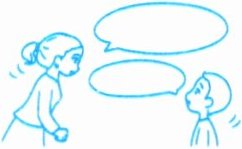
4. What should the boy say to his mum in the picture?
Mum: Honey, you came home so late. I was really worried.
Boy: Mum,
A. Complete the passage with the words in the box.
find out benefit from be yourself pay attention to show interest in
Communicating in English can be fun and useful! By following these tips, you can greatly 1.
benefit from
them and see your skills improve.(
E
)It might be difficult in some places, but it’s very helpful. By talking with native(本地的) speakers, you’ll 2. find out
how real English sounds.(
C
)If you 3. show interest in
how it sounds, listen carefully and you’ll find its flow(流动) like music. Even if your English is perfect, speaking like a robot feels strange.(
A
)Though we hear our own voice daily, we don’t truly know how it sound. So record yourself! When you listen back, 4. pay attention to
your sound, speed(速度) and tone(语调).(
B
)Try speaking it at home in daily activities. And remember, 5. be yourself
when speaking! You’re special and able to improve every day!B. Fill in the brackets with the sentences in the box. There is one extra option.
A. Record your voice.
B. Speak English at home.
C. Listen to English like it’s music.
D. Know why it’s difficult.
E. Try to talk to native speakers if you can.
Ⅲ. Read and answer the questions.
It was already 10:00 a.m. on Saturday, and I was late to meet my friend Linda at the cinema. We planned to watch a movie together at 9:30. I felt nervous because my alarm didn’t go off, and I overslept!
When I finally arrived, Linda was waiting outside. I said, “I’m so sorry! My alarm didn’t ring!” She frowned(皱眉) and replied, “You always forget to check your alarm!” I tried to explain, “I stayed up late studying last night ...” But she shouted, “That’s just an excuse!” She left me alone without saying anything.
At home that evening, my dad noticed I looked upset. I told him what happened. He patted my shoulder and said, “Son, you made a classic mistake. You didn’t intend to be late. But that’s not the point. What is important in your communication is how your lateness affected her. Next time, sorry for letting her down first, not your excuses.”
His words surprised me. The next day, I called Linda and said, “I’m really sorry you had to wait alone. It must have been very boring.” Her voice softened, “Yeah, I waited 30 minutes ... but thanks for saying that.”
Now, I always double-check my alarm. If I’m ever late again, I’ll remember: how my lateness makes others feel is more important than why it happened.
(
B
)1. How long was the writer late?A. For 15 minutes.
B. For 30 minutes.
C. For 45 minutes.
D. For an hour.
(
A
)2. What does the underlined word “intend” in Paragraph 3 mean?A. Mean.
B. Forget.
C. Try.
D. Fail.
(
C
)3. Why did Linda stay angry even after the writer gave his excuses?A. Because he was late for the movie.
B. Because he spent too much time studying.
C. Because he didn’t say sorry for making her wait.
D. Because he didn’t check his alarm before sleeping.
4. What should the boy say to his mum in the picture?
Mum: Honey, you came home so late. I was really worried.
Boy: Mum,
I’m sorry to make you worried.
答案
A. 1. benefit from 2. find out 3. show interest in 4. pay attention to 5. be yourself
B. E, C, A, B
Ⅲ. 1. B 2. A 3. C
4. One possible version: Mum, I’m sorry to make you worried.
B. E, C, A, B
Ⅲ. 1. B 2. A 3. C
4. One possible version: Mum, I’m sorry to make you worried.
解析
【分析】
本题分为三部分:A是用方框内短语补全段落,需先明确各短语含义,再结合上下文语境匹配;B是选句子补全段落,需通读段落主旨,匹配对应句子(注意有1个多余选项);Ⅲ是阅读理解,需先理解文章大意,再通过定位原文、词义猜测等方法解答选择题,最后结合语境补全句子。
【解析】
A. 1. 前文提到“遵循这些技巧”,此处表达“从这些技巧中受益”,故填benefit from;
2. 与本地人交流能“发现”真实英语的发音,故填find out;
3. 后文提到“听起来像音乐”,此处表达“对英语发音感兴趣”,故填show interest in;
4. 听自己的录音时要“注意”声音、速度和语调,故填pay attention to;
5. 后文提到“你是特别的”,此处表达“做你自己”,故填be yourself。
B. 第一段讲和本地人交流,对应E;第二段讲英语听起来像音乐,对应C;第三段讲录自己的声音,对应A;第四段讲在家说英语,对应B(D为多余选项)。
Ⅲ. 1. 原文计划9:30见面,10:00到达,晚了30分钟,选B;
2. 原文“you didn’t intend to be late”意为“你不是故意迟到”,intend意为“打算、故意”,对应mean,选A;
3. 琳达生气是因为男孩没为让她等待道歉,选C;
4. 结合妈妈说“我很担心”,男孩应表达歉意,故填I’m sorry to make you worried.
【答案】
A. 1. benefit from 2. find out 3. show interest in 4. pay attention to 5. be yourself
B. E, C, A, B
Ⅲ. 1. B 2. A 3. C
4. I’m sorry to make you worried.
【知识点】
英语短语运用、阅读理解细节理解、词义猜测、补全对话
【点评】
本题考查英语词汇运用、阅读理解及日常交际能力,题型贴合初中英语学习重点,需学生结合上下文语境分析,难度适中。
【难度系数】
0.6
