

 登录
登录
一、Listen, choose and write.
cl pl
Today is Saturday. It's 7 1. o'
the morning. I get up and 2.
bedroom first. I have no 3.
Then I 4.
in the park. There are so many 5.
there. We have a good time.
cl pl
Today is Saturday. It's 7 1. o'
cl
ock inthe morning. I get up and 2.
cl
ean mybedroom first. I have no 3.
cl
asses today.Then I 4.
pl
ay basketball with my friendsin the park. There are so many 5.
pl
ayersthere. We have a good time.
答案
1. cl 2. cl 3. cl 4. pl 5. pl
二、Listen and choose T or F.
(
School.
(
(
Monday afternoon.
(
friends.
(
(
T
)1. Huihui is a student at Foshan No.9 PrimarySchool.
(
F
)2. Huihui goes to school at 7:20.(
T
)3. Huihui can draw pictures in the class onMonday afternoon.
(
T
)4. After school, Huihui plays sports with herfriends.
(
F
)5. Huihui often watches TV in the evening.答案
1—5 T F T T F
三、Read, choose and write.
Amy: Good morning, Sally.
Sally: Good morning, Amy. 1.
Amy: I get up at 6:00 a.m.
Sally: 2.
Amy: Because I usually do kung fu with my
grandparents in the park.
Sally: 3.
Amy: I have a kung fu class on Saturday mornings.
Sally: 4.
Amy: I usually go shopping with my grandma.
How about you?
Sally: 5.
Amy: You are a good girl.
Amy: Good morning, Sally.
Sally: Good morning, Amy. 1.
When do you get up?
Amy: I get up at 6:00 a.m.
Sally: 2.
Why do you get up so early?
Amy: Because I usually do kung fu with my
grandparents in the park.
Sally: 3.
Wow! So cool!
Amy: I have a kung fu class on Saturday mornings.
Sally: 4.
What do you usually do on Saturday afternoons?
Amy: I usually go shopping with my grandma.
How about you?
Sally: 5.
I often clean my room.
Amy: You are a good girl.
答案
1. When do you get up?
2. Why do you get up so early?
3. Wow! So cool!
4. What do you usually do on Saturday afternoons?
5. I often clean my room.
2. Why do you get up so early?
3. Wow! So cool!
4. What do you usually do on Saturday afternoons?
5. I often clean my room.
解析
【分析】
首先通读对话,明确对话主题是Amy和Sally交流日常作息与活动。解题时需紧扣上下句的问答逻辑:第1空下句回答起床时间,对应询问起床时间的问句;第2空下句用because说明原因,对应询问原因的why开头问句;第3空上句提到功夫课,对应赞叹类表达;第4空下句回答周六下午的活动,对应询问周六下午活动的问句;第5空上句询问Sally的活动,结合夸赞语境对应回答家务活动的句子。
【解析】
1. 根据答句“I get up at 6:00 a.m.”(回答起床时间),可知此处需填询问起床时间的问句,故填“When do you get up?”。
2. 根据答句“Because I usually do kung fu with my grandparents in the park.”(用because说明原因),可知此处需填询问原因的问句,故填“Why do you get up so early?”。
3. 根据上句“I have a kung fu class on Saturday mornings.”(提及功夫课),可知此处需填赞叹类表达,故填“Wow! So cool!”。
4. 根据答句“I usually go shopping with my grandma.”(回答周六下午的活动),可知此处需填询问周六下午活动的问句,故填“What do you usually do on Saturday afternoons?”。
5. 根据上句“How about you?”(询问Sally的活动),结合下句“Amy: You are a good girl.”(夸赞语境),可知此处需填回答家务活动的句子,故填“I often clean my room.”。
【答案】
1. When do you get up?
2. Why do you get up so early?
3. Wow! So cool!
4. What do you usually do on Saturday afternoons?
5. I often clean my room.
【知识点】
日常对话、特殊疑问句、交际用语
【点评】
本题为补全对话题型,考查日常交际用语的运用,需结合上下文逻辑匹配语句,难度适中,适合小学阶段学生练习。
【难度系数】
0.4
首先通读对话,明确对话主题是Amy和Sally交流日常作息与活动。解题时需紧扣上下句的问答逻辑:第1空下句回答起床时间,对应询问起床时间的问句;第2空下句用because说明原因,对应询问原因的why开头问句;第3空上句提到功夫课,对应赞叹类表达;第4空下句回答周六下午的活动,对应询问周六下午活动的问句;第5空上句询问Sally的活动,结合夸赞语境对应回答家务活动的句子。
【解析】
1. 根据答句“I get up at 6:00 a.m.”(回答起床时间),可知此处需填询问起床时间的问句,故填“When do you get up?”。
2. 根据答句“Because I usually do kung fu with my grandparents in the park.”(用because说明原因),可知此处需填询问原因的问句,故填“Why do you get up so early?”。
3. 根据上句“I have a kung fu class on Saturday mornings.”(提及功夫课),可知此处需填赞叹类表达,故填“Wow! So cool!”。
4. 根据答句“I usually go shopping with my grandma.”(回答周六下午的活动),可知此处需填询问周六下午活动的问句,故填“What do you usually do on Saturday afternoons?”。
5. 根据上句“How about you?”(询问Sally的活动),结合下句“Amy: You are a good girl.”(夸赞语境),可知此处需填回答家务活动的句子,故填“I often clean my room.”。
【答案】
1. When do you get up?
2. Why do you get up so early?
3. Wow! So cool!
4. What do you usually do on Saturday afternoons?
5. I often clean my room.
【知识点】
日常对话、特殊疑问句、交际用语
【点评】
本题为补全对话题型,考查日常交际用语的运用,需结合上下文逻辑匹配语句,难度适中,适合小学阶段学生练习。
【难度系数】
0.4
四、[新趋势·图片理解]Look, read and write.
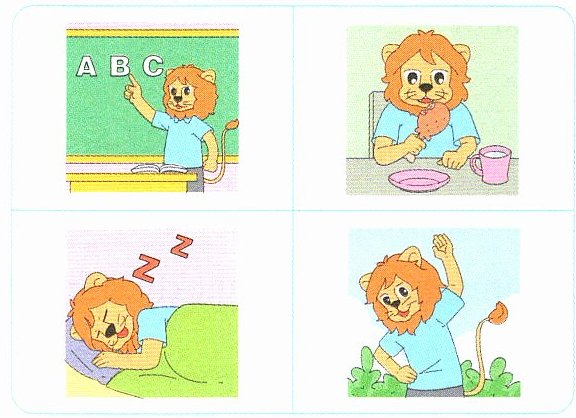
Mr Lion is an English teacher in the Forest
School. He 1. w
2. F
3. e
At noon, he eats 4. l
His favourite food is 5. c
6. h
much. After lunch, he has a nap at 7. h
Mr Lion has no 8. c
So he often plays 9. s
When he is tired, he listens to 10. m
on the grass. He has a good time.
Mr Lion is an English teacher in the Forest
School. He 1. w
orks
from Monday to2. F
riday
. He usually does morning3. e
xercises
at 6:30. Then he goes to work.At noon, he eats 4. l
unch
in the canteen.His favourite food is 5. c
hicken
. It's6. h
ealthy
. And he likes vegetables verymuch. After lunch, he has a nap at 7. h
ome
.Mr Lion has no 8. c
lass(es)
in the afternoon.So he often plays 9. s
ports
in the park.When he is tired, he listens to 10. m
usic
on the grass. He has a good time.
答案
1. works 2. Friday 3. exercises 4. lunch
5. chicken 6. healthy 7. home
8. class(es) 9. sports 10. music
5. chicken 6. healthy 7. home
8. class(es) 9. sports 10. music
解析
【分析】
解题时需结合图片信息、句子语境和语法规则逐一推导填空:1. 第1空主语是第三人称单数He,描述日常动作用一般现在时,结合“from Monday to...”可知是“工作”,需用动词三单形式;2. 第2空“from...to...”表时间范围,周一到周五对应星期类词汇;3. 第3空“does morning...”是固定搭配,结合6:30的时间可知是早操相关;4. 第4空“At noon”对应午饭场景;5. 第5空图片显示狮子吃鸡腿,对应食物类词汇;6. 第6空需形容词描述食物属性;7. 第7空“has a nap”的地点结合常识判断;8. 第8空“no”后接名词,结合语境是下午的课程;9. 第9空“plays...”是公园的活动,为固定短语;10. 第10空“listens to...”是固定短语,对应听音乐的场景。
【解析】
1. 主语He为第三人称单数,一般现在时中动词用三单形式,结合语境“从周一到周五工作”,填works;
2. “from...to...”表时间范围,周一到周五,填Friday;
3. 固定短语“morning exercises”意为早操,符合6:30的活动,填exercises;
4. “At noon”(中午)对应吃午饭,填lunch;
5. 图片中狮子吃的是鸡肉,填chicken;
6. 此处需形容词描述食物,鸡肉是健康的,填healthy;
7. 午饭后在家小睡,“at home”符合语境,填home;
8. “no”后可接单数或复数名词,下午没有课,填class(es);
9. 固定短语“play sports”意为做运动,符合公园的活动,填sports;
10. 固定短语“listen to music”意为听音乐,填music。
【答案】
1. works 2. Friday 3. exercises 4. lunch 5. chicken 6. healthy 7. home 8. class(es) 9. sports 10. music
【知识点】
一般现在时,固定短语,名词词义
【点评】
本题为图片理解型英语填空题,结合图片、语境与基础语法知识考查词汇运用,贴近日常,难度适中,适合小学阶段学生练习。
【难度系数】
0.6
解题时需结合图片信息、句子语境和语法规则逐一推导填空:1. 第1空主语是第三人称单数He,描述日常动作用一般现在时,结合“from Monday to...”可知是“工作”,需用动词三单形式;2. 第2空“from...to...”表时间范围,周一到周五对应星期类词汇;3. 第3空“does morning...”是固定搭配,结合6:30的时间可知是早操相关;4. 第4空“At noon”对应午饭场景;5. 第5空图片显示狮子吃鸡腿,对应食物类词汇;6. 第6空需形容词描述食物属性;7. 第7空“has a nap”的地点结合常识判断;8. 第8空“no”后接名词,结合语境是下午的课程;9. 第9空“plays...”是公园的活动,为固定短语;10. 第10空“listens to...”是固定短语,对应听音乐的场景。
【解析】
1. 主语He为第三人称单数,一般现在时中动词用三单形式,结合语境“从周一到周五工作”,填works;
2. “from...to...”表时间范围,周一到周五,填Friday;
3. 固定短语“morning exercises”意为早操,符合6:30的活动,填exercises;
4. “At noon”(中午)对应吃午饭,填lunch;
5. 图片中狮子吃的是鸡肉,填chicken;
6. 此处需形容词描述食物,鸡肉是健康的,填healthy;
7. 午饭后在家小睡,“at home”符合语境,填home;
8. “no”后可接单数或复数名词,下午没有课,填class(es);
9. 固定短语“play sports”意为做运动,符合公园的活动,填sports;
10. 固定短语“listen to music”意为听音乐,填music。
【答案】
1. works 2. Friday 3. exercises 4. lunch 5. chicken 6. healthy 7. home 8. class(es) 9. sports 10. music
【知识点】
一般现在时,固定短语,名词词义
【点评】
本题为图片理解型英语填空题,结合图片、语境与基础语法知识考查词汇运用,贴近日常,难度适中,适合小学阶段学生练习。
【难度系数】
0.6
五、Read and choose A, B or C.
Tom is twelve years old. He is in Shunde
Primary School. He has a happy family.
always go hiking in Shunfengshan Park on
Saturdays. The air in the park is fresh. Sometimes
they
go for a walk near their home. His father likes
playing ping-pong
Jack likes Huang Feihong very much. He
some kung fu every day. Tom usually plays
football with his friends in Shunde Sports Centre
always have a nice weekend.
(
(
(
(
(
Tom is twelve years old. He is in Shunde
Primary School. He has a happy family.
A
1always go hiking in Shunfengshan Park on
Saturdays. The air in the park is fresh. Sometimes
they
B
2 volleyball. Tom's grandparents oftengo for a walk near their home. His father likes
playing ping-pong
B
3 his mother. His brotherJack likes Huang Feihong very much. He
C
4some kung fu every day. Tom usually plays
football with his friends in Shunde Sports Centre
A
5 the weekend. They all like sports. Theyalways have a nice weekend.
(
A
)1. A. They B. Their C. Them(
B
)2. A. go B. play C. have(
B
)3. A. to B. with C. of(
C
)4. A. washes B. goes C. does(
A
)5. A. on B. in C. to答案
1—5 A B B C A
解析
【分析】本题为英语完形填空题,需结合语境和语法知识逐一分析选项。首先通读短文,明确短文围绕Tom一家的周末活动展开。第1空需选指代Tom及其家人且作主语的代词;第2空考查“打排球”的固定搭配;第3空需选表示“和……一起”的介词;第4空考查“练功夫”的固定搭配及动词第三人称单数形式;第5空考查“在周末”的固定介词搭配。
【解析】1. 第1空:此处指代Tom和他的家人,在句中作主语,需用主格代词。A选项They为主格,B选项Their为形容词性物主代词,C选项Them为宾格,故选A。2. 第2空:“打排球”的固定表达为play volleyball,故选B。3. 第3空:此处表示“和妈妈一起”,需用介词with,故选B。4. 第4空:“练功夫”的固定表达为do kung fu,主语He是第三人称单数,一般现在时谓语动词用does,故选C。5. 第5空:“在周末”的固定表达为on the weekend,故选A。
【答案】1—5 A B B C A
【知识点】代词用法、固定搭配、介词用法
【点评】本题为基础英语完形填空,聚焦代词、固定短语及介词的基础应用,难度较低,适合巩固英语基础知识。
【难度系数】0.7
【解析】1. 第1空:此处指代Tom和他的家人,在句中作主语,需用主格代词。A选项They为主格,B选项Their为形容词性物主代词,C选项Them为宾格,故选A。2. 第2空:“打排球”的固定表达为play volleyball,故选B。3. 第3空:此处表示“和妈妈一起”,需用介词with,故选B。4. 第4空:“练功夫”的固定表达为do kung fu,主语He是第三人称单数,一般现在时谓语动词用does,故选C。5. 第5空:“在周末”的固定表达为on the weekend,故选A。
【答案】1—5 A B B C A
【知识点】代词用法、固定搭配、介词用法
【点评】本题为基础英语完形填空,聚焦代词、固定短语及介词的基础应用,难度较低,适合巩固英语基础知识。
【难度系数】0.7
