

 登录
登录
六、阅读短文,判断正(T)误(F)
词数: 228 体裁: 说明文 核心素养: 文化意识
话题: 三月三 难度: 中 建议用时: 7分钟
The Double Third Festival is an ancient Chinese festival. It comes on the third day of the third lunar month. The day is said to be the birthday of the Yellow Emperor(Huangdi). He, along with the Yan Emperor(Yandi), is considered to be the ancestor of all Chinese people. The date was fixed after the Wei and Jin Dynasties.
In the Eastern Jin Dynasty, people often took a bath in the river on that day to wash away bad luck. Wang Xizhi wrote in his Lantingji Xu about how people took a bath and wrote poems while drinking from cups drifting along the river. In the Tang Dynasty, people enjoyed drinks and sightseeing. In the Ming and Qing Dynasties, people did activities like drifting cups, throwing stones, hiking and listening to music.
In modern times, it is mainly celebrated by the people in the southern parts of China. For the Zhuang people in Guangxi, it is a festival for young people to sing songs and find their true love. Bamboo dancing is another important activity for them. For the Li and Miao people in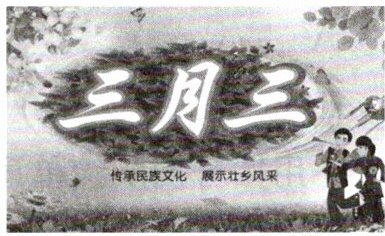 Hainan, it is a day for remembering ancestors. For the Han people, it is a time to go outside to enjoy flowers and cook eggs with jicai. The Han people believe the special eggs are good for their health.
(
(
(
(
(
词数: 228 体裁: 说明文 核心素养: 文化意识
话题: 三月三 难度: 中 建议用时: 7分钟
The Double Third Festival is an ancient Chinese festival. It comes on the third day of the third lunar month. The day is said to be the birthday of the Yellow Emperor(Huangdi). He, along with the Yan Emperor(Yandi), is considered to be the ancestor of all Chinese people. The date was fixed after the Wei and Jin Dynasties.
In the Eastern Jin Dynasty, people often took a bath in the river on that day to wash away bad luck. Wang Xizhi wrote in his Lantingji Xu about how people took a bath and wrote poems while drinking from cups drifting along the river. In the Tang Dynasty, people enjoyed drinks and sightseeing. In the Ming and Qing Dynasties, people did activities like drifting cups, throwing stones, hiking and listening to music.
In modern times, it is mainly celebrated by the people in the southern parts of China. For the Zhuang people in Guangxi, it is a festival for young people to sing songs and find their true love. Bamboo dancing is another important activity for them. For the Li and Miao people in
Hainan, it is a day for remembering ancestors. For the Han people, it is a time to go outside to enjoy flowers and cook eggs with jicai. The Han people believe the special eggs are good for their health.(
F
)1. The Double Third Festival falls on the third day of March every year.(
F
)2. People in the Tang Dynasty celebrated the festival by taking a bath in the river.(
T
)3. The Double Third Festival is mainly celebrated in the southern parts of China nowadays.(
F
)4. In Hainan, the festival is a day for young people to sing songs and find their love.(
T
)5. This passage mainly talks about the Double Third Festival and how people celebrate it.答案
【文章大意】本文是一篇说明文,主要向我们介绍"三月三"在各朝代的变迁以及人们如何庆祝这个节日。
1. F [解析]细节理解题。根据"The Double Third Festival is an ancient Chinese festival. It comes on the third day of the third lunar month."可知,"三月三"是在农历的第三个月的第三天。故该题表述错误。
2. F [解析]细节理解题。根据"In the Eastern Jin Dynasty, people often took a bath in the river on that day to wash away bad luck."可知,在东晋,人们经常在这一天在河里洗澡,以洗去厄运。故该题表述错误。
3. T [解析]细节理解题。根据"In modern times, it is mainly celebrated by the people in the southern parts of China."可知,在现代,它主要是由中国南方的人们庆祝。故该题表述正确。
4. F [解析]细节理解题。根据"For the Zhuang people in Guangxi, it is a festival for young people to sing songs and find their true love."可知,对广西壮族人来说,这是一个年轻人唱歌、寻找真爱的节日。故该题表述错误。
5. T [解析]主旨大意题。本文主要向我们介绍"三月三"在各朝代的变迁以及人们是如何庆祝这个节日。故该题表述正确。
1. F [解析]细节理解题。根据"The Double Third Festival is an ancient Chinese festival. It comes on the third day of the third lunar month."可知,"三月三"是在农历的第三个月的第三天。故该题表述错误。
2. F [解析]细节理解题。根据"In the Eastern Jin Dynasty, people often took a bath in the river on that day to wash away bad luck."可知,在东晋,人们经常在这一天在河里洗澡,以洗去厄运。故该题表述错误。
3. T [解析]细节理解题。根据"In modern times, it is mainly celebrated by the people in the southern parts of China."可知,在现代,它主要是由中国南方的人们庆祝。故该题表述正确。
4. F [解析]细节理解题。根据"For the Zhuang people in Guangxi, it is a festival for young people to sing songs and find their true love."可知,对广西壮族人来说,这是一个年轻人唱歌、寻找真爱的节日。故该题表述错误。
5. T [解析]主旨大意题。本文主要向我们介绍"三月三"在各朝代的变迁以及人们是如何庆祝这个节日。故该题表述正确。
解析
【分析】
本题是关于“三月三”的阅读理解判断题,解题思路为:先通读短文把握核心内容,再针对每个题目,回到原文定位对应信息,对比题目表述与原文内容判断正误;最后一题需总结文章主旨来判断。
【解析】
1. 根据原文“The Double Third Festival...It comes on the third day of the third lunar month.”可知,“三月三”是农历三月初三,而非公历三月三日,故该题错误,答案为F。
2. 根据原文“In the Eastern Jin Dynasty, people often took a bath in the river on that day...”可知,在河里洗澡是东晋的习俗,唐朝时人们是喝酒、观光,故该题错误,答案为F。
3. 根据原文“In modern times, it is mainly celebrated by the people in the southern parts of China.”可知,现代“三月三”主要由中国南方人庆祝,故该题正确,答案为T。
4. 根据原文“For the Zhuang people in Guangxi, it is a festival for young people to sing songs and find their true love.”可知,唱歌找真爱是广西壮族的习俗,海南黎族、苗族是纪念祖先,故该题错误,答案为F。
5. 本文主要介绍了“三月三”的相关信息,以及不同朝代、不同民族庆祝该节日的方式,故该题正确,答案为T。
【答案】
1.F 2.F 3.T 4.F 5.T
【知识点】
细节理解题、主旨大意题、阅读理解
【点评】
本题围绕中国传统节日“三月三”展开,考查学生对说明文细节信息的定位能力和主旨概括能力,涉及不同朝代、不同民族的节日习俗,有助于学生了解民族文化,难度适中。
【难度系数】
0.5
本题是关于“三月三”的阅读理解判断题,解题思路为:先通读短文把握核心内容,再针对每个题目,回到原文定位对应信息,对比题目表述与原文内容判断正误;最后一题需总结文章主旨来判断。
【解析】
1. 根据原文“The Double Third Festival...It comes on the third day of the third lunar month.”可知,“三月三”是农历三月初三,而非公历三月三日,故该题错误,答案为F。
2. 根据原文“In the Eastern Jin Dynasty, people often took a bath in the river on that day...”可知,在河里洗澡是东晋的习俗,唐朝时人们是喝酒、观光,故该题错误,答案为F。
3. 根据原文“In modern times, it is mainly celebrated by the people in the southern parts of China.”可知,现代“三月三”主要由中国南方人庆祝,故该题正确,答案为T。
4. 根据原文“For the Zhuang people in Guangxi, it is a festival for young people to sing songs and find their true love.”可知,唱歌找真爱是广西壮族的习俗,海南黎族、苗族是纪念祖先,故该题错误,答案为F。
5. 本文主要介绍了“三月三”的相关信息,以及不同朝代、不同民族庆祝该节日的方式,故该题正确,答案为T。
【答案】
1.F 2.F 3.T 4.F 5.T
【知识点】
细节理解题、主旨大意题、阅读理解
【点评】
本题围绕中国传统节日“三月三”展开,考查学生对说明文细节信息的定位能力和主旨概括能力,涉及不同朝代、不同民族的节日习俗,有助于学生了解民族文化,难度适中。
【难度系数】
0.5
