

 登录
登录
Ⅵ.阅读还原
跨生物食物消化过程「2025 江苏盐城鹿鸣路初中期中」
根据短文内容,从下面方框中选出恰当的句子补全短文,有一个选项是多余的。
When you are hungry, you eat food, right? You put it in your mouth, chew (咀嚼) it, and then swallow (吞咽) it down. 32.
After you swallow your food, it goes down your throat and then into an important place—the stomach. 33.
The stomach is like a small bag. It can hold a lot of food! Every year, a person eats a lot of food! That's a lot of food for the stomach. 34.
Now you know, when you eat food, it goes down your throat and into your stomach, and then it becomes tiny pieces to give you energy to help you grow! 36.
A. So, the stomach is busy every day.
B. And don't eat too much at a time.
C. But do you know where it goes after that?
D. In your stomach, there is something special.
E. So, please eat well and take care of your stomach.
F. Maybe, you are thinking about how the stomach changes food into energy.
跨生物食物消化过程「2025 江苏盐城鹿鸣路初中期中」
根据短文内容,从下面方框中选出恰当的句子补全短文,有一个选项是多余的。
When you are hungry, you eat food, right? You put it in your mouth, chew (咀嚼) it, and then swallow (吞咽) it down. 32.
C
Well, let me tell you!After you swallow your food, it goes down your throat and then into an important place—the stomach. 33.
D
It helps break your food into small pieces. They can become good things to help you grow big and strong.The stomach is like a small bag. It can hold a lot of food! Every year, a person eats a lot of food! That's a lot of food for the stomach. 34.
A
If you eat too much or eat unclean food, your stomach might get hurt. So it's important for you to eat healthy food. 35. B
Now you know, when you eat food, it goes down your throat and into your stomach, and then it becomes tiny pieces to give you energy to help you grow! 36.
E
A. So, the stomach is busy every day.
B. And don't eat too much at a time.
C. But do you know where it goes after that?
D. In your stomach, there is something special.
E. So, please eat well and take care of your stomach.
F. Maybe, you are thinking about how the stomach changes food into energy.
答案
32. C 前文描述了吃东西时将食物放入口中、咀嚼、吞咽的过程,空格后用“Well, let me tell you!”引出下文对食物去向的解释。选项C(但你知道在那之后它去了哪里吗?)符合语境。
33. D 根据空格后“It helps break your food into small pieces.”可知,它帮助把食物分解成小块,故选项D(在你的胃里,有特别的东西)符合题意。
34. A 前文指出胃像一个小袋子,能装很多食物,一个人每年要吃很多食物,强调了胃的工作量。选项A(所以,胃每天都很忙)符合语境。
35. B 前文提到如果吃太多或吃不干净的食物,胃可能会受伤,所以吃健康的食物很重要。选项B(而且一次不要吃太多)符合语境。
36. E 空格位于短文结尾,需要总结全文并给出结论。前文解释了食物进入胃后的过程,以及保护胃的重要性,选项E(所以,请好好吃饭,照顾好你的胃)是对全文的总结,适合作为结尾。
33. D 根据空格后“It helps break your food into small pieces.”可知,它帮助把食物分解成小块,故选项D(在你的胃里,有特别的东西)符合题意。
34. A 前文指出胃像一个小袋子,能装很多食物,一个人每年要吃很多食物,强调了胃的工作量。选项A(所以,胃每天都很忙)符合语境。
35. B 前文提到如果吃太多或吃不干净的食物,胃可能会受伤,所以吃健康的食物很重要。选项B(而且一次不要吃太多)符合语境。
36. E 空格位于短文结尾,需要总结全文并给出结论。前文解释了食物进入胃后的过程,以及保护胃的重要性,选项E(所以,请好好吃饭,照顾好你的胃)是对全文的总结,适合作为结尾。
解析
【分析】
做阅读还原题时,首先通读全文,明确文章主题为介绍食物进入胃后的消化过程及保护胃的重要性;接着逐个分析空格,结合空格前后句子的语义,判断句子间的逻辑关系(如设问、承接、因果、总结等);最后匹配方框中的选项,排除多余项,确定每个空格的正确答案。
【解析】
32. 空格前描述了进食到吞咽的过程,空格后用“Well, let me tell you!”引出对食物去向的解释,属于设问衔接,选项C(但你知道在那之后它去了哪里吗?)符合语境,故选C。
33. 空格后提到“它帮助把食物分解成小块”,说明前文应引出胃里的特殊物质,选项D(在你的胃里,有特别的东西)符合逻辑,故选D。
34. 空格前指出胃能容纳大量食物,人每年进食量很大,强调了胃的工作量,选项A(所以,胃每天都很忙)承接上文,故选A。
35. 空格前说明吃太多或不干净食物会损伤胃,因此需要给出合理建议,选项B(而且一次不要吃太多)符合语境,故选B。
36. 空格位于短文结尾,需总结全文关于保护胃的内容,选项E(所以,请好好吃饭,照顾好你的胃)是对全文的总结,故选E。
【答案】
32.C 33.D 34.A 35.B 36.E
【知识点】
英语阅读还原、语境逻辑推理
【点评】
本题为初中英语期中的阅读还原题,结合食物消化的生活常识,考查学生对语篇逻辑和上下文语境的理解能力,需把握句子间的问答、承接、因果、总结等逻辑关系,难度适中。
【难度系数】
0.6
做阅读还原题时,首先通读全文,明确文章主题为介绍食物进入胃后的消化过程及保护胃的重要性;接着逐个分析空格,结合空格前后句子的语义,判断句子间的逻辑关系(如设问、承接、因果、总结等);最后匹配方框中的选项,排除多余项,确定每个空格的正确答案。
【解析】
32. 空格前描述了进食到吞咽的过程,空格后用“Well, let me tell you!”引出对食物去向的解释,属于设问衔接,选项C(但你知道在那之后它去了哪里吗?)符合语境,故选C。
33. 空格后提到“它帮助把食物分解成小块”,说明前文应引出胃里的特殊物质,选项D(在你的胃里,有特别的东西)符合逻辑,故选D。
34. 空格前指出胃能容纳大量食物,人每年进食量很大,强调了胃的工作量,选项A(所以,胃每天都很忙)承接上文,故选A。
35. 空格前说明吃太多或不干净食物会损伤胃,因此需要给出合理建议,选项B(而且一次不要吃太多)符合语境,故选B。
36. 空格位于短文结尾,需总结全文关于保护胃的内容,选项E(所以,请好好吃饭,照顾好你的胃)是对全文的总结,故选E。
【答案】
32.C 33.D 34.A 35.B 36.E
【知识点】
英语阅读还原、语境逻辑推理
【点评】
本题为初中英语期中的阅读还原题,结合食物消化的生活常识,考查学生对语篇逻辑和上下文语境的理解能力,需把握句子间的问答、承接、因果、总结等逻辑关系,难度适中。
【难度系数】
0.6
Ⅶ.短文填空
跨艺术画圣吴道子「2025 河南中考改编」
阅读短文,从方框中选择适当的单词并用其正确形式填空。
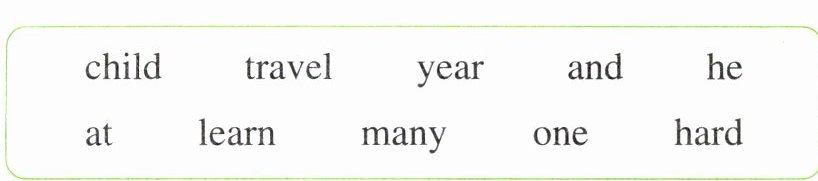
Wu Daozi was one of the greatest of all Chinese artists. He was famous for 37.
Wu lost his parents when he was a young 38.
In order to learn how to paint landscapes, Wu followed a great painter and he 41.
Besides landscapes, Wu also 44.
During his lifetime, Wu painted 46.
跨艺术画圣吴道子「2025 河南中考改编」
阅读短文,从方框中选择适当的单词并用其正确形式填空。
Wu Daozi was one of the greatest of all Chinese artists. He was famous for 37.
his
own way of painting with excellent skills.Wu lost his parents when he was a young 38.
child
and he lived a very poor life. The young Wu had to work very 39. hard
to make a living. He began to learn painting not from famous painters 40. at
that time, but from folk artisans (民间手艺人) in today's Henan Province.In order to learn how to paint landscapes, Wu followed a great painter and he 41.
traveled/travelled
to many places with mountains and rivers. After three 42. years
of learning, he created the so-called shuti of landscape painting. Also, he became the 43. first
artist in Chinese art history to turn landscapes into a new kind of painting.Besides landscapes, Wu also 44.
learned/learnt
a lot in painting human figures. He was especially good at it 45. and
developed (发展) his special painting skills.During his lifetime, Wu painted 46.
more
than 300 amazing murals (壁画). No wonder he is considered (认为) as a “Sage of Art” (画圣) in China.答案
37. his 空格后为“own way”,此处需用形容词性物主代词his,表示“他自己的方式”。
38. child 吴还是个小孩的时候就失去了父母,故填child。
39. hard “work very hard”是固定搭配,意为“非常努力地工作”。
40. at “at that time”是固定短语,意为“在那时”。
41. traveled/travelled 根据“to many places”可知此处需用动词travel;时态为一般过去时,故填traveled/travelled。
42. years “three”后接可数名词复数,year的复数形式为years。
43. first 定冠词the后需用序数词first,表示“第一位画家”。
44. learned/learnt 吴在画人物方面也学到了很多,learn意为“学习”,时态为一般过去时,故填learned/learnt。
45. and “was especially good at it”和“developed his special painting skills”是并列关系,用连词and连接。
46. more more than意为“超过”,是固定搭配。
38. child 吴还是个小孩的时候就失去了父母,故填child。
39. hard “work very hard”是固定搭配,意为“非常努力地工作”。
40. at “at that time”是固定短语,意为“在那时”。
41. traveled/travelled 根据“to many places”可知此处需用动词travel;时态为一般过去时,故填traveled/travelled。
42. years “three”后接可数名词复数,year的复数形式为years。
43. first 定冠词the后需用序数词first,表示“第一位画家”。
44. learned/learnt 吴在画人物方面也学到了很多,learn意为“学习”,时态为一般过去时,故填learned/learnt。
45. and “was especially good at it”和“developed his special painting skills”是并列关系,用连词and连接。
46. more more than意为“超过”,是固定搭配。
解析
【分析】
解题思路:先通读短文理解大意,再结合每个空格的语境、固定搭配、语法规则(如词性、时态、数的变化、序数词等),从方框中选合适单词并转换为正确形式填空。步骤为:1. 分析空格所需词性;2. 结合语境和固定搭配确定单词;3. 根据时态、数等要求调整单词形式。
【解析】
37. 空格后是名词短语“own way”,需用形容词性物主代词修饰,方框中“he”的形容词性物主代词是his,故填his。
38. 空格前有形容词“young”,需填名词,方框中“child”符合语境,意为“小孩”,故填child。
39. 固定搭配“work hard”表示“努力工作”,方框中“hard”符合,故填hard。
40. 固定短语“at that time”意为“在那时”,方框中“at”符合,故填at。
41. 空格处需填动词,结合语境时态为一般过去时,方框中“travel”的过去式为traveled/travelled,故填traveled/travelled。
42. 空格前有基数词“three”,需填可数名词复数,方框中“year”的复数是years,故填years。
43. 空格前有定冠词“the”,需填序数词,方框中“one”的序数词是first,意为“第一位”,故填first。
44. 空格处需填动词,结合语境时态为一般过去时,方框中“learn”的过去式为learned/learnt,故填learned/learnt。
45. 前后分句是并列关系,需用并列连词,方框中“and”符合,故填and。
46. 固定搭配“more than”意为“超过”,方框中“many”的比较级是more,故填more。
【答案】
37. his 38. child 39. hard 40. at 41. traveled/travelled 42. years 43. first 44. learned/learnt 45. and 46. more
【知识点】
固定搭配、动词时态、词性转换
【点评】
本题为河南中考改编题,考查学生词汇运用能力,涉及固定搭配、动词时态、词性变化、序数词等基础知识点,难度适中,需学生掌握基础词汇和语法,结合语境分析填空。
【难度系数】
0.6
解题思路:先通读短文理解大意,再结合每个空格的语境、固定搭配、语法规则(如词性、时态、数的变化、序数词等),从方框中选合适单词并转换为正确形式填空。步骤为:1. 分析空格所需词性;2. 结合语境和固定搭配确定单词;3. 根据时态、数等要求调整单词形式。
【解析】
37. 空格后是名词短语“own way”,需用形容词性物主代词修饰,方框中“he”的形容词性物主代词是his,故填his。
38. 空格前有形容词“young”,需填名词,方框中“child”符合语境,意为“小孩”,故填child。
39. 固定搭配“work hard”表示“努力工作”,方框中“hard”符合,故填hard。
40. 固定短语“at that time”意为“在那时”,方框中“at”符合,故填at。
41. 空格处需填动词,结合语境时态为一般过去时,方框中“travel”的过去式为traveled/travelled,故填traveled/travelled。
42. 空格前有基数词“three”,需填可数名词复数,方框中“year”的复数是years,故填years。
43. 空格前有定冠词“the”,需填序数词,方框中“one”的序数词是first,意为“第一位”,故填first。
44. 空格处需填动词,结合语境时态为一般过去时,方框中“learn”的过去式为learned/learnt,故填learned/learnt。
45. 前后分句是并列关系,需用并列连词,方框中“and”符合,故填and。
46. 固定搭配“more than”意为“超过”,方框中“many”的比较级是more,故填more。
【答案】
37. his 38. child 39. hard 40. at 41. traveled/travelled 42. years 43. first 44. learned/learnt 45. and 46. more
【知识点】
固定搭配、动词时态、词性转换
【点评】
本题为河南中考改编题,考查学生词汇运用能力,涉及固定搭配、动词时态、词性变化、序数词等基础知识点,难度适中,需学生掌握基础词汇和语法,结合语境分析填空。
【难度系数】
0.6
