

 登录
登录
(2026 · 重庆月考)① CNPC recently announced that it has finished drilling(钻井)Shenditake-1, the deepest vertical well in Asia. Located in the Taklimakan Desert in Xinjiang's Tarim Basin, this well reaches 10,910 metres deep.
② Drilling such a deep well is extremely difficult. An expert from CNPC says that it is like drilling through Mount Qomolangma and then going down another 2 kilometres underground. The whole process is full of great risks and challenges.
③The drilling work started on May 30, 2023. It took only 279 days to reach 10,000 metres, but the final 910 metres took as long as 300 days. This is because the challenges became bigger and bigger as the well went deeper. Besides, the Taklimakan Desert has a huge temperature difference of over 80℃ between summer and winter, which is a great test for all workers.
④The conditions under the ground are even worse. At the bottom of the well, the temperature can reach 220℃. These extreme conditions make common drilling tools unable to work. In addition, the drilling equipment is very heavy, which brings more difficulties to the work.
⑤ To solve these problems, CNPC developed new high-tech equipment on its own. The most important one is the world's first 12,000-metre automated drilling rig.
⑥ CNPC also created a set of advanced tools for ultra-deep well detection(探测). With the help of these new technologies, Shenditake-1 successfully went through 12 geological layers and found oil-and-gas-rich rocks between 10,851 and 10, 910 metres deep, achieving great progress in ultra-deep drilling technology.
⑦ As the world's second-deepest vertical well, Shenditake-1 helps China explore more ultra-deep oil and gas resources and shows that China's ability in deep-Earth exploration is getting stronger.
1. 语言能力 推断能力 Why does the expert mention “drilling through Mount Qomolangma” in Para. 2?
A. To introduce the location of the well.
B. To state that Mount Qomolangma is very high.
C. To suggest that the workers are as brave as mountain climbers.
D. To show the great difficulty of drilling Shenditake-1.
2. 新考法 学科融合 Which picture may show the drilling process?
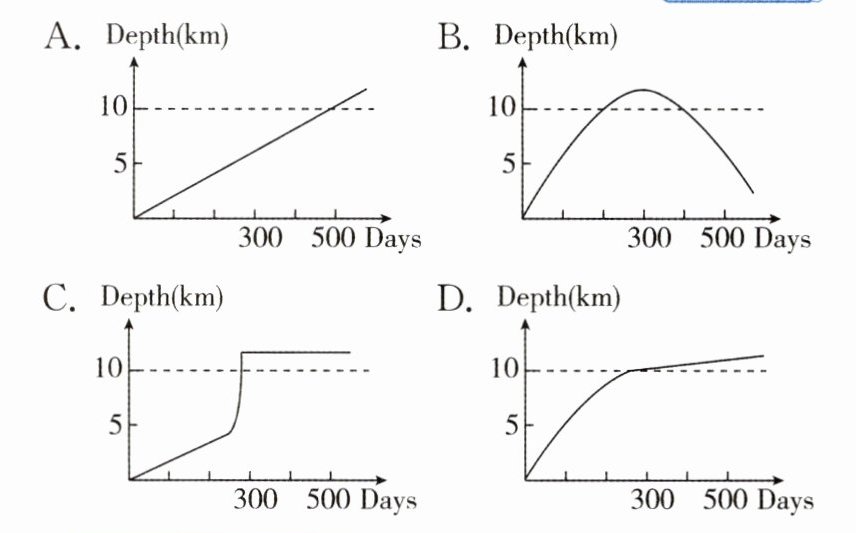
3. 新考法 创新设问 Which of the following words best fill in the blanks?

A. Finding; Research
B. Problem; Solution
C. General; Specific
D. Similarity; Difference
4. What is the best title for this passage?
A. How to Drill for Oil
B. The History of Drilling Technology
C. Taklimakan: The Hot Desert of Xinjiang
D. China's Great Step in Deep-Earth Exploration
② Drilling such a deep well is extremely difficult. An expert from CNPC says that it is like drilling through Mount Qomolangma and then going down another 2 kilometres underground. The whole process is full of great risks and challenges.
③The drilling work started on May 30, 2023. It took only 279 days to reach 10,000 metres, but the final 910 metres took as long as 300 days. This is because the challenges became bigger and bigger as the well went deeper. Besides, the Taklimakan Desert has a huge temperature difference of over 80℃ between summer and winter, which is a great test for all workers.
④The conditions under the ground are even worse. At the bottom of the well, the temperature can reach 220℃. These extreme conditions make common drilling tools unable to work. In addition, the drilling equipment is very heavy, which brings more difficulties to the work.
⑤ To solve these problems, CNPC developed new high-tech equipment on its own. The most important one is the world's first 12,000-metre automated drilling rig.
⑥ CNPC also created a set of advanced tools for ultra-deep well detection(探测). With the help of these new technologies, Shenditake-1 successfully went through 12 geological layers and found oil-and-gas-rich rocks between 10,851 and 10, 910 metres deep, achieving great progress in ultra-deep drilling technology.
⑦ As the world's second-deepest vertical well, Shenditake-1 helps China explore more ultra-deep oil and gas resources and shows that China's ability in deep-Earth exploration is getting stronger.
1. 语言能力 推断能力 Why does the expert mention “drilling through Mount Qomolangma” in Para. 2?
A. To introduce the location of the well.
B. To state that Mount Qomolangma is very high.
C. To suggest that the workers are as brave as mountain climbers.
D. To show the great difficulty of drilling Shenditake-1.
2. 新考法 学科融合 Which picture may show the drilling process?
3. 新考法 创新设问 Which of the following words best fill in the blanks?
A. Finding; Research
B. Problem; Solution
C. General; Specific
D. Similarity; Difference
4. What is the best title for this passage?
A. How to Drill for Oil
B. The History of Drilling Technology
C. Taklimakan: The Hot Desert of Xinjiang
D. China's Great Step in Deep-Earth Exploration
答案
1.D 2.D 3.B 4.D
【语篇解读】本文是一篇说明文,介绍了中国石油在新疆塔克拉玛干沙漠钻探的亚洲最深垂直井——深地塔科1井,说明了其钻探难度、技术挑战及中国在超深钻探领域取得的突破。
1. D 解析:推理判断题。根据第二段“Drilling such a deep well is extremely difficult.”及专家将钻探比作“钻穿珠穆朗玛峰后再向下2公里”可知,专家提到珠穆朗玛峰是为了说明钻探的极大难度。故选D。
2. D 解析:推理判断题。第三段说明钻探进程:279天钻至10000米,最后910米耗时300天,因此深度随天数的增长曲线会先快后慢,整体呈逐渐平缓上升的趋势,与D项的图表特征一致。故选D。
3. B 解析:图示理解题。第三、四段描述钻探过程中遇到的“问题”(温度差异大、地下条件恶劣、设备沉重等),第五、六段介绍解决这些“问题的办法”(自主研发新技术、自动化钻机、超深井探测工具等),对应B项“Problem; Solution”。故选B。
4. D 解析:篇章结构题。全文围绕深地塔科1井的钻探过程、技术挑战及突破展开,最后一段指出这标志着中国在深层地球探测方面的能力增强。D项“中国在深层地球探测方面的重大一步”最能概括文章主旨。故选D。
【语篇解读】本文是一篇说明文,介绍了中国石油在新疆塔克拉玛干沙漠钻探的亚洲最深垂直井——深地塔科1井,说明了其钻探难度、技术挑战及中国在超深钻探领域取得的突破。
1. D 解析:推理判断题。根据第二段“Drilling such a deep well is extremely difficult.”及专家将钻探比作“钻穿珠穆朗玛峰后再向下2公里”可知,专家提到珠穆朗玛峰是为了说明钻探的极大难度。故选D。
2. D 解析:推理判断题。第三段说明钻探进程:279天钻至10000米,最后910米耗时300天,因此深度随天数的增长曲线会先快后慢,整体呈逐渐平缓上升的趋势,与D项的图表特征一致。故选D。
3. B 解析:图示理解题。第三、四段描述钻探过程中遇到的“问题”(温度差异大、地下条件恶劣、设备沉重等),第五、六段介绍解决这些“问题的办法”(自主研发新技术、自动化钻机、超深井探测工具等),对应B项“Problem; Solution”。故选B。
4. D 解析:篇章结构题。全文围绕深地塔科1井的钻探过程、技术挑战及突破展开,最后一段指出这标志着中国在深层地球探测方面的能力增强。D项“中国在深层地球探测方面的重大一步”最能概括文章主旨。故选D。
解析
【分析】
1. 第1题是推理判断题,需定位第二段中心句,结合专家的比喻目的分析,明确其是为了说明钻井难度;2. 第2题是图表理解题,梳理第三段时间与深度的变化关系,判断曲线特征匹配的图表;3. 第3题是逻辑对应题,分析语篇结构,明确前后段落的问题与解决办法的对应关系;4. 第4题是主旨大意题,把握全文核心内容,结合最后一段的总结提炼主旨。
【解析】
1. D 解析:推理判断题。根据第二段“Drilling such a deep well is extremely difficult.”及专家将钻探比作“钻穿珠穆朗玛峰后再向下2公里”可知,专家提到珠穆朗玛峰是为了说明钻探的极大难度,故选D。
2. D 解析:推理判断题。第三段说明钻探进程:279天钻至10000米,最后910米耗时300天,因此深度随天数的增长曲线会先快后慢,整体呈逐渐平缓上升的趋势,与D项的图表特征一致,故选D。
3. B 解析:图示理解题。第三、四段描述钻探过程中遇到的“问题”(温度差异大、地下条件恶劣、设备沉重等),第五、六段介绍解决这些“问题的办法”(自主研发新技术、自动化钻机、超深井探测工具等),对应B项“Problem; Solution”,故选B。
4. D 解析:篇章结构题。全文围绕深地塔科1井的钻探过程、技术挑战及突破展开,最后一段指出这标志着中国在深层地球探测方面的能力增强,D项“中国在深层地球探测方面的重大一步”最能概括文章主旨,故选D。
【答案】
1.D 2.D 3.B 4.D
【知识点】
阅读理解推理判断、主旨大意题、图表信息题
【点评】
本题为重庆月考英语阅读理解题,涵盖推理判断、图表理解、逻辑对应、主旨大意等题型,结合新考法考查学生语篇分析能力,需学生把握细节、结构及主旨,符合初中英语阅读考查要求。
【难度系数】
0.6
1. 第1题是推理判断题,需定位第二段中心句,结合专家的比喻目的分析,明确其是为了说明钻井难度;2. 第2题是图表理解题,梳理第三段时间与深度的变化关系,判断曲线特征匹配的图表;3. 第3题是逻辑对应题,分析语篇结构,明确前后段落的问题与解决办法的对应关系;4. 第4题是主旨大意题,把握全文核心内容,结合最后一段的总结提炼主旨。
【解析】
1. D 解析:推理判断题。根据第二段“Drilling such a deep well is extremely difficult.”及专家将钻探比作“钻穿珠穆朗玛峰后再向下2公里”可知,专家提到珠穆朗玛峰是为了说明钻探的极大难度,故选D。
2. D 解析:推理判断题。第三段说明钻探进程:279天钻至10000米,最后910米耗时300天,因此深度随天数的增长曲线会先快后慢,整体呈逐渐平缓上升的趋势,与D项的图表特征一致,故选D。
3. B 解析:图示理解题。第三、四段描述钻探过程中遇到的“问题”(温度差异大、地下条件恶劣、设备沉重等),第五、六段介绍解决这些“问题的办法”(自主研发新技术、自动化钻机、超深井探测工具等),对应B项“Problem; Solution”,故选B。
4. D 解析:篇章结构题。全文围绕深地塔科1井的钻探过程、技术挑战及突破展开,最后一段指出这标志着中国在深层地球探测方面的能力增强,D项“中国在深层地球探测方面的重大一步”最能概括文章主旨,故选D。
【答案】
1.D 2.D 3.B 4.D
【知识点】
阅读理解推理判断、主旨大意题、图表信息题
【点评】
本题为重庆月考英语阅读理解题,涵盖推理判断、图表理解、逻辑对应、主旨大意等题型,结合新考法考查学生语篇分析能力,需学生把握细节、结构及主旨,符合初中英语阅读考查要求。
【难度系数】
0.6
