

 登录
登录
二、阅读理解 自然的“声景”
素养:思维品质 难度:难 用时:8分钟
[2025福建中考]As we often use eyes to touch nature, most of us “lose” the ability to listen to the world.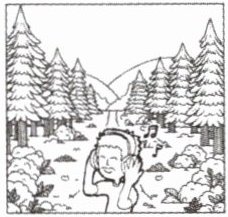
Peter writes music. He likes sounds and uses natural sounds as part of his music. He often went out to the wild with his microphone and recorded interesting sounds to put in movies or to use in his own songs. Instead of trying to capture just the sound of one animal or bird, he recorded the sound of everything all together—the animals, the trees, the wind and the earth. He called these recordings “soundscapes”—the sound of a certain place. Every soundscape Peter recorded had a lot of information.
Back in his workshop, Peter used a computer to make a picture of all the sounds going on in a place. Each animal, bird and insect had its own place on the picture—its own notes in the music. The busier the picture, the richer the life in that place. “While a picture may be worth 1,000 words, a soundscape is worth 1,000 pictures,” said Peter. “Our ears tell us the sound of every leaf and animal and speak to the natural sources of our lives, which may hold the secrets of love for all things, especially our own humanity.”
But not everything is satisfying. When Peter began recording over forty years ago, he could record for ten hours to get one hour of usable material good enough for a movie. Now, because of human activities, it can take up to 1,000 hours or more to get the same thing. Some of the places he has recorded over the years have slowly fallen silent. His sound pictures show that although nature might look the same to humans, it has lost part of its orchestra(管弦乐队).
So next time you are in the forests, try another way to look—shut your eyes, and listen carefully.
1. Why did Peter record natural sounds?
A. To write songs for a music group.
B. To discover rich life in the forests.
C. To use some of them in his music.
D. To make music about birds singing.
2. What does the underlined word “capture” in Paragraph 2 mean?
A. Shut. B. Catch. C. Touch. D. Check.
3. What is a sound picture according to the passage?
A. The sound of every leaf and animal in nature.
B. The sound recorded in the natural environment.
C. A picture of music with sounds of 1,000 animals.
D. A picture of music with natural sounds in a place.
4. What can we learn from Paragraph 4?
A. Recording sounds needs less material.
B. Sound pictures are the same as before.
C. Some beautiful sounds in nature are lost.
D. Human activities improve recording results.
5. What does the writer mainly want to tell us?
A. Nature is the source of our future.
B. Nature has wonders to be heard.
C. Making music enriches our lives.
D. Making music needs information.
素养:思维品质 难度:难 用时:8分钟
[2025福建中考]As we often use eyes to touch nature, most of us “lose” the ability to listen to the world.
Peter writes music. He likes sounds and uses natural sounds as part of his music. He often went out to the wild with his microphone and recorded interesting sounds to put in movies or to use in his own songs. Instead of trying to capture just the sound of one animal or bird, he recorded the sound of everything all together—the animals, the trees, the wind and the earth. He called these recordings “soundscapes”—the sound of a certain place. Every soundscape Peter recorded had a lot of information.
Back in his workshop, Peter used a computer to make a picture of all the sounds going on in a place. Each animal, bird and insect had its own place on the picture—its own notes in the music. The busier the picture, the richer the life in that place. “While a picture may be worth 1,000 words, a soundscape is worth 1,000 pictures,” said Peter. “Our ears tell us the sound of every leaf and animal and speak to the natural sources of our lives, which may hold the secrets of love for all things, especially our own humanity.”
But not everything is satisfying. When Peter began recording over forty years ago, he could record for ten hours to get one hour of usable material good enough for a movie. Now, because of human activities, it can take up to 1,000 hours or more to get the same thing. Some of the places he has recorded over the years have slowly fallen silent. His sound pictures show that although nature might look the same to humans, it has lost part of its orchestra(管弦乐队).
So next time you are in the forests, try another way to look—shut your eyes, and listen carefully.
1. Why did Peter record natural sounds?
A. To write songs for a music group.
B. To discover rich life in the forests.
C. To use some of them in his music.
D. To make music about birds singing.
2. What does the underlined word “capture” in Paragraph 2 mean?
A. Shut. B. Catch. C. Touch. D. Check.
3. What is a sound picture according to the passage?
A. The sound of every leaf and animal in nature.
B. The sound recorded in the natural environment.
C. A picture of music with sounds of 1,000 animals.
D. A picture of music with natural sounds in a place.
4. What can we learn from Paragraph 4?
A. Recording sounds needs less material.
B. Sound pictures are the same as before.
C. Some beautiful sounds in nature are lost.
D. Human activities improve recording results.
5. What does the writer mainly want to tell us?
A. Nature is the source of our future.
B. Nature has wonders to be heard.
C. Making music enriches our lives.
D. Making music needs information.
答案
语篇研读
主题和内容
本文主要讲述了 Peter 通过录制自然“声景”来感受和记录大自然的丰富性,并指出了人类活动对大自然的破坏。
意义和价值
本文借助自然“声景”引导学生意识到自然环境的退化和生物多样性的减少,唤醒人们的环保意识,聆听大自然的声音,与其和谐共处。
方式和方法
语篇类型:本文为夹叙夹议文,以 Peter 的个人经历和感悟为主线引导人们倾听大自然的声音。篇章结构:本文为“总—分—总”结构,在文章开头(第1段)指出很多人“失去”聆听世界的能力,接着在文章主体部分(第2-4段)重点介绍 Peter 倾听和记录大自然声音的经历和个人感悟,最后在文章结尾(第5段)呼吁人们闭上眼睛去聆听大自然。亮点表达:夹叙夹议类文章的核心在于“叙中有议,议由叙生”。叙为基础,议为升华。本文在写作过程中运用了生动形象的比喻,将自然的声音比作“orchestra”;通过“ten hours”和“1,000 hours”的对比指出人类活动对大自然的破坏。
熟词生义
Each animal, bird and insect had its own place on the picture—its own notes in the music.
常用义:n. 笔记;便条
句中义:n. 单音;音调;音符
1. C 细节理解题。根据第二段中的“He often went out to the wild with his microphone and recorded interesting sounds to put in movies or to use in his own songs”可知,Peter 录制自然声音是为了将其中一些用于自己的音乐中。故选 C。
2. B 词义猜测题。根据第二段中的“Instead of ... he recorded the sound of everything all together”可知,他没有试图只捕捉一种动物或鸟类的声音,而是把所有声音都记录下来。所以“capture”在这里指的是“捕捉”,和 catch 意思相近。故选 B。
3. D 推理判断题。根据第三段中的“Back in his workshop, Peter used a computer to make a picture of all the sounds going on in a place. Each animal, bird and insect had its own place on the picture—its own notes in the music”可推知,声音图像指的是一张有着某地自然声音的音乐图片。故选 D。
4. C 细节理解题。根据第四段中的“Now, because of human activities, it can take up to 1,000 hours or more to get the same thing. Some of the places he has recorded over the years have slowly fallen silent”可知,由于人类活动的影响,大自然中一些美妙的声音已逐渐消失。故选 C。
5. B 写作意图题。通读全文可知,本文主要介绍了 Peter 通过录制自然“声景”来展现生命的丰富性和自然的重要性,呼吁人们用耳朵倾听世界。故选 B。
主题和内容
本文主要讲述了 Peter 通过录制自然“声景”来感受和记录大自然的丰富性,并指出了人类活动对大自然的破坏。
意义和价值
本文借助自然“声景”引导学生意识到自然环境的退化和生物多样性的减少,唤醒人们的环保意识,聆听大自然的声音,与其和谐共处。
方式和方法
语篇类型:本文为夹叙夹议文,以 Peter 的个人经历和感悟为主线引导人们倾听大自然的声音。篇章结构:本文为“总—分—总”结构,在文章开头(第1段)指出很多人“失去”聆听世界的能力,接着在文章主体部分(第2-4段)重点介绍 Peter 倾听和记录大自然声音的经历和个人感悟,最后在文章结尾(第5段)呼吁人们闭上眼睛去聆听大自然。亮点表达:夹叙夹议类文章的核心在于“叙中有议,议由叙生”。叙为基础,议为升华。本文在写作过程中运用了生动形象的比喻,将自然的声音比作“orchestra”;通过“ten hours”和“1,000 hours”的对比指出人类活动对大自然的破坏。
熟词生义
Each animal, bird and insect had its own place on the picture—its own notes in the music.
常用义:n. 笔记;便条
句中义:n. 单音;音调;音符
1. C 细节理解题。根据第二段中的“He often went out to the wild with his microphone and recorded interesting sounds to put in movies or to use in his own songs”可知,Peter 录制自然声音是为了将其中一些用于自己的音乐中。故选 C。
2. B 词义猜测题。根据第二段中的“Instead of ... he recorded the sound of everything all together”可知,他没有试图只捕捉一种动物或鸟类的声音,而是把所有声音都记录下来。所以“capture”在这里指的是“捕捉”,和 catch 意思相近。故选 B。
3. D 推理判断题。根据第三段中的“Back in his workshop, Peter used a computer to make a picture of all the sounds going on in a place. Each animal, bird and insect had its own place on the picture—its own notes in the music”可推知,声音图像指的是一张有着某地自然声音的音乐图片。故选 D。
4. C 细节理解题。根据第四段中的“Now, because of human activities, it can take up to 1,000 hours or more to get the same thing. Some of the places he has recorded over the years have slowly fallen silent”可知,由于人类活动的影响,大自然中一些美妙的声音已逐渐消失。故选 C。
5. B 写作意图题。通读全文可知,本文主要介绍了 Peter 通过录制自然“声景”来展现生命的丰富性和自然的重要性,呼吁人们用耳朵倾听世界。故选 B。
解析
【分析】本题为夹叙夹议类阅读理解题,围绕自然“声景”展开,包含细节理解、词义猜测、推理判断、主旨大意等题型。解题时需先通读全文把握主旨,再针对各题目定位原文关键信息,结合语境分析词义,最后总结作者写作意图,逐一对应选项得出答案。
【解析】1. 细节理解题:根据第二段“He often went out to the wild with his microphone and recorded interesting sounds to put in movies or to use in his own songs”,可知Peter录制自然声音是为了将其用于自己的音乐中,对应选项C。
2. 词义猜测题:由第二段“Instead of trying to capture just the sound of one animal or bird, he recorded the sound of everything all together”可知,他没有试图只捕捉单一声音,而是记录所有声音,故“capture”意为“捕捉”,与“catch”含义相近,选B。
3. 推理判断题:根据第三段“Back in his workshop, Peter used a computer to make a picture of all the sounds going on in a place. Each animal, bird and insect had its own place on the picture—its own notes in the music”,可推知声音图像是带有某地自然声音的音乐图片,选D。
4. 细节理解题:第四段提到“Some of the places he has recorded over the years have slowly fallen silent”,说明由于人类活动,一些自然中的美妙声音已消失,选C。
5. 主旨大意题:全文通过Peter记录自然声景的经历,呼吁人们用耳朵倾听自然,展现自然值得聆听的奇妙,对应选项B。
【答案】1.C 2.B 3.D 4.C 5.B
【知识点】阅读理解细节理解、词义猜测、主旨大意
【点评】本文以Peter的经历为线索,引导学生关注自然声景,渗透环保意识,是中考典型的夹叙夹议阅读题,题型全面,注重语篇理解与细节定位能力。
【难度系数】0.5
【解析】1. 细节理解题:根据第二段“He often went out to the wild with his microphone and recorded interesting sounds to put in movies or to use in his own songs”,可知Peter录制自然声音是为了将其用于自己的音乐中,对应选项C。
2. 词义猜测题:由第二段“Instead of trying to capture just the sound of one animal or bird, he recorded the sound of everything all together”可知,他没有试图只捕捉单一声音,而是记录所有声音,故“capture”意为“捕捉”,与“catch”含义相近,选B。
3. 推理判断题:根据第三段“Back in his workshop, Peter used a computer to make a picture of all the sounds going on in a place. Each animal, bird and insect had its own place on the picture—its own notes in the music”,可推知声音图像是带有某地自然声音的音乐图片,选D。
4. 细节理解题:第四段提到“Some of the places he has recorded over the years have slowly fallen silent”,说明由于人类活动,一些自然中的美妙声音已消失,选C。
5. 主旨大意题:全文通过Peter记录自然声景的经历,呼吁人们用耳朵倾听自然,展现自然值得聆听的奇妙,对应选项B。
【答案】1.C 2.B 3.D 4.C 5.B
【知识点】阅读理解细节理解、词义猜测、主旨大意
【点评】本文以Peter的经历为线索,引导学生关注自然声景,渗透环保意识,是中考典型的夹叙夹议阅读题,题型全面,注重语篇理解与细节定位能力。
【难度系数】0.5
【语篇解构】阅读文章,补充下面的结构图(每空一词)
The lively sound of a place
Most people “lose” the ability to 1.
People use eyes more, and ignore natural sounds.
Peter: a field composer or recorder
• Use a microphone to record 2.
• Every soundscape has a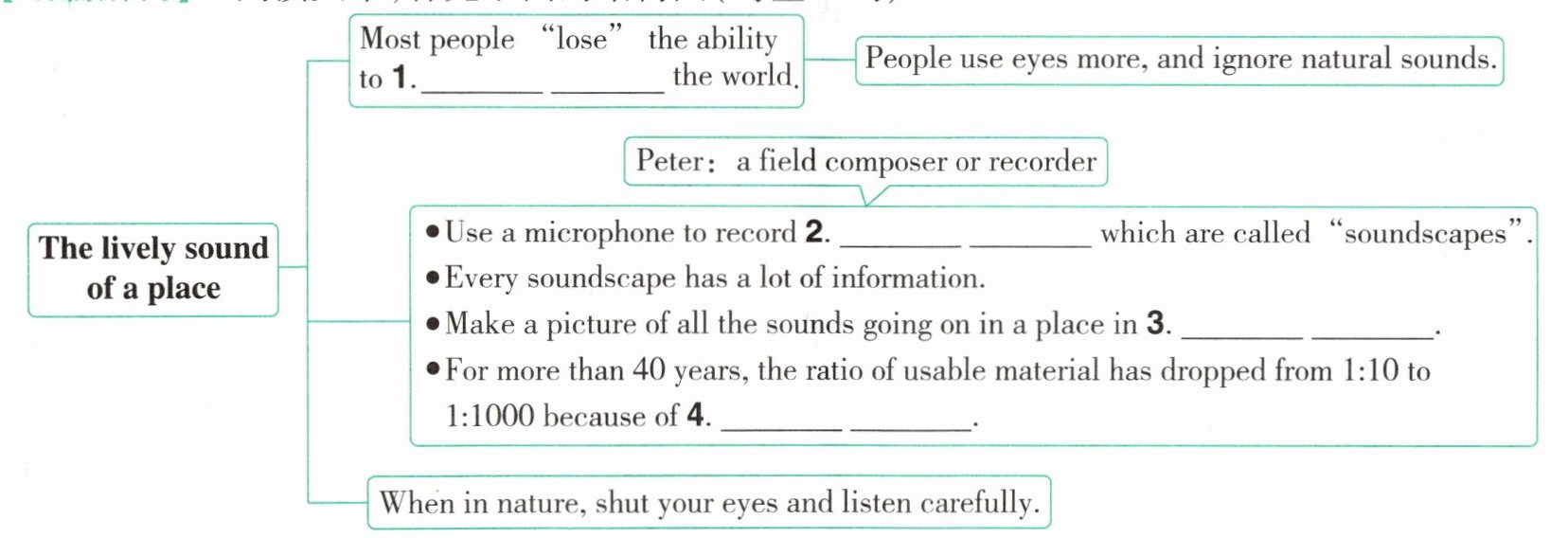 of information.
• Make a picture of all the sounds going on in a place in 3.
• For more than 40 years, the ratio of usable material has dropped from 1:10 to 1:1000 because of 4.
When in nature, shut your eyes and listen carefully.
注:夹叙夹议类语篇研读见答案 P26
The lively sound of a place
Most people “lose” the ability to 1.
listen
to
the world.People use eyes more, and ignore natural sounds.
Peter: a field composer or recorder
• Use a microphone to record 2.
interesting
sounds
which are called “soundscapes”.• Every soundscape has a
of information.• Make a picture of all the sounds going on in a place in 3.
his
workshop
.• For more than 40 years, the ratio of usable material has dropped from 1:10 to 1:1000 because of 4.
human
activities
.When in nature, shut your eyes and listen carefully.
注:夹叙夹议类语篇研读见答案 P26
答案
【语篇解构】1. listen to 2. interesting sounds 3. his workshop 4. human activities
解析
【分析】本题为语篇解构填空题,需结合上下文语境和语篇逻辑提取关键信息完成填空。第1题由后文“ignore natural sounds”可推断,人们失去的是“听”世界的能力;第2题结合Peter作为录音师的身份,可知他记录的是被称为“soundscapes”的有趣声音;第3题根据制作声音图像的场景,可推断是在他的工作室;第4题根据可用材料比例下降的原因,结合常识可知是人类活动。
【解析】1. 由后文“People use eyes more, and ignore natural sounds”可知,此处指人们失去“听”世界的能力,故填listen to;2. Peter是野外作曲家或录音师,他用麦克风记录的是被称为“soundscapes”的有趣声音,故填interesting sounds;3. 制作一个地方所有声音的图像是在他的工作室,故填his workshop;4. 四十多年来,可用材料的比例下降是因为人类活动,故填human activities。
【答案】1. listen to 2. interesting sounds 3. his workshop 4. human activities
【知识点】语篇解构、信息提取、词汇搭配
【点评】本题考查语篇结构的理解与信息提取,要求学生结合上下文语境和语篇逻辑完成填空,难度适中,适合基础阶段学生练习。
【难度系数】0.5
【解析】1. 由后文“People use eyes more, and ignore natural sounds”可知,此处指人们失去“听”世界的能力,故填listen to;2. Peter是野外作曲家或录音师,他用麦克风记录的是被称为“soundscapes”的有趣声音,故填interesting sounds;3. 制作一个地方所有声音的图像是在他的工作室,故填his workshop;4. 四十多年来,可用材料的比例下降是因为人类活动,故填human activities。
【答案】1. listen to 2. interesting sounds 3. his workshop 4. human activities
【知识点】语篇解构、信息提取、词汇搭配
【点评】本题考查语篇结构的理解与信息提取,要求学生结合上下文语境和语篇逻辑完成填空,难度适中,适合基础阶段学生练习。
【难度系数】0.5
