

 登录
Ⅰ.根据句意及相关提示填写单词
1. (2026 · 宿迁期末) Zhang Xue, founder of ZXMOTOR(张雪机车), has gotten a wealth of good
2. We have great fun
3. Are you
4. He's made some strict
5. (2026·宿迁宿豫区期中)—We will go to a small
—Wow, I think we will have great fun.
6. (2026·无锡东林集团期中) Lily really enjoyed reading Chinese
1. (2026 · 宿迁期末) Zhang Xue, founder of ZXMOTOR(张雪机车), has gotten a wealth of good
reviews
(评论) recently.2. We have great fun
discussing
( talk about something) with each other in English classes.3. Are you
certain
(确定;必定) of the answer to the question?4. He's made some strict
rules
(规则) to manage his department.5. (2026·宿迁宿豫区期中)—We will go to a small
island
/'aɪlənd/ by boat tomorrow.—Wow, I think we will have great fun.
6. (2026·无锡东林集团期中) Lily really enjoyed reading Chinese
literature
(文学), and it made her dream of finding beauty in life.答案
1. reviews
2. discussing
3. certain
4. rules
5. island
6. literature
2. discussing
3. certain
4. rules
5. island
6. literature
Ⅱ. 用方框中所给短语的适当形式填空
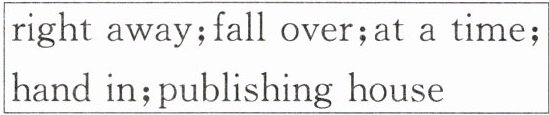
1. If you run in such big shoes, you may
2. 对点练⟶《上分攻略》P29 高频短语 Tom hasn't
3. Please clean up the desk
4. Next month, this
5. (2025·无锡梁溪区期中) If you put up your hands, I will answer one question
1. If you run in such big shoes, you may
fall over
.2. 对点练⟶《上分攻略》P29 高频短语 Tom hasn't
handed in
his homework yet because he was ill yesterday.3. Please clean up the desk
right away
to keep the classroom tidy.4. Next month, this
publishing house
will publish a new set of English grammar books.5. (2025·无锡梁溪区期中) If you put up your hands, I will answer one question
at a time
.答案
1. fall over
2. handed in
3. right away
4. publishing house
5. at a time
2. handed in
3. right away
4. publishing house
5. at a time
Ⅲ. 根据汉语意思完成句子
1. 我的同桌莉莉经常借故事书回家读。
My deskmate Lily often
2. (2026·常州天宁区期中改编)尽管安迪筋疲力尽,他仍然设法一人爬到了山顶。
Though Andy was
3. 笼子里的小鸟努力挣脱,最终飞向了蓝天。
The bird in the cage tried
4. 我们不能在比赛前泄露战术,否则会输的。
We can't
5. 想要保持健康,首先你要养成规律的作息习惯。
To keep healthy,
延伸探究提优 挑战自我,激发创新
1. 我的同桌莉莉经常借故事书回家读。
My deskmate Lily often
checks
out
storybooks to read at home.2. (2026·常州天宁区期中改编)尽管安迪筋疲力尽,他仍然设法一人爬到了山顶。
Though Andy was
tired
out
, he still managed
to
get/climb
to the top of the mountain alone.3. 笼子里的小鸟努力挣脱,最终飞向了蓝天。
The bird in the cage tried
to
break
free
and finally flew into the blue sky.4. 我们不能在比赛前泄露战术,否则会输的。
We can't
give
away
the tactics before the game, or we will lose.5. 想要保持健康,首先你要养成规律的作息习惯。
To keep healthy,
first
of
all
, you should develop a regular daily routine.延伸探究提优 挑战自我,激发创新
答案
1. checks out
2. tired out; managed to get/climb
3. to break free
4. give away
5. first of all
2. tired out; managed to get/climb
3. to break free
4. give away
5. first of all
Ⅳ. 新高考视野 有声书背后的科学 (2026·南通崇川区期中)
阅读理解
① When you go to the park, you might notice many older people listening to audiobooks(有声读物) instead of reading paper books. Audiobooks have become quite popular these days. Why are more and more people choosing audiobooks over traditional books? Is listening to an audiobook just as good as reading a book?
② Reading needs us to focus(集中) all our attention on the words in a book, and we also need to find time and a place to sit down and read. However, you can listen to audiobooks anytime and anywhere you like, and it gives your eyes a break too. That's why people like audiobooks better.
③ But the big question is, do we get knowledge from audiobooks as effectively as we do from paper books? Scientists did an experiment to find the answer. Volunteers in Group One were asked to listen to an audiobook while volunteers in Group Two read a book of the same content(内容). The result showed that the volunteers remembered the same amount(量) of information, whether they listened to it or read it.
④ Another study published in *the Journal of Neuroscience* further supported the result above. In the study, researchers scanned(扫描) people's brains when they listened to and read books. The result showed that listening to audiobooks activates(激活) almost the same parts of the brain as reading does.
⑤ However, some people still believe that they learn better from reading paper books. One reason might be that when we listen to audiobooks, we are often multitasking(处理多个任务). "If you're trying to learn while doing two things, you're not going to learn as well, " Daniel Willingham, a professor of psychology at the University of Virginia, told *The New York Times*.
1. What do we know about the study published in the *Journal of Neuroscience*?
A. People learn better from reading paper books.
B. People need to read and listen to books at the same time.
C. People get as much information from audiobooks as from paper books.
D. Listening to audiobooks activates different parts of the brain from what reading does.
2. What does the underlined word "effectively" mean in Paragraph 3?
A. 有效地
B. 同样地
C. 清晰地
D. 快速地
3. Why do some people believe they learn better from reading paper books?
A. Because paper books are more interesting.
B. Because they can listen to audiobooks later.
C. Because they can focus better on paper books.
D. Because they can do other tasks at the same time.
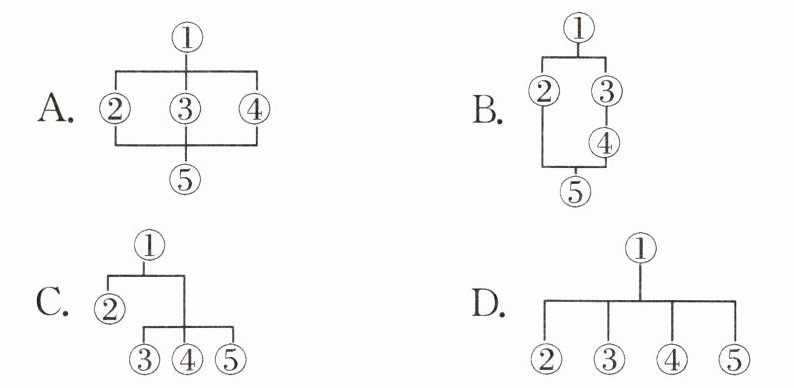
4. 新考法 推断篇章结构 Which shows the best structure of the passage? ($1=$Paragraph 1, $2=$Paragraph 2...)
阅读理解
① When you go to the park, you might notice many older people listening to audiobooks(有声读物) instead of reading paper books. Audiobooks have become quite popular these days. Why are more and more people choosing audiobooks over traditional books? Is listening to an audiobook just as good as reading a book?
② Reading needs us to focus(集中) all our attention on the words in a book, and we also need to find time and a place to sit down and read. However, you can listen to audiobooks anytime and anywhere you like, and it gives your eyes a break too. That's why people like audiobooks better.
③ But the big question is, do we get knowledge from audiobooks as effectively as we do from paper books? Scientists did an experiment to find the answer. Volunteers in Group One were asked to listen to an audiobook while volunteers in Group Two read a book of the same content(内容). The result showed that the volunteers remembered the same amount(量) of information, whether they listened to it or read it.
④ Another study published in *the Journal of Neuroscience* further supported the result above. In the study, researchers scanned(扫描) people's brains when they listened to and read books. The result showed that listening to audiobooks activates(激活) almost the same parts of the brain as reading does.
⑤ However, some people still believe that they learn better from reading paper books. One reason might be that when we listen to audiobooks, we are often multitasking(处理多个任务). "If you're trying to learn while doing two things, you're not going to learn as well, " Daniel Willingham, a professor of psychology at the University of Virginia, told *The New York Times*.
1. What do we know about the study published in the *Journal of Neuroscience*?
A. People learn better from reading paper books.
B. People need to read and listen to books at the same time.
C. People get as much information from audiobooks as from paper books.
D. Listening to audiobooks activates different parts of the brain from what reading does.
2. What does the underlined word "effectively" mean in Paragraph 3?
A. 有效地
B. 同样地
C. 清晰地
D. 快速地
3. Why do some people believe they learn better from reading paper books?
A. Because paper books are more interesting.
B. Because they can listen to audiobooks later.
C. Because they can focus better on paper books.
D. Because they can do other tasks at the same time.
4. 新考法 推断篇章结构 Which shows the best structure of the passage? ($1=$Paragraph 1, $2=$Paragraph 2...)
答案
[文章大意]本文主要介绍了越来越多人选择听有声书而不是读纸质书这一现象。研究表明有声书和纸质书对获取知识的效果相同,但仍然有人持有不同意见。
1. C [解析]细节理解题。根据第三段中“The result showed that the volunteers remembered the same amount(量)of information, whether they listened to it or read it.”以及第四段中的“Another study published in the Journol of Neuroscience further supported the result above.”可知,研究表明,人们通过有声书获取和纸质书一样多的信息。故选 C。
2. A [解析]词义猜测题。根据画线词后文的研究结果“The result showed that the volunteers remembered the same amount(量)of information, whether they listened to it or read it.”可知,此处回答了人们通过有声书获取的知识是否与通过纸质书获取一样有效这一问题,则画线词“effectively”在此指在多大程度上获取知识,即“有效地”。故选 A。
3. C [解析]细节理解题。根据“One reason might be that when we listen to audiobooks, we are often multitasking(处理多个任务).”可知,当听有声读物时,人们经常同时处理多项任务,一心二用,学习效果不好,因此人们认为读纸质书更专注。故选 C。
4. B [解析]篇章结构题。通读全文可知,第一段总起全文并提出问题,第二段讲述纸质书的缺点和有声书的优点,第三段用实验论证问题,第四段进一步给出科学依据并得出结论,第五段补充不同的观点。因此选项 B 中的结构符合题意。故选 B。
素养考向 本文主要考查学生的语言能力和思维品质,通过介绍有声书与纸质书的对比及相关研究,引导学生辩证地看待不同阅读方式的特点,培养理性分析问题的能力,同时体会科技发展对阅读方式的影响,形成科学的阅读观念。
