

 登录
登录
阅读量:154词 难度: ★★★★☆ 建议用时:8分钟 正确率: /6
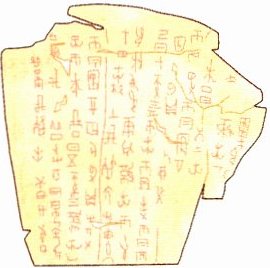
欣欣在参观博物馆时看到了一些非常神奇的文字。
What are they?
In the Shang Dynasty(商代), people often asked fortune tellers(占卜者) about all kinds of things. They wanted to know about the illness, the weather, or even wars. The fortune tellers wrote down the questions on turtle shells or animal bones. The shells or bones with words are more than 3,000 years old. Most of them are found in the Yin Ruins(殷墟) in Anyang, Henan province. In 2017, they were listed in the UNESCO Memory of the World Register(《世界记忆遗产名录》) program.
Who found the characters?
A man named Wang Yirong found them. In 1899, Wang was sick in Beijing, so he bought some medicine called "dragon bones". But in fact, it was made out of turtle shells. Wang Yirong found some strange characters on the shells. These are what we call jiaguwen today.
思维新题
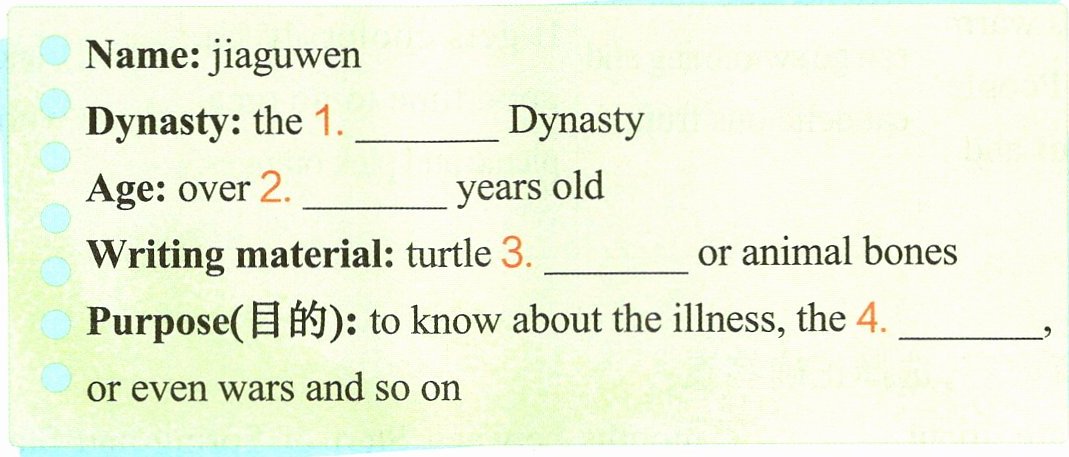
任务一:根据文章内容,完成甲骨文的基本信息卡。
任务二:根据文章内容,选择正确答案。
(
A. 文字
B. 碎片
C. 人物
(
A. People in the Shang Dynasty used animal bones to make medicine.
B. In 1899, Wang Yirong found jiaguwen in Beijing.
C. The "dragon bones" were listed in the UNESCO program in 2017.
欣欣在参观博物馆时看到了一些非常神奇的文字。
What are they?
In the Shang Dynasty(商代), people often asked fortune tellers(占卜者) about all kinds of things. They wanted to know about the illness, the weather, or even wars. The fortune tellers wrote down the questions on turtle shells or animal bones. The shells or bones with words are more than 3,000 years old. Most of them are found in the Yin Ruins(殷墟) in Anyang, Henan province. In 2017, they were listed in the UNESCO Memory of the World Register(《世界记忆遗产名录》) program.
Who found the characters?
A man named Wang Yirong found them. In 1899, Wang was sick in Beijing, so he bought some medicine called "dragon bones". But in fact, it was made out of turtle shells. Wang Yirong found some strange characters on the shells. These are what we call jiaguwen today.
思维新题
任务一:根据文章内容,完成甲骨文的基本信息卡。
任务二:根据文章内容,选择正确答案。
(
A
)5. The underlined word "characters" means "文字
" in Chinese. 考点 词义猜测A. 文字
B. 碎片
C. 人物
(
B
)6. What can we know from the passage?A. People in the Shang Dynasty used animal bones to make medicine.
B. In 1899, Wang Yirong found jiaguwen in Beijing.
C. The "dragon bones" were listed in the UNESCO program in 2017.
答案
任务一:
1. Shang 【细节理解】由文章中的"In the Shang Dynasty, people often asked fortune tellers about all kinds of things...The fortune tellers wrote down the questions on turtle shells or animal bones."可知,甲骨文出现于商代。
2. 3,000 【细节理解】由文章中的"The shells or bones with words are more than 3,000 years old."可知,甲骨文已有超过3000年的历史。
3. shells 【细节理解】由文章中的"The fortune tellers wrote down the questions on turtle shells or animal bones."可知,书写材料是龟甲或兽骨。
4. weather 【细节理解】由文章中的"They wanted to know about the illness, the weather, or even wars."可知,占卜的目的包括了解疾病、天气、战争等。
任务二:
5. A 【词义猜测】由文章中的"Wang Yirong found some strange characters on the shells. These are what we call jiaguwen today."可知,characters 在此处指龟甲上的"文字"。
6. B 【细节理解】由文章中的"In 1899, Wang was sick in Beijing, so he bought some medicine called 'dragon bones'...Wang Yirong found some strange characters on the shells."可知,王懿荣于1899年在北京发现了甲骨文。
1. Shang 【细节理解】由文章中的"In the Shang Dynasty, people often asked fortune tellers about all kinds of things...The fortune tellers wrote down the questions on turtle shells or animal bones."可知,甲骨文出现于商代。
2. 3,000 【细节理解】由文章中的"The shells or bones with words are more than 3,000 years old."可知,甲骨文已有超过3000年的历史。
3. shells 【细节理解】由文章中的"The fortune tellers wrote down the questions on turtle shells or animal bones."可知,书写材料是龟甲或兽骨。
4. weather 【细节理解】由文章中的"They wanted to know about the illness, the weather, or even wars."可知,占卜的目的包括了解疾病、天气、战争等。
任务二:
5. A 【词义猜测】由文章中的"Wang Yirong found some strange characters on the shells. These are what we call jiaguwen today."可知,characters 在此处指龟甲上的"文字"。
6. B 【细节理解】由文章中的"In 1899, Wang was sick in Beijing, so he bought some medicine called 'dragon bones'...Wang Yirong found some strange characters on the shells."可知,王懿荣于1899年在北京发现了甲骨文。
解析
【分析】
本题为英语阅读理解题,包含信息卡填写和选择题两类题型。解题思路为:任务一需根据题干关键词回原文定位,查找对应细节信息完成信息卡;任务二第5题是词义猜测题,需结合characters所在句子的上下文语境(与甲骨文相关,龟甲上的内容)判断词义;第6题是细节理解题,需逐一核对每个选项与原文表述是否一致,排除错误选项得出答案。
【解析】
任务一:
1. 甲骨文出现的朝代:由原文“In the Shang Dynasty...The fortune tellers wrote down the questions on turtle shells or animal bones.”可知,甲骨文出现于商代,故填Shang。
2. 甲骨文的历史时长:由原文“The shells or bones with words are more than 3,000 years old.”可知,甲骨文已有超过3000年历史,故填3,000。
3. 书写材料:由原文“The fortune tellers wrote down the questions on turtle shells or animal bones.”可知,书写材料是龟甲(shells)或兽骨,故填shells。
4. 占卜目的:由原文“They wanted to know about the illness, the weather, or even wars.”可知,占卜目的包括了解疾病、天气、战争等,故填weather。
任务二:
5. 词义猜测:characters所在句为“Wang Yirong found some strange characters on the shells. These are what we call jiaguwen today.”,jiaguwen即甲骨文,是古代文字,故characters在此处意为“文字”,选A。
6. 细节理解:
选项A:原文未提及商代用兽骨做药,错误;
选项B:由原文“In 1899, Wang was sick in Beijing...Wang Yirong found some strange characters on the shells.”可知,1899年王懿荣在北京发现甲骨文,正确;
选项C:原文是2017年甲骨文被列入世界记忆遗产,而非“dragon bones”,错误;故选B。
【答案】
任务一:1. Shang;2. 3,000;3. shells;4. weather;任务二:5. A;6. B
【知识点】
英语阅读理解、词义猜测、细节理解
【点评】
本题围绕甲骨文的英语阅读材料,考查细节查找与词义猜测能力,题型基础,需学生精准定位原文信息,结合语境推断词义,同时渗透中国传统文化知识,适合巩固英语阅读基础技能。
【难度系数】
0.6
本题为英语阅读理解题,包含信息卡填写和选择题两类题型。解题思路为:任务一需根据题干关键词回原文定位,查找对应细节信息完成信息卡;任务二第5题是词义猜测题,需结合characters所在句子的上下文语境(与甲骨文相关,龟甲上的内容)判断词义;第6题是细节理解题,需逐一核对每个选项与原文表述是否一致,排除错误选项得出答案。
【解析】
任务一:
1. 甲骨文出现的朝代:由原文“In the Shang Dynasty...The fortune tellers wrote down the questions on turtle shells or animal bones.”可知,甲骨文出现于商代,故填Shang。
2. 甲骨文的历史时长:由原文“The shells or bones with words are more than 3,000 years old.”可知,甲骨文已有超过3000年历史,故填3,000。
3. 书写材料:由原文“The fortune tellers wrote down the questions on turtle shells or animal bones.”可知,书写材料是龟甲(shells)或兽骨,故填shells。
4. 占卜目的:由原文“They wanted to know about the illness, the weather, or even wars.”可知,占卜目的包括了解疾病、天气、战争等,故填weather。
任务二:
5. 词义猜测:characters所在句为“Wang Yirong found some strange characters on the shells. These are what we call jiaguwen today.”,jiaguwen即甲骨文,是古代文字,故characters在此处意为“文字”,选A。
6. 细节理解:
选项A:原文未提及商代用兽骨做药,错误;
选项B:由原文“In 1899, Wang was sick in Beijing...Wang Yirong found some strange characters on the shells.”可知,1899年王懿荣在北京发现甲骨文,正确;
选项C:原文是2017年甲骨文被列入世界记忆遗产,而非“dragon bones”,错误;故选B。
【答案】
任务一:1. Shang;2. 3,000;3. shells;4. weather;任务二:5. A;6. B
【知识点】
英语阅读理解、词义猜测、细节理解
【点评】
本题围绕甲骨文的英语阅读材料,考查细节查找与词义猜测能力,题型基础,需学生精准定位原文信息,结合语境推断词义,同时渗透中国传统文化知识,适合巩固英语阅读基础技能。
【难度系数】
0.6
