

 登录
登录
3. Read and number. 读一读,给图片排序。
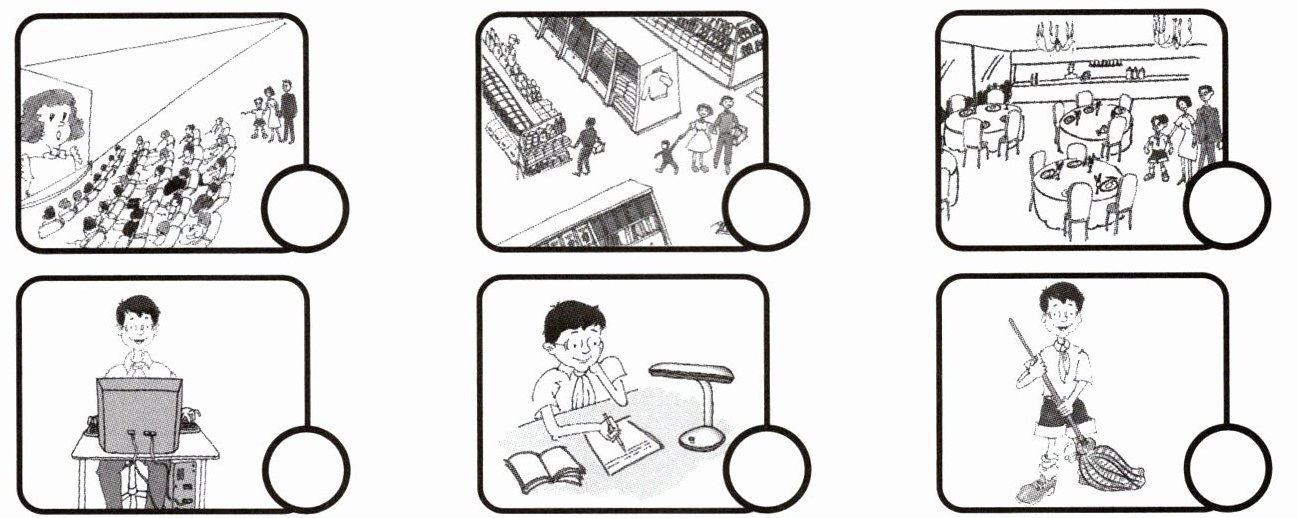
Guo Yang: What did you do yesterday?
Li Ming: In the morning, I talked to Jenny and Danny on the computer. Then I did my homework. In the afternoon, I cleaned my house. Then I shopped in the supermarket. In the evening, I had dinner with my family in a restaurant. Then we watched a film at a cinema.
Guo Yang: What did you do yesterday?
Li Ming: In the morning, I talked to Jenny and Danny on the computer. Then I did my homework. In the afternoon, I cleaned my house. Then I shopped in the supermarket. In the evening, I had dinner with my family in a restaurant. Then we watched a film at a cinema.
答案
1. 6
2. 4
3. 5
4. 1
5. 2
6. 3
2. 4
3. 5
4. 1
5. 2
6. 3
解析
翻译:
3. 读一读,给图片排序。
郭阳:你昨天做什么了?
李明:早上,我和珍妮、丹尼在电脑上聊天。然后我做了作业。下午,我打扫了我的房子。然后我在超市购物。晚上,我和家人在一家餐馆吃了晚饭。然后我们在电影院看了一场电影。
3. 读一读,给图片排序。
郭阳:你昨天做什么了?
李明:早上,我和珍妮、丹尼在电脑上聊天。然后我做了作业。下午,我打扫了我的房子。然后我在超市购物。晚上,我和家人在一家餐馆吃了晚饭。然后我们在电影院看了一场电影。
4. Write the correct words. 用单词的正确形式填空。
a. I always my homework at home.
I my homework at home last night. (do)
b. She sometimes to the restaurant.
She to the restaurant yesterday. (go)
c. My mum often in the supermarket.
My mum in the supermarket last Sunday. (shop)
d. I an apple every day.
I an apple yesterday. (eat)
e. I often books for my son.
I books for my son last week. (buy)
a. I always my homework at home.
I my homework at home last night. (do)
b. She sometimes to the restaurant.
She to the restaurant yesterday. (go)
c. My mum often in the supermarket.
My mum in the supermarket last Sunday. (shop)
d. I an apple every day.
I an apple yesterday. (eat)
e. I often books for my son.
I books for my son last week. (buy)
答案
a. do; did
b. goes; went
c. shops; shopped
d. eat; ate
e. buy; bought
b. goes; went
c. shops; shopped
d. eat; ate
e. buy; bought
解析
本题主要考查一般现在时与一般过去时的用法。一般现在时表示经常性、习惯性的动作或现在的状态,谓语动词按具体情况变化(第三人称单数加s/es等);一般过去时表示过去某个时间发生的动作或存在的状态,谓语动词要用过去式。
a. 第一句“always”表示经常,用一般现在时,主语I,动词用原形do;第二句“last night”表示过去时间,用一般过去时,do的过去式是did。
b. 第一句“sometimes”表示有时,用一般现在时,主语She是第三人称单数,go的第三人称单数形式是goes;第二句“yesterday”表示过去时间,用一般过去时,go的过去式是went。
c. 第一句“often”表示经常,用一般现在时,主语My mum是第三人称单数,shop的第三人称单数形式是shops;第二句“last Sunday”表示过去时间,用一般过去时,shop的过去式是shopped。
d. 第一句“every day”表示每天,用一般现在时,主语I,动词用原形eat;第二句“yesterday”表示过去时间,用一般过去时,eat的过去式是ate。
e. 第一句“often”表示经常,用一般现在时,主语I,动词用原形buy;第二句“last week”表示过去时间,用一般过去时,buy的过去式是bought。
翻译:
4. 写出单词的正确形式。
a. 我总是在家______我的家庭作业。
我昨晚在家______我的家庭作业。(做)
b. 她有时______去餐馆。
她昨天______去餐馆。(去)
c. 我妈妈经常在超市______。
我妈妈上周日在超市______。(购物)
d. 我每天______一个苹果。
我昨天______一个苹果。(吃)
e. 我经常给我儿子______书。
我上周给我儿子______书。(买)
a. 第一句“always”表示经常,用一般现在时,主语I,动词用原形do;第二句“last night”表示过去时间,用一般过去时,do的过去式是did。
b. 第一句“sometimes”表示有时,用一般现在时,主语She是第三人称单数,go的第三人称单数形式是goes;第二句“yesterday”表示过去时间,用一般过去时,go的过去式是went。
c. 第一句“often”表示经常,用一般现在时,主语My mum是第三人称单数,shop的第三人称单数形式是shops;第二句“last Sunday”表示过去时间,用一般过去时,shop的过去式是shopped。
d. 第一句“every day”表示每天,用一般现在时,主语I,动词用原形eat;第二句“yesterday”表示过去时间,用一般过去时,eat的过去式是ate。
e. 第一句“often”表示经常,用一般现在时,主语I,动词用原形buy;第二句“last week”表示过去时间,用一般过去时,buy的过去式是bought。
翻译:
4. 写出单词的正确形式。
a. 我总是在家______我的家庭作业。
我昨晚在家______我的家庭作业。(做)
b. 她有时______去餐馆。
她昨天______去餐馆。(去)
c. 我妈妈经常在超市______。
我妈妈上周日在超市______。(购物)
d. 我每天______一个苹果。
我昨天______一个苹果。(吃)
e. 我经常给我儿子______书。
我上周给我儿子______书。(买)
