

 登录
登录
冰雪奇缘:雪花诞生记
Do you know how snow comes into being?
When the sun heats the ground, the air around it also becomes 1. As warmer air rises higher into the sky, it cools down. The water in the rising air 2 into tiny droplets of water or ice. This creates clouds.
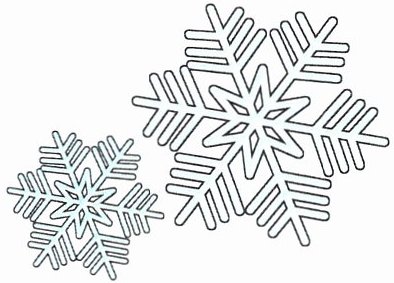
When temperatures are below freezing point on the ground, the clouds are 3 made up of water in the form of ice. The frozen water molecules change into six-sided crystals. As the ice crystals increase, they become too 4 to stay up in the air. When they fall through the clouds, some of them start to grow “arms” in different shapes at their six 5. This creates the common snowflake shape.
When snow falls from the sky, it sometimes 6 in clumps of snowflakes. The clumps can form in two 7. When the air is cold and dry, the snowflakes meet each other. This makes their “arms” tangle and stick together. The 8 is called “dry snow”. It’s perfect for skiing.
Sometimes, the snowflakes 9 a warmer area as they fall. The snowflakes begin to melt 10 the temperature is above freezing point. The melted water helps the snowflakes stick together very well, as if glued. This makes “wet snow”. It’s great for building snowmen.
(
(
(
(
(
(
(
(
(
(
语篇类型: 科普说明
难度星级: ★★★★
建议用时: /10 min
参考答案: P29
词汇积累
tiny /ˈtaɪni/ adj. 微小的
droplet /ˈdrɒplət/ n. 小滴
freezing /ˈfriːzɪŋ/ adj. 极冷的;冰冻的
molecule /ˈmɒlɪkjuːl/ n. 分子
crystal /ˈkrɪst(ə)l/ n. 晶体 clump /klʌmp/ n. 团;块
tangle /ˈtæŋɡ(ə)l/ v. (使)纠缠;混乱
语法充电
1. come into being 开始存在,产生
2. be made up of 表示“由……构成”。前面是主语,后面接成分/部分/元素。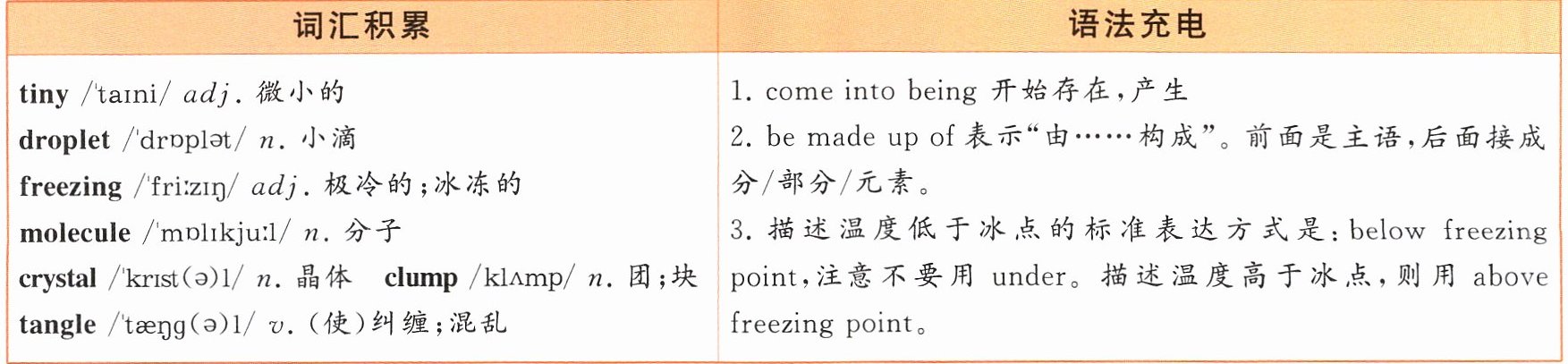
3. 描述温度低于冰点的标准表达方式是:below freezing point,注意不要用 under。描述温度高于冰点,则用 above freezing point。
Do you know how snow comes into being?
When the sun heats the ground, the air around it also becomes 1. As warmer air rises higher into the sky, it cools down. The water in the rising air 2 into tiny droplets of water or ice. This creates clouds.
When temperatures are below freezing point on the ground, the clouds are 3 made up of water in the form of ice. The frozen water molecules change into six-sided crystals. As the ice crystals increase, they become too 4 to stay up in the air. When they fall through the clouds, some of them start to grow “arms” in different shapes at their six 5. This creates the common snowflake shape.
When snow falls from the sky, it sometimes 6 in clumps of snowflakes. The clumps can form in two 7. When the air is cold and dry, the snowflakes meet each other. This makes their “arms” tangle and stick together. The 8 is called “dry snow”. It’s perfect for skiing.
Sometimes, the snowflakes 9 a warmer area as they fall. The snowflakes begin to melt 10 the temperature is above freezing point. The melted water helps the snowflakes stick together very well, as if glued. This makes “wet snow”. It’s great for building snowmen.
(
D
)1. A. dry B. clean C. cool D. warm(
B
)2. A. gets B. turns C. falls D. moves(
A
)3. A. mostly B. hardly C. clearly D. really(
C
)4. A. thin B. small C. heavy D. light(
C
)5. A. parts B. roles C. corners D. levels(
A
)6. A. appears B. requires C. competes D. produces(
C
)7. A. steps B. plans C. ways D. parts(
B
)8. A. task B. result C. habit D. reason(
D
)9. A. drop by B. leave for C. reach for D. pass by(
D
)10. A. until B. though C. so D. if语篇类型: 科普说明
难度星级: ★★★★
建议用时: /10 min
参考答案: P29
词汇积累
tiny /ˈtaɪni/ adj. 微小的
droplet /ˈdrɒplət/ n. 小滴
freezing /ˈfriːzɪŋ/ adj. 极冷的;冰冻的
molecule /ˈmɒlɪkjuːl/ n. 分子
crystal /ˈkrɪst(ə)l/ n. 晶体 clump /klʌmp/ n. 团;块
tangle /ˈtæŋɡ(ə)l/ v. (使)纠缠;混乱
语法充电
1. come into being 开始存在,产生
2. be made up of 表示“由……构成”。前面是主语,后面接成分/部分/元素。
3. 描述温度低于冰点的标准表达方式是:below freezing point,注意不要用 under。描述温度高于冰点,则用 above freezing point。
答案
1. D 根据“the sun heats the ground”可知,在太阳光的照射下,空气会变“温暖”,故选D。
2. B 根据“The water ... into tiny droplets”可知,此处表示“变成”,turn into意为“变成”,故选B。
3. A mostly主要地;hardly几乎不;clearly清楚地;really确实。根据语境和常识可知,当温度低于冰点(0℃)时,云大部分由冰晶构成(水分变为冰),故选A。
4. C 句意:随着冰晶增多,它们变得太重以至于不能停留在空中。根据语境可知,冰晶因为“太重”而会下落,故选C。
5. C 结合“six-sided crystals”和常识可知,雪花有六个“角”,在六个顶端延伸,故选C。
6. A 句意:雪从天上落下时,有时会以雪花团的形式出现。appear出现;require需要;compete竞争;produce生产。表示雪“呈现出某种形式”,用appear最合适,故选A。
7. C step步骤;plan计划;way方式;part部分。根据下文“called ‘dry snow’”和“This makes ‘wet snow’.”结合“in two ...”可知,表示雪成团的两种“方式”,故选C。
8. B task任务;result结果;habit习惯;reason原因。根据语境“This makes their ‘arms’ tangle and stick together.”可知,所产生的结果是“干雪”,故选B。
9. D drop by顺便拜访;leave for动身前往;reach for伸手拿;pass by经过。根据“a warmer area as they fall”表示雪“经过”温暖区域,故选D。
10. D until直到;though虽然;so所以;if如果。根据“The snowflakes begin to melt”和“the temperature is above freezing point”可知前后两句为条件关系,如果温度高于冰点,雪花就融化,故选D。
2. B 根据“The water ... into tiny droplets”可知,此处表示“变成”,turn into意为“变成”,故选B。
3. A mostly主要地;hardly几乎不;clearly清楚地;really确实。根据语境和常识可知,当温度低于冰点(0℃)时,云大部分由冰晶构成(水分变为冰),故选A。
4. C 句意:随着冰晶增多,它们变得太重以至于不能停留在空中。根据语境可知,冰晶因为“太重”而会下落,故选C。
5. C 结合“six-sided crystals”和常识可知,雪花有六个“角”,在六个顶端延伸,故选C。
6. A 句意:雪从天上落下时,有时会以雪花团的形式出现。appear出现;require需要;compete竞争;produce生产。表示雪“呈现出某种形式”,用appear最合适,故选A。
7. C step步骤;plan计划;way方式;part部分。根据下文“called ‘dry snow’”和“This makes ‘wet snow’.”结合“in two ...”可知,表示雪成团的两种“方式”,故选C。
8. B task任务;result结果;habit习惯;reason原因。根据语境“This makes their ‘arms’ tangle and stick together.”可知,所产生的结果是“干雪”,故选B。
9. D drop by顺便拜访;leave for动身前往;reach for伸手拿;pass by经过。根据“a warmer area as they fall”表示雪“经过”温暖区域,故选D。
10. D until直到;though虽然;so所以;if如果。根据“The snowflakes begin to melt”和“the temperature is above freezing point”可知前后两句为条件关系,如果温度高于冰点,雪花就融化,故选D。
