

 登录
登录
C 跨学科 数学
[2026深圳模拟]You may feel that maths is hard and boring. Is it possible that you've been looking at maths in the wrong way? With International Day of Maths coming on March 14, Teens interviewed Li Xing, a maths professor. We asked if maths can be beautiful and fun. Here's what he said.
Numbers are beautiful. There is maths hidden in beautiful human bodies. Measure(测量) the length from your head to your belly button(肚脐) and from your belly button to your feet. The ratio(比例) of these two numbers is always around 0.618. This is the golden ratio, which can be seen everywhere, like in nature, music and paintings. In Chinese poems, we can also see the beauty of numbers, as Li Bai wrote, "I've sailed a thousand miles through the Gorges in a day" and "My boat has left ten thousand mountains far away". The numbers show how fast Li Bai travelled and how happy he felt. Numbers give us freedom to imagine.
Curves are beautiful. Sine curves(正弦曲线) are beautiful. They go towards the two opposite directions on and on without ever ending. They look like waves slowly moving. The tangent curve(正切曲线) is like a waterfall. That's really "dashing down three thousand feet from on high(飞流直下三千尺)".
Formulas(公式) are beautiful. Do you know Euler's Formula: $\mathrm{e}^{iπ} + 1 = 0$? It's beautiful, too. The number "e" is an irrational number(无理数), whose digits go on and on and never stop. "$π$" is also such an irrational number. However, when these two numbers come together, things become different.
11. If the ratio of a thing is around 0.618,
A. it will look like a human body
B. it has a golden colour
C. it can bring us a sense of beauty
D. it is as long as a person's leg
12. What can we know about Li Bai from his poem in this text?
A. He's good at solving maths problems.
B. He was good at counting numbers.
C. He loved travelling by boat.
D. He used numbers to show his feelings.
13.(创新考法·图片理解)What does a sine curve look like?
A.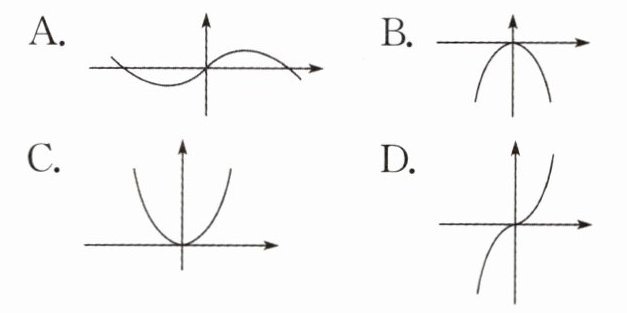 B. C. D.
14. We can infer from the passage that
A. $\mathrm{e}^{iπ}$ isn't an irrational number
B. the tangent curve is always three thousand feet high
C. we can't see the golden ratio in the drawings
D. Li Xing thinks maths is difficult and boring
15. What is the passage mainly about?
A. The beauty and fun of maths.
B. The International Day of Maths.
C. The importance of maths.
D. The life of a maths professor.
[2026深圳模拟]You may feel that maths is hard and boring. Is it possible that you've been looking at maths in the wrong way? With International Day of Maths coming on March 14, Teens interviewed Li Xing, a maths professor. We asked if maths can be beautiful and fun. Here's what he said.
Numbers are beautiful. There is maths hidden in beautiful human bodies. Measure(测量) the length from your head to your belly button(肚脐) and from your belly button to your feet. The ratio(比例) of these two numbers is always around 0.618. This is the golden ratio, which can be seen everywhere, like in nature, music and paintings. In Chinese poems, we can also see the beauty of numbers, as Li Bai wrote, "I've sailed a thousand miles through the Gorges in a day" and "My boat has left ten thousand mountains far away". The numbers show how fast Li Bai travelled and how happy he felt. Numbers give us freedom to imagine.
Curves are beautiful. Sine curves(正弦曲线) are beautiful. They go towards the two opposite directions on and on without ever ending. They look like waves slowly moving. The tangent curve(正切曲线) is like a waterfall. That's really "dashing down three thousand feet from on high(飞流直下三千尺)".
Formulas(公式) are beautiful. Do you know Euler's Formula: $\mathrm{e}^{iπ} + 1 = 0$? It's beautiful, too. The number "e" is an irrational number(无理数), whose digits go on and on and never stop. "$π$" is also such an irrational number. However, when these two numbers come together, things become different.
11. If the ratio of a thing is around 0.618,
C
.A. it will look like a human body
B. it has a golden colour
C. it can bring us a sense of beauty
D. it is as long as a person's leg
12. What can we know about Li Bai from his poem in this text?
A. He's good at solving maths problems.
B. He was good at counting numbers.
C. He loved travelling by boat.
D. He used numbers to show his feelings.
13.(创新考法·图片理解)What does a sine curve look like?
A.
B. C. D.14. We can infer from the passage that
A
.A. $\mathrm{e}^{iπ}$ isn't an irrational number
B. the tangent curve is always three thousand feet high
C. we can't see the golden ratio in the drawings
D. Li Xing thinks maths is difficult and boring
15. What is the passage mainly about?
A. The beauty and fun of maths.
B. The International Day of Maths.
C. The importance of maths.
D. The life of a maths professor.
答案
11. C 推理判断题。根据“Numbers are beautiful.”和“This is the golden ratio,which can be seen everywhere,like in nature,music and paintings.”可知,0.618就是黄金比例,在自然界、音乐和绘画中随处可见,它能给我们带来美感。
12. D 细节理解题。根据“The numbers show how fast Li Bai travelled and how happy he felt.”可知,李白诗句中运用数字来表现自己行船之快与心情之畅。
13. A 图片理解题。根据“They go towards the two opposite directions on and on without ever ending. They look like waves slowly moving.”可知,正弦曲线的特征是它在两个相反方向上不断延伸,没有终点。呈周期性波浪起伏,与海浪、波纹相似。这与选项A的图形相符。
14. A 推理判断题。根据“The number ‘e’ is an irrational number,whose digits go on and on and never stop. ‘π’ is also such an irrational number. However,when these two numbers come together,things become different.”可知,e是一个无理数,π也是这样一个无理数。然而,当这两个数字放在一起时,事情就变得不同了。可推断出,e^(iπ)不是无理数。
15. A 主旨大意题。通读全文可知,本文主要介绍了数学的美丽和有趣。
12. D 细节理解题。根据“The numbers show how fast Li Bai travelled and how happy he felt.”可知,李白诗句中运用数字来表现自己行船之快与心情之畅。
13. A 图片理解题。根据“They go towards the two opposite directions on and on without ever ending. They look like waves slowly moving.”可知,正弦曲线的特征是它在两个相反方向上不断延伸,没有终点。呈周期性波浪起伏,与海浪、波纹相似。这与选项A的图形相符。
14. A 推理判断题。根据“The number ‘e’ is an irrational number,whose digits go on and on and never stop. ‘π’ is also such an irrational number. However,when these two numbers come together,things become different.”可知,e是一个无理数,π也是这样一个无理数。然而,当这两个数字放在一起时,事情就变得不同了。可推断出,e^(iπ)不是无理数。
15. A 主旨大意题。通读全文可知,本文主要介绍了数学的美丽和有趣。
解析
【分析】
本题为跨学科英语阅读理解题,包含细节理解、推理判断、图片理解、主旨大意四类题型。解题思路:1. 细节理解题:根据题干关键词定位原文对应段落,对比选项与原文信息,选出匹配项;2. 推理判断题:结合原文上下文逻辑推导隐含结论,排除与原文不符的选项;3. 图片理解题:依据原文对曲线特征的描述,匹配对应图形;4. 主旨大意题:通读全文梳理核心内容,确定文章主旨。
【解析】
11. 细节理解题:题干关键词为“ratio around 0.618”,定位到第二段,原文提到0.618是黄金比例,在自然、音乐、绘画中随处可见,结合“Numbers are beautiful”可知黄金比例能带来美感,对应选项C。
12. 细节理解题:题干关键词为“Li Bai from his poem”,定位到第二段末尾,原文指出李白诗句中的数字体现了行船速度和心情,对应选项D。
13. 图片理解题:题干问正弦曲线的样子,定位到第三段,原文描述正弦曲线“向两个相反方向不断延伸,无终点,像波浪”,匹配选项A的图形,其余选项不符合正弦曲线特征,故选A。
14. 推理判断题:题干要求推断,定位到第四段,原文说明e和π都是无理数,结合欧拉公式可推断e^(iπ)不是无理数,对应选项A;B为原文比喻而非实际情况,C与原文“在绘画中可见”矛盾,D与原文“数学美丽有趣”不符,故选A。
15. 主旨大意题:通读全文,文章围绕数学的美丽与有趣展开,对应选项A。
【答案】
11. C 12. D 13. A 14. A 15. A
【知识点】
阅读理解细节理解、阅读理解推理判断、图片理解
【点评】
本题结合数学知识考查英语阅读能力,题型全面,需学生具备原文定位、信息分析、图形匹配的能力,难度适中。
【难度系数】
0.6
本题为跨学科英语阅读理解题,包含细节理解、推理判断、图片理解、主旨大意四类题型。解题思路:1. 细节理解题:根据题干关键词定位原文对应段落,对比选项与原文信息,选出匹配项;2. 推理判断题:结合原文上下文逻辑推导隐含结论,排除与原文不符的选项;3. 图片理解题:依据原文对曲线特征的描述,匹配对应图形;4. 主旨大意题:通读全文梳理核心内容,确定文章主旨。
【解析】
11. 细节理解题:题干关键词为“ratio around 0.618”,定位到第二段,原文提到0.618是黄金比例,在自然、音乐、绘画中随处可见,结合“Numbers are beautiful”可知黄金比例能带来美感,对应选项C。
12. 细节理解题:题干关键词为“Li Bai from his poem”,定位到第二段末尾,原文指出李白诗句中的数字体现了行船速度和心情,对应选项D。
13. 图片理解题:题干问正弦曲线的样子,定位到第三段,原文描述正弦曲线“向两个相反方向不断延伸,无终点,像波浪”,匹配选项A的图形,其余选项不符合正弦曲线特征,故选A。
14. 推理判断题:题干要求推断,定位到第四段,原文说明e和π都是无理数,结合欧拉公式可推断e^(iπ)不是无理数,对应选项A;B为原文比喻而非实际情况,C与原文“在绘画中可见”矛盾,D与原文“数学美丽有趣”不符,故选A。
15. 主旨大意题:通读全文,文章围绕数学的美丽与有趣展开,对应选项A。
【答案】
11. C 12. D 13. A 14. A 15. A
【知识点】
阅读理解细节理解、阅读理解推理判断、图片理解
【点评】
本题结合数学知识考查英语阅读能力,题型全面,需学生具备原文定位、信息分析、图形匹配的能力,难度适中。
【难度系数】
0.6
