

 登录
登录
Ⅰ.用所给词的适当形式填空
1.With the
2.To tell the
3.To win the game, you have to stay
1.With the
belief
( believe ) that I would succeed, I worked hard day and night.2.To tell the
truth
( true ), you shouldn't have missed that part.3.To win the game, you have to stay
concentrated
( concentrate ) and focused.答案
1.belief 2.truth 3.concentrated
解析
【分析】
首先观察每个空格前的结构,判断所需词性,再将所给词转换为对应形式:第1题空格前有定冠词the,需填名词;第2题涉及固定短语,需用名词;第3题中stay是系动词,后需接形容词作表语,据此转换所给词的形式。
【解析】
1. 定冠词the后需接名词,所给词believe是动词,其名词形式为belief,故填belief;
2. 固定短语tell the truth意为“说实话”,需用形容词true的名词形式truth,故填truth;
3. stay在此处为系动词,后接形容词作表语,所给词concentrate是动词,其形容词形式为concentrated,故填concentrated。
【答案】
1.belief 2.truth 3.concentrated
【知识点】
词性转换、形容词作表语、固定搭配
【点评】
本题考查英语基础的词性转换和固定搭配,属于常规基础题型,只要掌握常见词性变化规则和常用短语即可轻松作答。
【难度系数】
0.8
首先观察每个空格前的结构,判断所需词性,再将所给词转换为对应形式:第1题空格前有定冠词the,需填名词;第2题涉及固定短语,需用名词;第3题中stay是系动词,后需接形容词作表语,据此转换所给词的形式。
【解析】
1. 定冠词the后需接名词,所给词believe是动词,其名词形式为belief,故填belief;
2. 固定短语tell the truth意为“说实话”,需用形容词true的名词形式truth,故填truth;
3. stay在此处为系动词,后接形容词作表语,所给词concentrate是动词,其形容词形式为concentrated,故填concentrated。
【答案】
1.belief 2.truth 3.concentrated
【知识点】
词性转换、形容词作表语、固定搭配
【点评】
本题考查英语基础的词性转换和固定搭配,属于常规基础题型,只要掌握常见词性变化规则和常用短语即可轻松作答。
【难度系数】
0.8
Ⅱ.根据汉语意思完成句子,每空一词
4.请问你可以帮我伸手去拿那上面的书吗?
Could you please help me
5.年轻的士兵们为了理想而斗争。
The young soldiers
6.情况如此紧急,以至于他不能停止工作。
The situation was
7.当我回到房间时,我看到所有灯都亮着,很惊讶。
When I got back to the room, I was
8.据说一位伟大的政治家就是出生在这里。
4.请问你可以帮我伸手去拿那上面的书吗?
Could you please help me
reach
for
the book up there?5.年轻的士兵们为了理想而斗争。
The young soldiers
fight/fought
for
their ideals.6.情况如此紧急,以至于他不能停止工作。
The situation was
so
urgent that
he could not stop working.7.当我回到房间时,我看到所有灯都亮着,很惊讶。
When I got back to the room, I was
surprised
to
see
that all the lights were on.8.据说一位伟大的政治家就是出生在这里。
It
is
said
that
a great statesman was born here.答案
4.reach for 5.fight/fought for 6.so; that
7.surprised to see 8.It is said that
7.surprised to see 8.It is said that
解析
【分析】
本题为根据汉语意思完成英语句子的题型,解题思路为:先明确汉语句子的核心含义,再回忆对应的英语固定短语、句型或搭配,同时注意动词的形式(如时态)、固定结构的正确使用,确保填入内容符合语法和句意要求。
【解析】
4. “伸手去拿”对应的固定短语是reach for,help sb do sth结构中动词用原形,故填reach for;
5. “为……而斗争”是固定短语fight for,主语为复数名词,时态可选用一般现在时(fight)或一般过去时(fought),故填fight/fought for;
6. “如此……以至于”引导结果状语从句,修饰形容词urgent需用so,故填so; that;
7. “做某事很惊讶”的固定搭配是be surprised to do sth,“看到”对应动词see,故填surprised to see;
8. “据说……”的固定句型是It is said that,故填It is said that。
【答案】
4.reach for 5.fight/fought for 6.so; that 7.surprised to see 8.It is said that
【知识点】
固定短语搭配;固定句型;动词时态
【点评】
本题考查英语常用的固定短语、固定句式及动词形式的运用,属于基础题型,需学生平时积累相关英语表达,难度不大,掌握常见短语和句型即可正确作答。
【难度系数】
0.5
本题为根据汉语意思完成英语句子的题型,解题思路为:先明确汉语句子的核心含义,再回忆对应的英语固定短语、句型或搭配,同时注意动词的形式(如时态)、固定结构的正确使用,确保填入内容符合语法和句意要求。
【解析】
4. “伸手去拿”对应的固定短语是reach for,help sb do sth结构中动词用原形,故填reach for;
5. “为……而斗争”是固定短语fight for,主语为复数名词,时态可选用一般现在时(fight)或一般过去时(fought),故填fight/fought for;
6. “如此……以至于”引导结果状语从句,修饰形容词urgent需用so,故填so; that;
7. “做某事很惊讶”的固定搭配是be surprised to do sth,“看到”对应动词see,故填surprised to see;
8. “据说……”的固定句型是It is said that,故填It is said that。
【答案】
4.reach for 5.fight/fought for 6.so; that 7.surprised to see 8.It is said that
【知识点】
固定短语搭配;固定句型;动词时态
【点评】
本题考查英语常用的固定短语、固定句式及动词形式的运用,属于基础题型,需学生平时积累相关英语表达,难度不大,掌握常见短语和句型即可正确作答。
【难度系数】
0.5
Ⅲ.阅读理解
「2025 广东广州中考」
When I was young, my father took me outside to see the stars. Once we saw a comet (彗星)! It was the first comet I’d seen but wasn’t the last.
My name is Caroline Herschel. I was born in Hanover, Germany in 1750. When I was 22, I moved to England to stay with my older brother, William. He was a musician and he offered me singing lessons. I helped him with housework in return. I practiced hard and soon started singing at his concerts.
Life changed when William became interested in astronomy. He read about space late into the night. Breakfast often turned into a lesson about stars. I learned a lot from him. And we even started working together on a big project: building telescopes—the special tools for seeing faraway things.
To make the perfect mirrors for our telescopes, we heated metals and shaped them using special molds (模具). These molds were made from strange things, like dry horse waste. I had to break it into small bits. It was dirty work, but I didn’t mind. Someone had to do it.
Making the mirrors smooth was very difficult. William invented a machine to help, but he still had to work without stopping for hours once he began. He couldn’t even stop to eat, so I fed him and read stories to keep him happy and relaxed.
In 1781, William discovered something fantastic—a new planet! King George was so glad that he made William his astronomer. William made a telescope just for me. And I was able to search the sky along with him.
On August 1, 1786, I found something special too—a comet! I watched it carefully for one more night and discovered it was real. Now everyone is talking about my comet. They call it the first lady’s comet.
This is the first comet I’ve ever discovered, but I don’t think it will be the last.
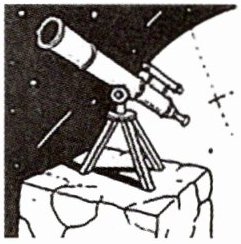
Historical Note: After Caroline discovered her first comet, King George paid her to be William’s assistant (助手). She was one of the first women astronomers to be paid for her work. She went on to find seven more comets herself between 1786 and 1797.
9.Why did Caroline move to England?
A.To live with her brother.
B.To study at a music school.
C.To sing at famous concerts.
D.To look after a sick relative.
10. 特色考法 事件排序题 In what order did the following happen in Caroline’s life?
a. She discovered her first comet.
b. Her brother built a telescope for her.
c. Her brother became interested in space.
d. She built telescopes together with her brother.
e. She got paid by King George to help with her brother’s work.
A.c-d-b-a-e B.c-d-e-b-a
C.c-b-d-a-e D.c-b-a-e-d
11.How many comets did Caroline discover by herself?
A.One. B.Seven. C.Eight. D.Nine.
12. Which of the following best describes Caroline and William’s working relationship?
A.Caroline gave William more help.
B.Caroline had to do all the dirty work.
C.William took care of most of the work.
D.They were important to each other’s success.
「2025 广东广州中考」
When I was young, my father took me outside to see the stars. Once we saw a comet (彗星)! It was the first comet I’d seen but wasn’t the last.
My name is Caroline Herschel. I was born in Hanover, Germany in 1750. When I was 22, I moved to England to stay with my older brother, William. He was a musician and he offered me singing lessons. I helped him with housework in return. I practiced hard and soon started singing at his concerts.
Life changed when William became interested in astronomy. He read about space late into the night. Breakfast often turned into a lesson about stars. I learned a lot from him. And we even started working together on a big project: building telescopes—the special tools for seeing faraway things.
To make the perfect mirrors for our telescopes, we heated metals and shaped them using special molds (模具). These molds were made from strange things, like dry horse waste. I had to break it into small bits. It was dirty work, but I didn’t mind. Someone had to do it.
Making the mirrors smooth was very difficult. William invented a machine to help, but he still had to work without stopping for hours once he began. He couldn’t even stop to eat, so I fed him and read stories to keep him happy and relaxed.
In 1781, William discovered something fantastic—a new planet! King George was so glad that he made William his astronomer. William made a telescope just for me. And I was able to search the sky along with him.
On August 1, 1786, I found something special too—a comet! I watched it carefully for one more night and discovered it was real. Now everyone is talking about my comet. They call it the first lady’s comet.
This is the first comet I’ve ever discovered, but I don’t think it will be the last.
Historical Note: After Caroline discovered her first comet, King George paid her to be William’s assistant (助手). She was one of the first women astronomers to be paid for her work. She went on to find seven more comets herself between 1786 and 1797.
9.Why did Caroline move to England?
A.To live with her brother.
B.To study at a music school.
C.To sing at famous concerts.
D.To look after a sick relative.
10. 特色考法 事件排序题 In what order did the following happen in Caroline’s life?
a. She discovered her first comet.
b. Her brother built a telescope for her.
c. Her brother became interested in space.
d. She built telescopes together with her brother.
e. She got paid by King George to help with her brother’s work.
A.c-d-b-a-e B.c-d-e-b-a
C.c-b-d-a-e D.c-b-a-e-d
11.How many comets did Caroline discover by herself?
A.One. B.Seven. C.Eight. D.Nine.
12. Which of the following best describes Caroline and William’s working relationship?
A.Caroline gave William more help.
B.Caroline had to do all the dirty work.
C.William took care of most of the work.
D.They were important to each other’s success.
答案
Ⅲ.[语篇解读] 本文以第一人称的口吻,主要讲述了天文学家卡罗琳·赫歇尔的生平。
9.A 细节理解题。根据“I moved to England to stay with my older brother, William”可知,卡罗琳搬到英国是为了与哥哥住在一起。故选A。
10.A 事件排序题。根据“Life changed when William became interested in astronomy.”可知,她的哥哥威廉对天文学产生兴趣,这是最先发生的,对应c;根据“And we even started working together on a big project: building telescopes”可知,兄妹俩一起制作望远镜,对应d,排除C、D;根据“In 1781...William made a telescope just for me.”可知,威廉为卡罗琳制作了一台望远镜,对应b,排除B。故选A。
11.C 细节理解题。根据“On August 1, 1786, I found something special too—a comet!”和“She went on to find seven more comets herself between 1786 and 1797.”可知,卡罗琳自己先发现1颗彗星,之后又发现7颗,总共发现8颗。故选C。
12.D 推理判断题。根据“And we even started working together on a big project: building telescopes”“He couldn’t even stop to eat, so I fed him and read stories to keep him happy and relaxed.”和“William made a telescope just for me. And I was able to search the sky along with him.”可知,卡罗琳和威廉一起制造望远镜,在威廉工作时卡罗琳喂他吃饭、给他读故事,威廉后来也为卡罗琳制作望远镜,他们的工作是相互配合的,对彼此的成功都很重要。故选D。
9.A 细节理解题。根据“I moved to England to stay with my older brother, William”可知,卡罗琳搬到英国是为了与哥哥住在一起。故选A。
10.A 事件排序题。根据“Life changed when William became interested in astronomy.”可知,她的哥哥威廉对天文学产生兴趣,这是最先发生的,对应c;根据“And we even started working together on a big project: building telescopes”可知,兄妹俩一起制作望远镜,对应d,排除C、D;根据“In 1781...William made a telescope just for me.”可知,威廉为卡罗琳制作了一台望远镜,对应b,排除B。故选A。
11.C 细节理解题。根据“On August 1, 1786, I found something special too—a comet!”和“She went on to find seven more comets herself between 1786 and 1797.”可知,卡罗琳自己先发现1颗彗星,之后又发现7颗,总共发现8颗。故选C。
12.D 推理判断题。根据“And we even started working together on a big project: building telescopes”“He couldn’t even stop to eat, so I fed him and read stories to keep him happy and relaxed.”和“William made a telescope just for me. And I was able to search the sky along with him.”可知,卡罗琳和威廉一起制造望远镜,在威廉工作时卡罗琳喂他吃饭、给他读故事,威廉后来也为卡罗琳制作望远镜,他们的工作是相互配合的,对彼此的成功都很重要。故选D。
解析
【分析】
本题为人物传记类英语阅读理解,包含4道题,分别考查细节理解、事件排序、细节计算、推理判断。解题思路:1. 细节题需定位原文对应句子,提取直接信息;2. 事件排序题要按原文事件发生的先后顺序逐一确认;3. 细节计算题需提取两个相关数据相加得出结果;4. 推理判断题要结合原文人物的合作内容分析关系。
【解析】
9. 细节理解题:根据原文第二段“When I was 22, I moved to England to stay with my older brother, William.”可知,卡罗琳搬到英国是为了和哥哥住在一起,故选A。
10. 事件排序题:按原文事件先后顺序:①哥哥对天文学感兴趣(c)→②兄妹一起制作望远镜(d)→③哥哥为卡罗琳制作望远镜(b)→④卡罗琳发现第一颗彗星(a)→⑤国王付钱给卡罗琳协助哥哥工作(e),顺序为c-d-b-a-e,故选A。
11. 细节计算题:根据原文“On August 1, 1786, I found something special too—a comet!”(1颗)和“She went on to find seven more comets herself between 1786 and 1797.”(7颗),总共1+7=8颗,故选C。
12. 推理判断题:原文提到兄妹一起制作望远镜,威廉工作时卡罗琳照顾他,威廉为卡罗琳制作望远镜,两人相互配合,对彼此的成功都很重要,故选D。
【答案】
9.A 10.A 11.C 12.D
【知识点】
英语阅读理解、细节理解、事件排序
【点评】
本题为中考英语阅读理解题,以人物传记为载体,考查多种阅读技能,题目设置合理,能有效检测学生的信息定位、逻辑排序和推理分析能力,难度适中。
【难度系数】
0.6
本题为人物传记类英语阅读理解,包含4道题,分别考查细节理解、事件排序、细节计算、推理判断。解题思路:1. 细节题需定位原文对应句子,提取直接信息;2. 事件排序题要按原文事件发生的先后顺序逐一确认;3. 细节计算题需提取两个相关数据相加得出结果;4. 推理判断题要结合原文人物的合作内容分析关系。
【解析】
9. 细节理解题:根据原文第二段“When I was 22, I moved to England to stay with my older brother, William.”可知,卡罗琳搬到英国是为了和哥哥住在一起,故选A。
10. 事件排序题:按原文事件先后顺序:①哥哥对天文学感兴趣(c)→②兄妹一起制作望远镜(d)→③哥哥为卡罗琳制作望远镜(b)→④卡罗琳发现第一颗彗星(a)→⑤国王付钱给卡罗琳协助哥哥工作(e),顺序为c-d-b-a-e,故选A。
11. 细节计算题:根据原文“On August 1, 1786, I found something special too—a comet!”(1颗)和“She went on to find seven more comets herself between 1786 and 1797.”(7颗),总共1+7=8颗,故选C。
12. 推理判断题:原文提到兄妹一起制作望远镜,威廉工作时卡罗琳照顾他,威廉为卡罗琳制作望远镜,两人相互配合,对彼此的成功都很重要,故选D。
【答案】
9.A 10.A 11.C 12.D
【知识点】
英语阅读理解、细节理解、事件排序
【点评】
本题为中考英语阅读理解题,以人物传记为载体,考查多种阅读技能,题目设置合理,能有效检测学生的信息定位、逻辑排序和推理分析能力,难度适中。
【难度系数】
0.6
