

 登录
四、补全对话:根据下面对话中的情境,在每个空白处填入一个适当的语句,使对话恢复完整。
A:Hello! This is John. May I speak to Carrie,please?
B:Hi,John. This is Carrie speaking.
A:Carrie,why didn't you come to school today?
B:1.
A:Sorry to hear that.2.
B:Much better. Thank you. Could you tell me something about the school sports meeting?
A:3.
B:You're good at it.4.
A:Yes. And Joe won second place.
B:Great! What about the girls' relay race?5.
A:Rose, Amy, Julia and Sarah. But our class didn't win the race.
B:What a pity!
A:Hello! This is John. May I speak to Carrie,please?
B:Hi,John. This is Carrie speaking.
A:Carrie,why didn't you come to school today?
B:1.
I have a fever/headache/...
.A:Sorry to hear that.2.
How are you feeling now
?B:Much better. Thank you. Could you tell me something about the school sports meeting?
A:3.
Sure/Of course/...
. It was very exciting. I took part in the boys' 100-metre race.B:You're good at it.4.
Did you win first place
?A:Yes. And Joe won second place.
B:Great! What about the girls' relay race?5.
Who took part in it
?A:Rose, Amy, Julia and Sarah. But our class didn't win the race.
B:What a pity!
答案
1. I have a fever/headache/... 2. How are you feeling now 3. Sure/Of course/... 4. Did you win first place 5. Who took part in it
解析
【分析】
做补全对话题需结合上下文语境梳理对话逻辑:1. 前句A询问B没来学校的原因,B需说明缺席的合理理由(生病类表述);2. 后句B回答“Much better”,可知A是在询问B现在的身体状况;3. 前句B请求告知运动会情况,A需给出肯定的答复;4. 前句A提到自己参加100米且擅长该项目,后句A以“Yes”回应,可知B是在询问是否获得第一名;5. 后句A回答参赛人员,可知B是在询问女子接力赛的参赛人员。
【解析】
1. 根据A的问题“why didn't you come to school today?”,B需说明生病等缺席原因,故填“I have a fever/headache/...”;2. 根据B的回答“Much better”,可知A询问B现在的身体状况,故填“How are you feeling now”;3. 根据B的请求“Could you tell me something about the school sports meeting?”,A需给出肯定答复,故填“Sure/Of course/...”;4. 根据A的回答“Yes”及前文“A took part in the boys' 100-metre race. You're good at it”,可知B询问是否获得第一名,故填“Did you win first place”;5. 根据A的回答“Rose, Amy, Julia and Sarah”,可知B询问女子接力赛的参赛人员,故填“Who took part in it”。
【答案】
1. I have a fever/headache/... 2. How are you feeling now 3. Sure/Of course/... 4. Did you win first place 5. Who took part in it
【知识点】
日常交际用语、情景对话
【点评】
本题考查日常交际中关于生病询问、运动会话题的补全,需结合上下文逻辑推导,注重交际用语的实际运用,难度较低。
【难度系数】
0.8
五、根据短文内容,从短文后的选项中选出能填入空白处的最佳选项。
Rock Paper Scissors:An Ancient Game with Modern Competitions
Have you ever used Rock Paper Scissors to solve a disagreement? This simple game actually originated(起源) in China over 2,000 years ago.
Origins and Development.
According to Wuzazu from the Ming Dynasty, the game dates back to the Han Dynasty (202 BC - 220 AD). It was first called "Shoushiling", meaning "hand command game". 1. _________ From Japan, it reached Europe and America in the early 20th century.
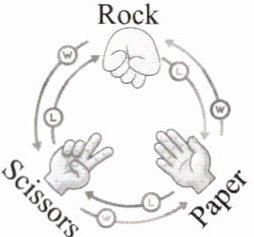
2. _________
Although the game seems to depend on luck, research shows several winning tips:
• First throw matters. Studies show that men often start with Rock, while women prefer Scissors. Adjust your first move accordingly—Paper beats Rock, and Rock beats Scissors.
• Losers change patterns. 3. _________ Use this tip to guess their next move.
• Beginners love Rock. 4. _________ Beat them with Paper.
Chinese scientists have confirmed these patterns through research.
Modern Competitions.
Today, Rock Paper Scissors has become an organized sport. The World Rock Paper Scissors Association(WRPSA) runs official tournaments, including yearly World Championships with prize money up to 50,000.
5. _________ It has held national championships since 2003. In 2019, Beijing hosted the World Championship, and the organizers said the game is an intangible cultural heritage which is fun and full of ancient Chinese wisdom.
Next time you play, use these tips—and remember you are taking part in a tradition with over 2,000 years of history.
A. How to Gain an Advantage.
B. New players often choose Rock because it feels strong.
C. Later, the game spread to Japan and became modern rock-paper-scissors.
D. China now officially recognizes rock-paper-scissors as a competitive game.
E. After losing, most players change to a move that beats the other's last choice.
Rock Paper Scissors:An Ancient Game with Modern Competitions
Have you ever used Rock Paper Scissors to solve a disagreement? This simple game actually originated(起源) in China over 2,000 years ago.
Origins and Development.
According to Wuzazu from the Ming Dynasty, the game dates back to the Han Dynasty (202 BC - 220 AD). It was first called "Shoushiling", meaning "hand command game". 1. _________ From Japan, it reached Europe and America in the early 20th century.
2. _________
Although the game seems to depend on luck, research shows several winning tips:
• First throw matters. Studies show that men often start with Rock, while women prefer Scissors. Adjust your first move accordingly—Paper beats Rock, and Rock beats Scissors.
• Losers change patterns. 3. _________ Use this tip to guess their next move.
• Beginners love Rock. 4. _________ Beat them with Paper.
Chinese scientists have confirmed these patterns through research.
Modern Competitions.
Today, Rock Paper Scissors has become an organized sport. The World Rock Paper Scissors Association(WRPSA) runs official tournaments, including yearly World Championships with prize money up to 50,000.
5. _________ It has held national championships since 2003. In 2019, Beijing hosted the World Championship, and the organizers said the game is an intangible cultural heritage which is fun and full of ancient Chinese wisdom.
Next time you play, use these tips—and remember you are taking part in a tradition with over 2,000 years of history.
A. How to Gain an Advantage.
B. New players often choose Rock because it feels strong.
C. Later, the game spread to Japan and became modern rock-paper-scissors.
D. China now officially recognizes rock-paper-scissors as a competitive game.
E. After losing, most players change to a move that beats the other's last choice.
答案
1. C 2. A 3. E 4. B 5. D
解析
【分析】
本题为英语阅读理解七选五题型,需结合上下文逻辑、段落主题匹配选项。解题时先通读全文把握各段主旨,再逐一分析空格前后内容,找到衔接紧密的选项:第1空需承接“起源中国”和“传到欧美”的内容;第2空需概括下文“获胜技巧”的主题;第3空需解释“输的人改变模式”的具体表现;第4空需衔接“新手爱选石头”的内容;第5空需引出下文中国对该游戏的官方认可相关内容。
【解析】
1. 第1空:前文提到游戏起源于中国,后文提到从日本传到欧美,C选项“后来,这个游戏传到日本,成为现代的石头剪刀布”承上启下,符合逻辑,故选C;
2. 第2空:下文介绍了获胜的几个技巧,A选项“如何获得优势”作为该部分小标题,概括内容,故选A;
3. 第3空:前文提到“输的人改变模式”,E选项“输了之后,大多数玩家会换成能打败对方上一个选择的招式”具体解释了改变的模式,符合语境,故选E;
4. 第4空:前文提到“新手爱选石头”,B选项“新玩家经常选石头,因为它感觉很强”解释了新手选石头的原因,衔接下文“用石头赢”,故选B;
5. 第5空:后文提到中国举办世锦赛、官方称其为非物质文化遗产,D选项“中国现在正式承认石头剪刀布为竞技游戏”引出下文中国的相关举措,故选D。
【答案】
1.C 2.A 3.E 4.B 5.D
【知识点】
英语阅读理解 七选五题型
【点评】
本题围绕石头剪刀布的起源、获胜技巧及现代发展展开,考查学生对语篇逻辑和上下文衔接的理解能力,难度适中。
【难度系数】
0.5
